Parasites are – naturally – unpopular. They don’t have good public relations. They provoke “disgust” in people. Their death is rarely lamented – but perhaps it should be.
In a study on the fossilized feces of the kākāpō, researchers from Manaaki Whenua – Landcare Research were able, for the first time, to show what happens to parasites when their host, nearly extinct, goes extinct.
Despite public perception, parasites are vital components of ecosystems. It is currently thought that parasites are fundamental to the creation and maintenance of high levels of biodiversity, as they prevent a single species from becoming dominant.
In addition, many parasites have complex life cycles that involve multiple hosts, and they cannot survive unless these interact (for example, predators and prey). The numerous and fascinating ways in which parasites facilitate these interactions may be so numerous that ecological food webs can, in fact, depend heavily on parasites to function properly.
Furthermore, parasites and their hosts often have deeply intertwined evolutionary histories. Parasites—including the “parasitoids” that deliberately kill their hosts—normally want to ensure the survival of their hosts, and these have also had a long time to develop defenses that would prevent them from becoming destructive. Thus, the elimination of these “natural” parasites may have severe consequences. For example, hosts may now be easily colonized by new and exotic parasites, which can be deadly to them.
Parasites are also extremely numerous and successful, but an immeasurable number of parasites may be going extinct as their own hosts decline or disappear. It has long been suspected that if a host goes extinct, many of its parasites also disappear.
However, it is completely unknown whether parasites go extinct before their hosts. Or whether endangered species may have lost parasites at some point during their decline.
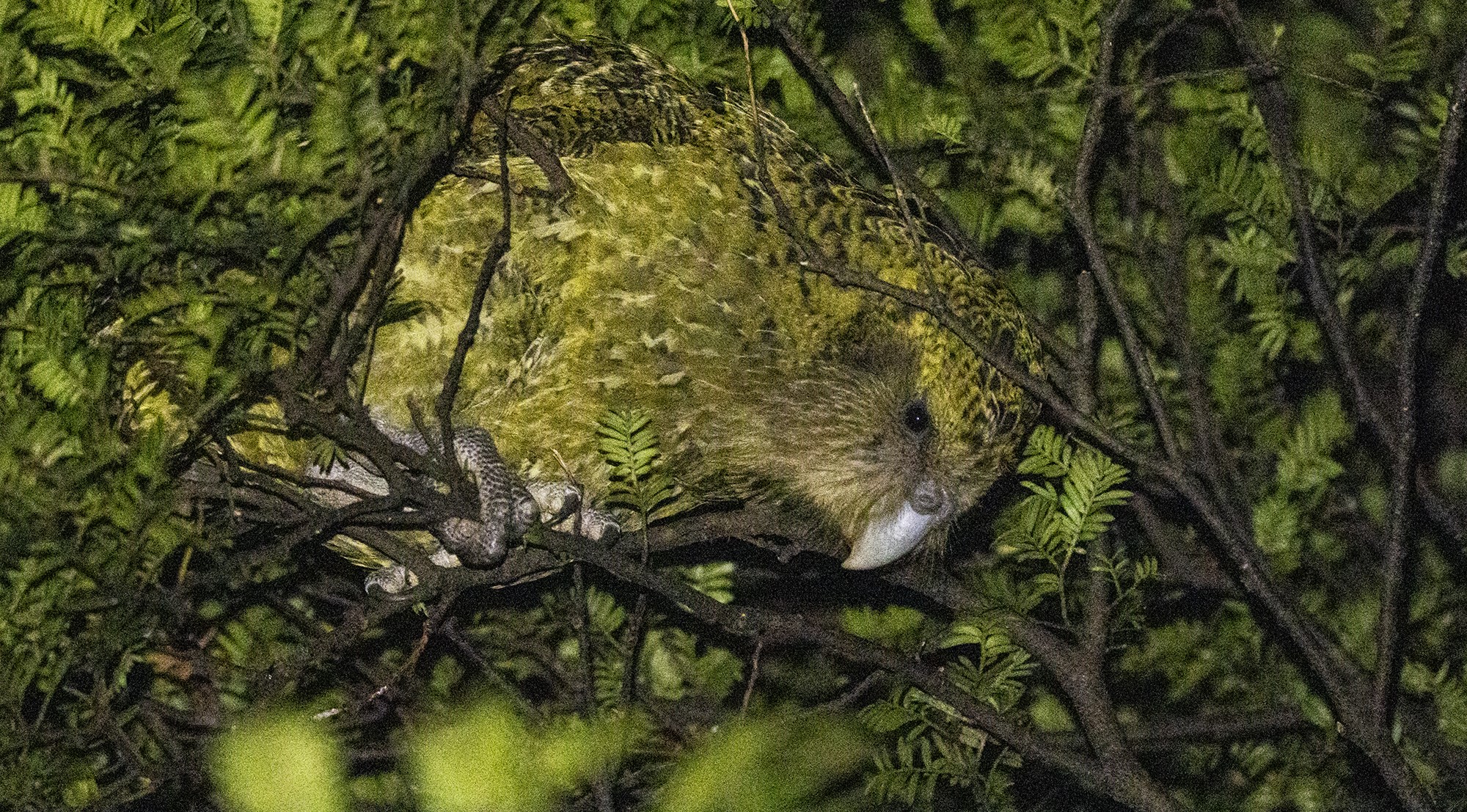
Answering this question has proven almost impossible, since parasites are almost never preserved in fossil deposits, or described before their extinction. However, researchers led by Alex Boast from Manaaki Whenua – Landcare Research managed to overcome this problem by using a unique fecal record of the kākāpō (Strigops habroptila), critically endangered, and understanding what happened to its intestinal parasites over time.
The kākāpō was subjected to one of the world’s most intensive species recovery efforts and faced near-extinction due to human activities and the introduction of predators, with only 51 individuals recorded between 1995 and 1996 and fewer than 250 surviving currently in managed sanctuaries.
The record of scat and coprolites extends for more than 1,000 years, culminating in the near-extinction of the kākāpō (circa 1280–1990 CE) and the total management of its population in predator-free reserves from around 1990.
Co-author Janet Wilmshurst explains why this record is so unique and important: “Very few living species have coprolite records, or have had their dung collected and frozen during conservation. The Kākāpō have both, which means they may be the only species in the world to have their parasite communities preserved throughout their decline and their ongoing recovery.”
Ancient DNA and microfossil data revealed a loss of parasite diversity over time.
Thirteen of the 16 (81.3%) parasite taxa detected in samples prior to 1990 are absent from the kākāpō parasite populations today, with nine losses occurring before and four after the start of the period of full management.
The decline of parasites continued after the kākāpō were saved from near-extinction, suggesting that population declines, as well as extinctions, will result in permanent loss of parasites.
The lead author, Alex Boast, was surprised by the level of parasite loss: “The level of parasite loss in the kākāpō was greater than we expected, and very few parasite species were found in kākāpō populations from pre-human and modern times. Thus, it seems that threatened species worldwide may have possessed only fractions of their original parasite communities.”
Parasite extinctions may be far more common than we know, with still-unknown impacts on the health of their hosts and on broader ecosystems.
Andrew Digby, Scientific Advisor for Kākāpō/Takahē in the Kakapo Recovery Programme of the Department of Conservation, acknowledged the importance of the study’s findings, stating: “The kākāpō are one of the most threatened species in New Zealand. However, this study shows that some of the parasites that inhabit the kākāpō may be even more threatened than their host. This study underscores the importance of historical evidence to inform conservation biology.”