The American ethnobotanist Mark Plotkin warned yesterday in Lisbon that destroying the Amazon is “destroying a sanctuary of biodiversity and of miraculous cures.”
“Conservation is not a sacrifice, it is a benefit and a necessity,” said the official at a forest conference organized by the Jerónimo Martins business group, highlighting that this “sanctuary” is being replaced by soy.
In the final part of the initiative under the theme “Into the Forest | Sustainability Conference” Mark Plotkin, cofounder and president of the organization “Amazon Conservation Team,” a leader in biocultural conservation of the Amazon rainforest, explained the importance of the Amazon to the planet, focusing on the contribution it makes to advances in medicine, centered on plants and animals but also on the wisdom of the indigenous communities with whom he has worked.
Speaking on a panel under the theme “Amazon Alive,” the official began by saying that the Amazon is “the greatest source of wisdom and healing,” the area where there are the world’s largest snakes, waters or spiders but where a new species is also found every three days, he said, to “emphasize what remains to be discovered.”
The future of new medicines for humanity will originate from venoms such as that of a blue tarantula discovered in a region of the Amazon, and based on two newly discovered electric eels, new batteries and cells for human pacemakers are being studied.
Emphasizing that nature must be protected above all else, Mark Plotkin also said that a new source for medicine may come from a newly discovered species of scorpion found in the Brazilian part of the Amazon, whose cells have the potential to cure cancer.
The tropical forest conservation advocate also drew attention to the variety of products that either exist only in the Amazon or originate there, such as peanuts, cacao, beans, corn or pineapple, yam or cassava.
“Only a small tribal group in the Amazon has 200 varieties of cassava. With climate change we must protect these species,” said the expert, author of the book “The Shaman’s Apprentice,” about Indigenous wisdom in terms of medicine through plants and about the dangers of destruction of the Amazon rainforest.
Today in Lisbon he also highlighted natural pesticides that exist in tropical forests, or almost unknown fruits rich in omega-3, and warned that it is necessary to allow these cultures, these peoples and this knowledge to endure. For them “but also for our benefit.”
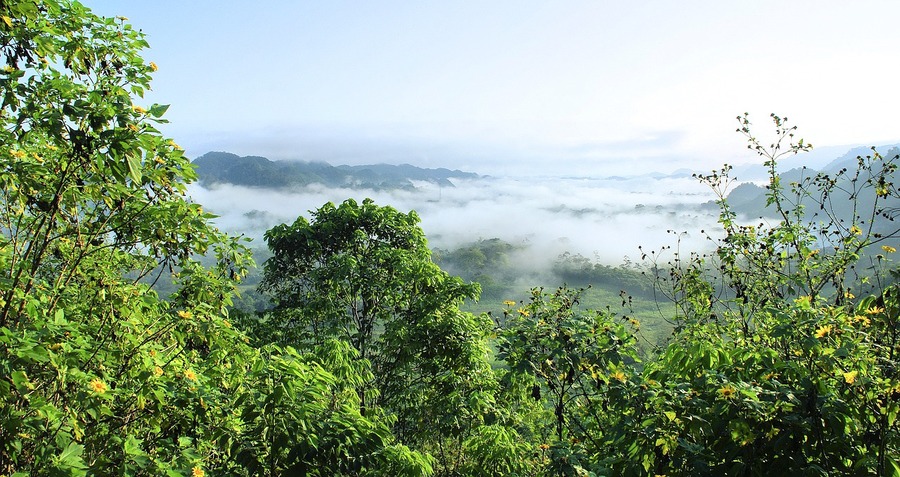
The Amazon covers more than six million square kilometers and spans nine countries, although most of it is in Brazil.
Over the years it has been considered the “lung” of the planet, given the unmatched vastness of the forest (the largest tropical forest in the world). Alarms about the destruction of the ecosystem, due to deforestation to cultivate soy or for cattle, or due to illegal mining, among other causes, have been frequently reported in recent years.
This year the UN climate conference, COP30, which will begin in less than a month (from November 10 to 21) in Belém, Brazil, takes place within the so-called Brazilian Legal Amazon.