Climate change has made the extreme weather conditions that fueled the recent wildfires at least twice as likely in France and at least 20 times more likely in Spain, according to a study released.
The study, by the World Weather Attribution (WWA) organization, which scientists say contains “conservative estimates,” says that in the current climate, events of this intensity are expected to occur once every 20 years in the southwest of France and once every six years in the center of Spain.
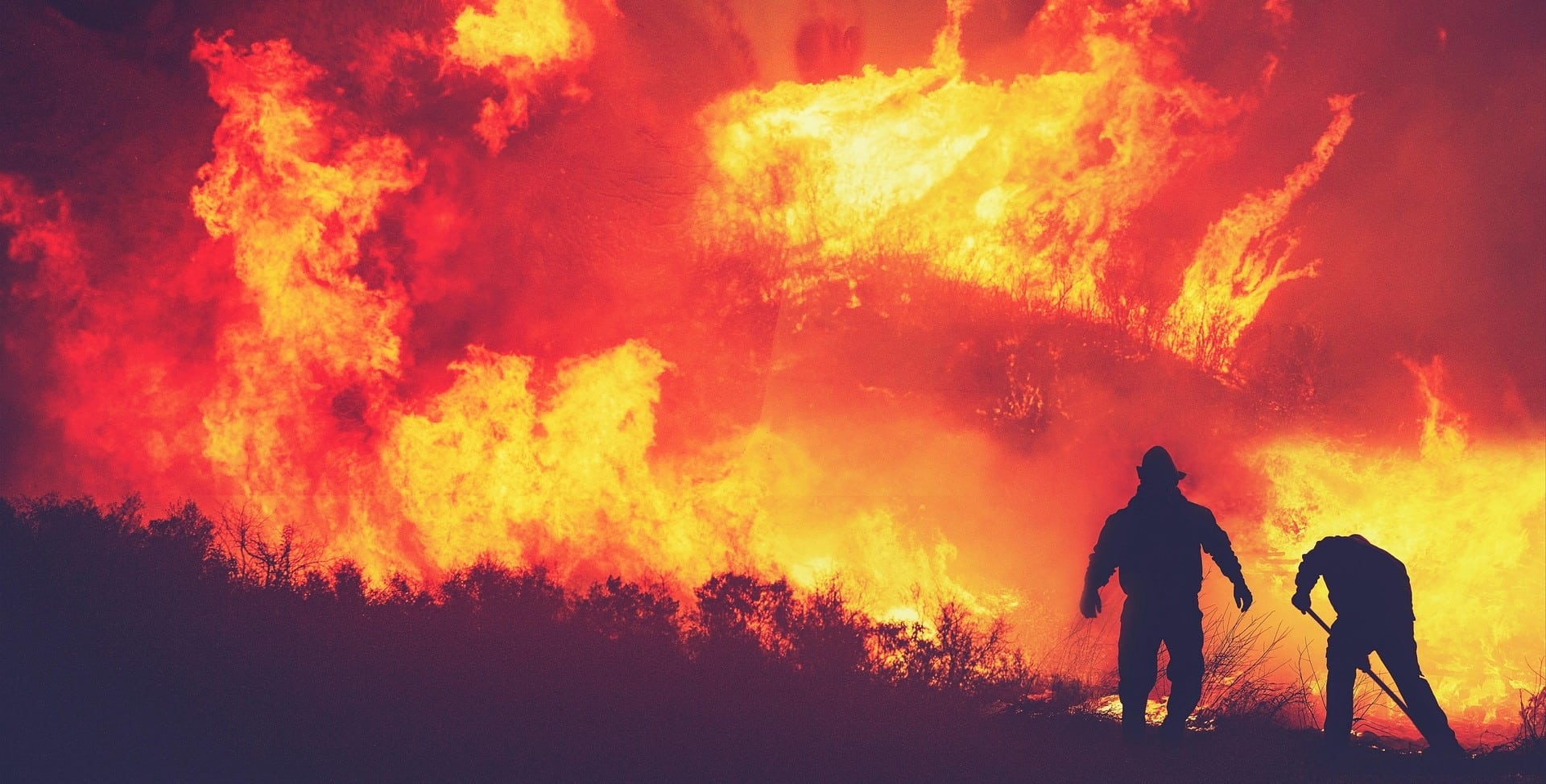
The two regions have fallen victim in recent weeks to devastating wildfires, which have already killed three people, destroyed thousands of homes and forced 300,000 people to flee.
The fires have been described as among the worst on record, with some creating their own weather systems and increasing firefighting difficulties.
Analyses published recently by the WWA indicate that both the June heatwaves and the drought currently affecting Europe were fueled by human-induced climate change.
Last September, the team also concluded that climate change worsened the wildfires of the previous year in Spain and Portugal.
The WWA is an international scientific collaboration that analyzes and communicates the possible influence of climate change on extreme weather events, such as storms, torrential rains, heatwaves and droughts. It includes researchers from universities and scientific institutions around the world.
Cited in a press release about the analysis, Andreia Ribeiro, a climate scientist at the Helmholtz Centre for Environmental Research in Germany, stated: “When wildfires erupt simultaneously across different regions, it is evident that human-induced climate change is not only increasing the probability of more extreme fires, but also their synchronicity.”
And Augustin Colette, from the French National Institute for the Environment and Industrial Risks, warned about the large amount of air pollutants resulting from the fires, increasing up to 20 times the particles above what is considered a “reasonable air quality” in Europe. And the poor air quality was felt up to 400 kilometers away from the fires, he said.
“What we are seeing in France and Spain is not just bad luck; it is a clear signal of the growing impacts of anthropogenic warming,” said Clair Barnes, Associate Researcher in Extreme Climate and Climate Change at the Centre for Environmental Policy at Imperial College London.