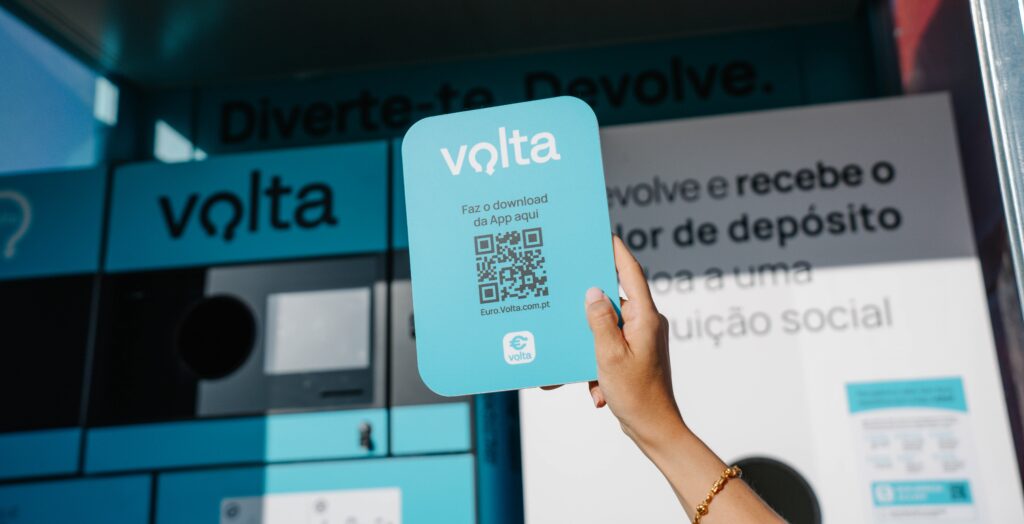
Consumers are increasingly committed to recycling and recognize the role of the Volta Program in promoting a more circular economy. However, for the system to reach its full potential, Portuguese people argue that it should become more accessible, simple and integrated into their routines. This is one of the main conclusions of the latest ConsumerChoice study on the Volta Program.
Recycling is already a well-established habit for the majority of consumers. Almost eight in ten respondents (79%) consider recycling beverage packaging to be very important, and 85% say they do it always or frequently.
That predisposition is also reflected in how respondents view the Volta Program: 94% are familiar with the initiative, 80% believe it represents an important measure for Portugal, and 87% say it contributes to encouraging the recycling of beverage packaging. In addition, 80% trust in the proper registration of the packaging and the return of the corresponding deposit.
More than a known program, Volta is also beginning to become part of participants’ habits. 41% use it regularly and 23% have already used the system a few times, which means that 64% of Portuguese have already tried the Program. Among those who still do not use it, the growth potential remains significant, as 17% admit they have not yet had the opportunity to do so and 12% intend to join in the future.
Despite the overall positive assessment, consumers identify clear opportunities for improvement. For 66% of respondents, increasing the number of return locations should be the program’s main priority. Simplifying the return and refund process, reducing the time needed to use the system, and creating additional benefits also emerge among the most mentioned suggestions.
The study also shows that financial incentives continue to influence respondents’ behavior. Almost half say they would use the Program more frequently if the deposit value were higher than the current 10 cents, demonstrating that there is room to reinforce adoption through more attractive incentive mechanisms.
Although knowledge levels about the initiative are high, there are still some doubts regarding its operation. For example, many consumers are unaware of what happens to the value of deposits that are not claimed, highlighting that there is room to strengthen communication and increase the system’s transparency. Television (69%) and social networks (50%) emerge as the main channels through which participants learned about the Volta Program, confirming the importance of these media in raising awareness about recycling and adopting new behaviours.
They also reveal a clear expectation regarding the evolution of this initiative. Among the suggestions are strengthening the network of return points, expanding the system to more types of packaging, simplifying the user experience and refund, as well as introducing more practical payment solutions, such as MB Way.
Finally, Portuguese view the success of the Volta Program as a collective commitment. The environment is identified as the main beneficiary of the initiative by a significant portion of participants, while many argue that the system’s success depends on the involvement of all stakeholders — consumers, brands, retailers, and managing entities.