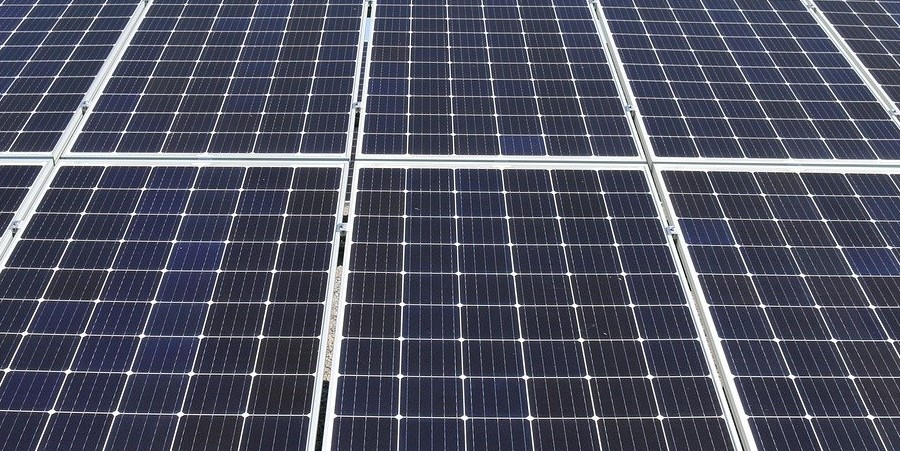
Chinese authorities announced new accounting rules for solar panel manufacturers and will meet this week with sector officials, in a new phase of the campaign aimed at curbing the price war in the industry.
According to the financial portal Yicai, the new regulation aims to ‘solve the chaos caused by the different accounting methods’ used by sector companies, which faces strong pressure on profit margins due to price-cutting competition, leading some manufacturers to operate at a loss.
This situation, which has dragged on since 2024, results from an excess productive capacity and has caused, among the 26 Chinese-listed companies that have already issued forecasts for the first half of the year, only four to expect to remain profitable.
The remaining could accumulate losses between January and June amounting to 2.7 billion and 3.2 billion dollars (2.3 billion and 2.8 billion euros), according to Yicai.
Beijing believes that introducing a standardized method for calculating costs will allow a ‘fundamental step’ to prevent companies from continuing to sell below production costs.
Meanwhile, another important Chinese economic body, Cailianshe, today disclosed that the State Administration for Market Regulation (SAMR) will meet on Friday with the solar industry association and representatives of sector companies to provide guidance on applying the new price-setting rules.
Experts cited by Cailianshe consider that this initiative marks a shift in Beijing’s policy toward a more interventionist stance. Yicai frames this week’s measures as part of a broader plan to create a complete regulatory framework for the sector, following the introduction, in recent weeks, of new safety and efficiency rules.
In April, the Ministry of Industry and Information Technology (MIIT) convened industry representatives to underline ‘the importance and urgency’ of combating the phenomenon known in China as neijuan (‘involution’), a term used to describe a cycle of excess productive capacity and price wars that ends up eroding companies’ profit margins.
In the face of the slowing Chinese economy, the prolonged real estate crisis and weak consumer confidence, which have constrained domestic demand, this phenomenon of ‘involution’ affects not only solar panel manufacturers but also other sectors, such as electric vehicles and digital services, including meal delivery platforms.