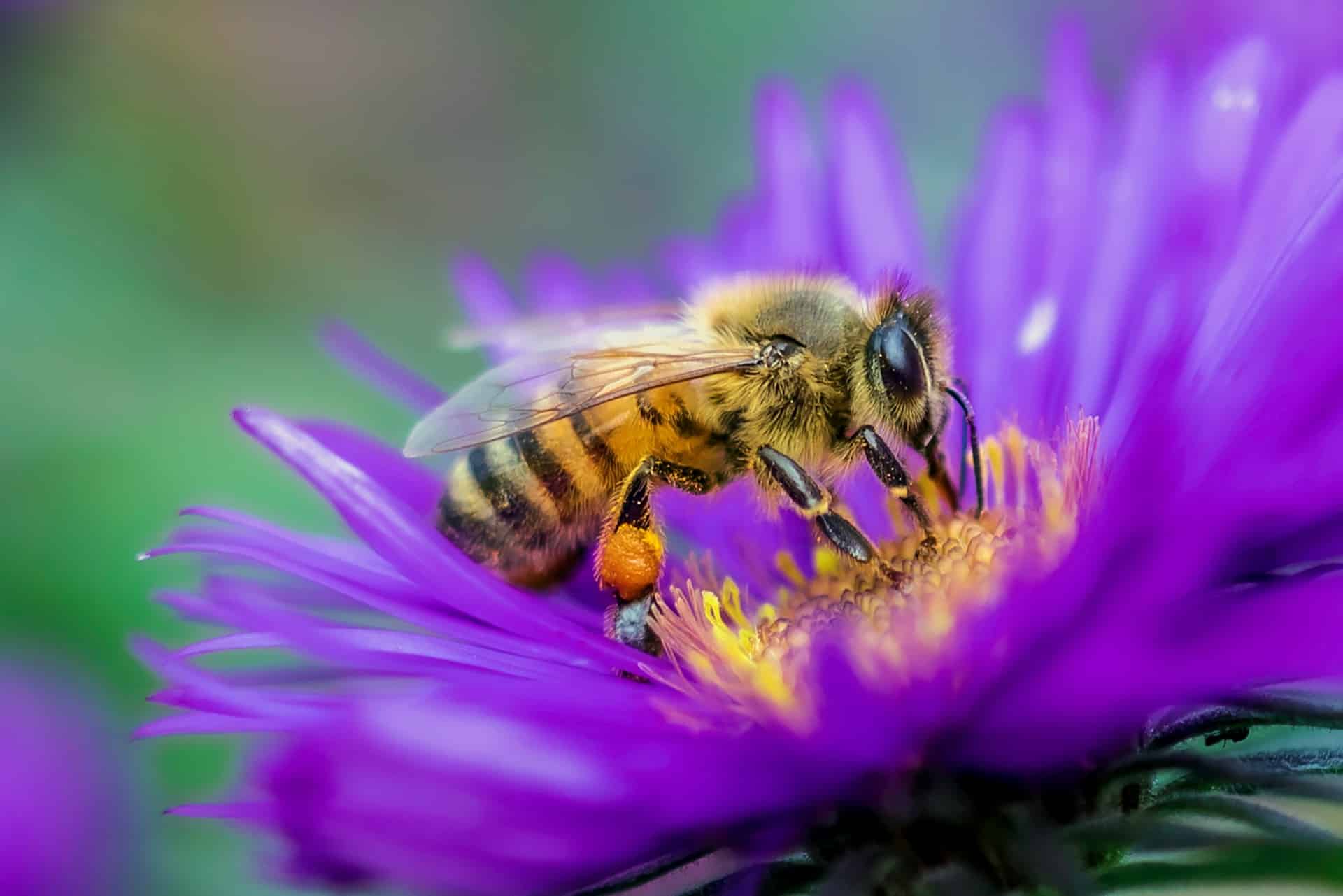
In the second half of summer, especially between the end of July and August, honeybees (of the genus Apis) have more difficulty collecting nectar. Therefore, planting or allowing to grow plants that are better adapted to this time of year is a valuable help for these insects.
The conclusion comes from a paper by researchers at the University of Sussex (the United Kingdom), published this month in the journal Functional Ecology, who studied green spaces in the cities of Brighton and Edinburgh and found that nectar scarcity is greater at the end of July and in August.
The scientists suggest that this is due to the fact that, at that time of year, with higher heat, there are fewer flowers and a greater number of pollinators competing for scarcer food sources.
This contrasts with spring, when the foraging efficiency of honey bees reaches its highest levels, mainly because there are more flowers available.
“Our conclusions add to an ever-growing body of studies indicating that the end of summer is a particularly difficult season for pollinators,” says Nicholas Balfour, coauthor of the paper.
“This is incredibly important, because it is at this time of year that the vast majority of pollinator species are active and require food to sustain their offspring,” adds the researcher.
Thus, the team suggests that the public help honey bees during the most challenging period of the year. One way to do so is, as Ciaran Harris, the first author, indicates, “planting flowers that bloom late in the summer, adjusting how often lawns are mowed, or being more tolerant of ‘weeds’ that bloom in the summer,” such as thistle, tasneira or greater centaury.
The researchers note that not removing these weeds that bloom late in the summer is “especially important” in years of extreme heat and heat waves, such as the 2026 event, when nectar availability is lower and high temperatures are disrupting the natural flowering calendars.
These factors, they say, may further exacerbate existing pressures on pollinators, such as agricultural intensification.
The team notes that the results of this study apply not only to honey bees but also to all other nectar-feeding insects.