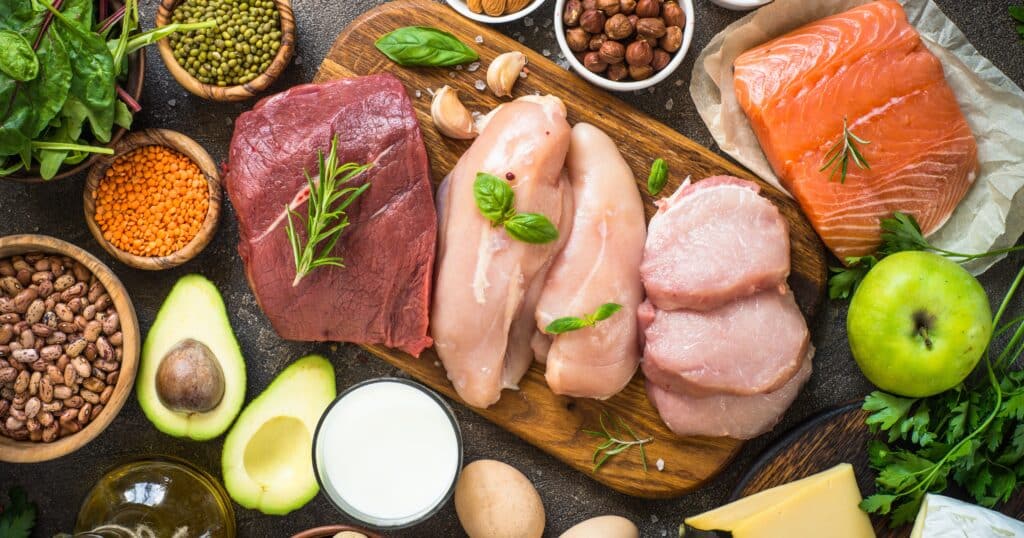
An investigation concludes that the consumption of foods rich in animal protein is not associated with an increased risk of death and may even offer protective benefits against cancer-related mortality.
The study, published in the journal Applied Physiology, Nutrition, and Metabolism, analyzed data from nearly 16,000 adults aged 19 years or older, using the National Health and Nutrition Examination Survey (NHAMES III).
The researchers examined the amount of animal and plant protein people typically consume and whether these patterns were linked to the risk of death from heart disease, cancer, or any other cause.
In light of this, they found no increase in mortality risk associated with higher animal protein intake. In fact, the data showed a modest yet significant reduction in cancer-related mortality among those who consumed more animal protein.
“There is a lot of confusion around proteins – how much to eat, what type, and what that means for long-term health. This study brings clarity, which is important for anyone who wants to make informed and evidence-based decisions about what to eat,” explains Stuart Phillips, professor and chair of the Department of Kinesiology at McMaster University, who supervised the research.
To ensure reliable results, the team used advanced statistical methods, including the National Cancer Institute (NCI) method and multivariate Markov Chain Monte Carlo (MCMC) modeling, to estimate long-term dietary intake and minimize measurement error.
“It was imperative that our analysis used the most rigorous, gold-standard methods to assess habitual intake and mortality risk. These methods allowed us to account for fluctuations in daily protein intake and provide a more accurate picture of long-term eating patterns,” says Phillips.
The researchers found no associations between total protein, animal protein, or plant protein and the risk of death from any cause, cardiovascular disease, or cancer. When both plant and animal protein were included in the analysis, the results remained consistent, suggesting that plant protein has a minimal impact on cancer mortality, while animal protein may offer a small protective effect.
Observational studies like this cannot prove causation; however, they are valuable for identifying patterns and associations in large populations. Coupled with decades of evidence from clinical trials, the results support including animal proteins as part of a healthy dietary pattern.
“When observational data like this and clinical research are considered, it becomes clear that both animal and plant protein foods promote health and longevity,” concludes the lead investigator Yanni Papanikolaou, MPH, president of Nutritional Strategies.