
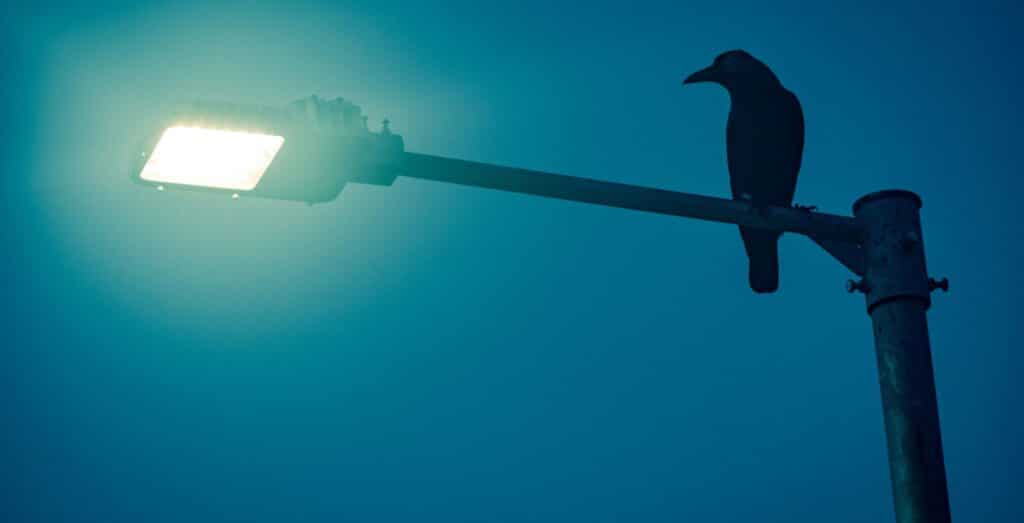
Light pollution is causing birds around the world to sing longer every day, extending their vocalizations by an average of 50 minutes, according to a new study by Brent Pease and Neil Gilbert.
In their analysis of more than 500 diurnal bird species, the authors also note that birds most exposed to light—whether due to having large eyes or open nests—are the most affected by light pollution.
Researchers know that light pollution, which affects 23% of the planet, is influencing activity patterns governed by the circadian cycle of light and darkness in individual species.
The new study is the first to document this phenomenon in birds across multiple species, habitats, and seasons. It is not clear whether these impacts are positive, negative, or neutral for avian fitness, but “documenting these effects on fitness and reducing light pollution are challenges for conservation in the twenty-first century,” the authors write.
Pease and Gilbert analyzed 2.6 million observations of the onset (morning) of bird vocalizations and 1.8 million observations of the end (evening) of bird songs.
The data come from the BirdWeather project, which includes records from volunteer scientists, automated biodiversity monitoring, and machine learning. The researchers found limited evidence of the effects of habitat density, latitude, and species richness on the interaction of light pollution with vocalizations, but note that their database remains too incomplete for some regions and species to definitively measure these effects.