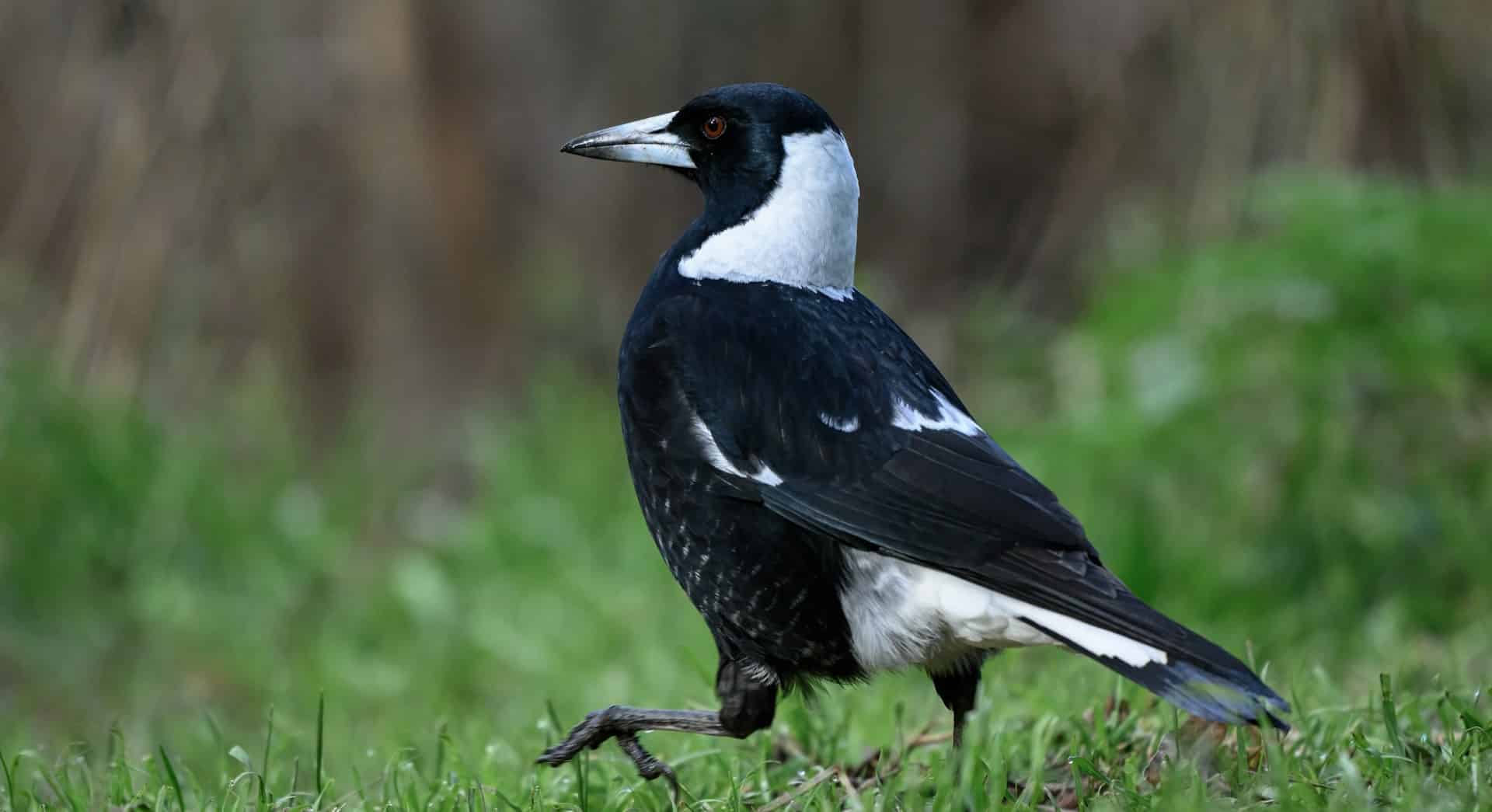
Magpies can be considered Australian immigrants, but a new investigation reveals that their relatives lived in Aotearoa New Zealand 19 million years ago.
Magpies were introduced from Australia in the 1860s and, since then, New Zealanders have developed a love-hate relationship with this sometimes aggressive bird.
The researchers—from Flinders University (Adelaide), the University of New South Wales (Sydney), the Canterbury Museum and Te Whare Wānanga o Waitaha University of Canterbury—spent more than two decades unearthing and analyze fossils discovered near St Bathans, in central Otago. They have now found fragments sufficient to describe a new species, which was an ancestor of the bird that today threatens New Zealand.
The newly discovered bird, which the researchers named the St Bathans Currawong, lived in New Zealand about 19 to 16 million years ago. It probably became extinct near the end of the Miocene, an era spanning from 20 million years ago to 5 million years ago. The ancient bird would have been about the same size as the Australian magpie currently found in New Zealand, but was likely all black.
The co-author and senior curator of Natural History at the Canterbury Museum, Paul Scofield, says the research, published today in PalZ, challenges New Zealand’s views of the much-maligned magpie.
“We pursued the magpie as an Australian who has no place in New Zealand’s ecosystem, but its close relatives lived here in the past,” he says.
“Probably, we don’t have a member of the magpie’s extended family dating back as recently as 5 million years,” he adds.
Trevor Worthy, co-author and associate professor at Flinders University, says that New Zealand’s ecosystem has changed drastically over millions of years and housed various species at different times.
“There is a notion that we should try to return New Zealand to a pre-European ecological state,” he notes.
“But at that time, New Zealand’s ecosystems were changing continuously for millions of years. Aotearoa had lost much of the floral diversity that existed when humans arrived. Only a few fruit-tree species remained, and the loss of pigeons reflects that,” he adds.