The Zero association today advocated the establishment of mental health teams to assist recurring arsonists, who often display “addictive behaviours,” and called for greater stability in nature conservation policies.
These warnings were voiced by Paulo Lucas, representative of the environmental association Zero, during an action by Livre in the National Forest of Leiria, as part of their parliamentary journeys that began today with a focus on the central region of the country.
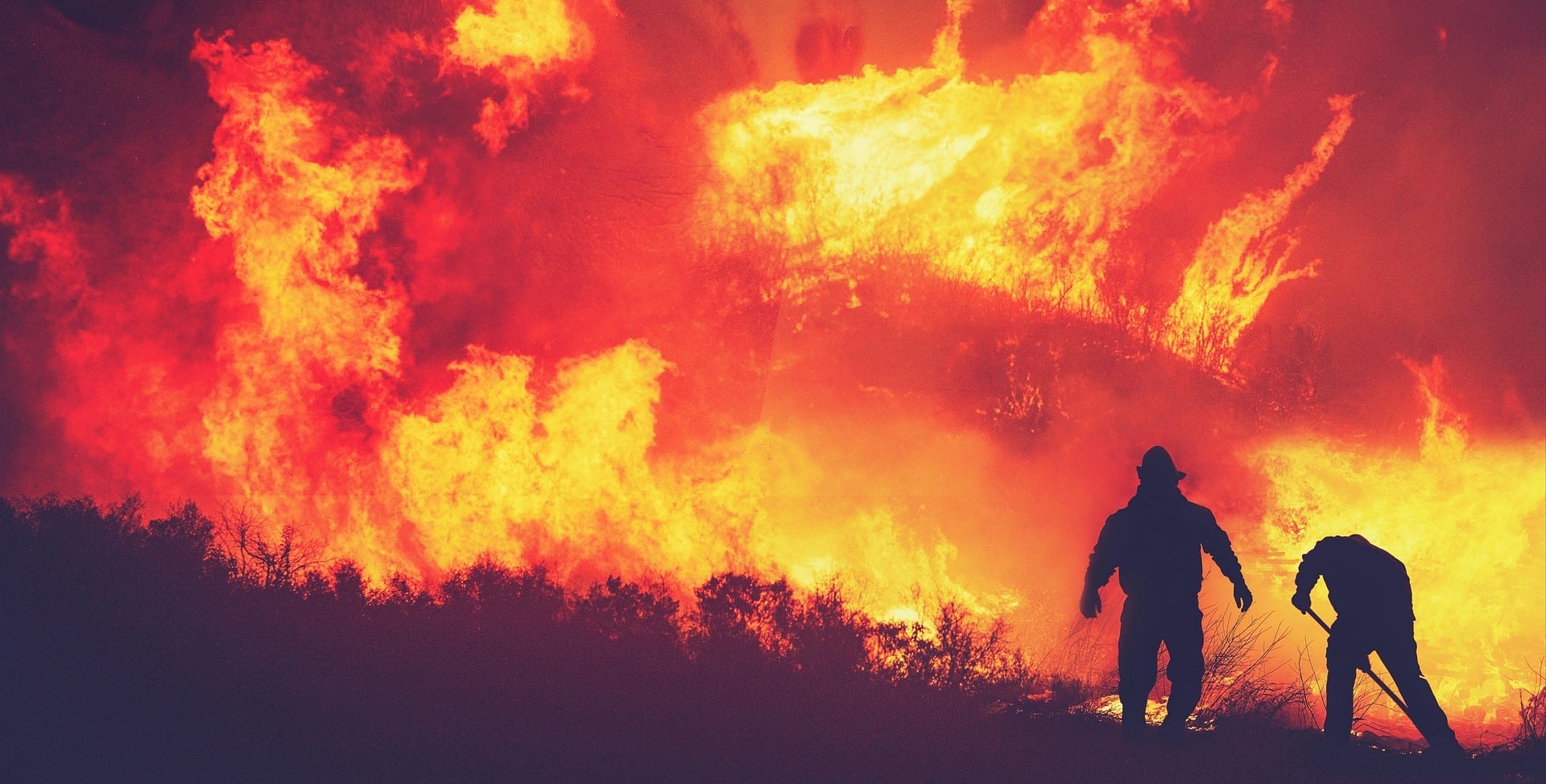
At a time when the rural fire season approaches, and the Summer has brought high temperatures to the country, Paulo Lucas stressed that “the forest does not burn alone” and that “99% of fires have human origins”.
“From the discussions we see [during fire season] it seems that the forest self-immolates,” he quipped.
Paulo Lucas acknowledged that “there is a lot of negligence” with burnings or the use of machinery, but stressed that rural fires are a “social phenomenon.”
“There are people who continue to do it recurrently and, at times, imprisonment is not a solution,” he emphasized, advocating the creation of “mental health teams” to help these arsonists cope with “addictive behaviours.”
The Livre spokesperson and parliamentary leader, Isabel Mendes Lopes, accompanied by a delegation of deputies from the party, was at the National Forest of Leiria this morning, where she also heard Paulo Lucas calling on the party to “keep a tight rein” on the government.
The official referred to the new National Plan for Nature Restoration (PNRN), presented by the Government this month, and which envisages 500 million euros per year until 2030.
Sceptical that the funds will reach the ground, Paulo Lucas called for a “state commitment” so that this plan “does not become a fiasco.”
The Zero association leader also complained of “a lot of instability” in public policies in this area: “Leaders like to come in and change the policies of their predecessors,” he lamented.
Conservation of nature, he continued, should not be “subject to political dispute,” but rather a “national consensus,” which he said is reflected in the Forest Plan 2050, approved by Parliament.
Margarida Gonçalves, representative of ICNF – Institute for Nature Conservation and Forests, recalled that in 2017, 90% of the National Forest was affected by the fires that year, followed by Storm Leslie in 2018, and more recently the weather disturbances at the start of the year.
“It’s not easy, it hasn’t been easy; at the end of last year we had practically all the area affected by the fires recovered,” she lamented.
Questioned by Isabel Mendes Lopes about the status of many of the trees that remained fallen on the ground after the storms, the official added that 97 kilometres of roads in the forest have already been cleared, reporting difficulties in selling the wood collected.
“It’s impossible by summer to remove all the wood; it’s a virtually impossible mission,” she warned, explaining that the priority is to clear around homes.
Despite the adversities, Margarida Gonçalves stressed that the associations and on-the-ground entities “do not give up” and continue to work to conserve the National Forest of Leiria and its biodiversity, notably through a project that plants different types of trees in the forest and aims at the “active restoration” of the territory.