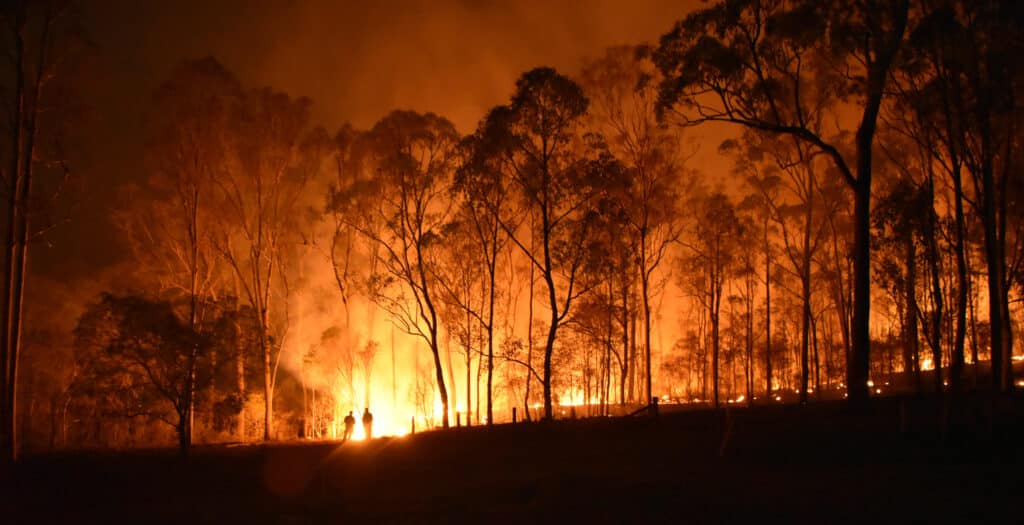
Less than 1% of fires recorded this year accounted for 81% of the burned area, announced yesterday by the Institute for Nature Conservation and Forests, adding that 42% of fires originated from burning and brush clearing.
The provisional report on rural fires from the Institute for Nature Conservation and Forests (ICNF), covering the period from January 1 to July 31, indicates that fires with burned area under one hectare are the most frequent this year, with only five “largest-scale fires” (burned area equal to or greater than 1,000 hectares).
The five “largest-scale fires” were the ones that broke out in July in the municipalities of Valpaços (13,849), Vouzela (12,804), Guarda (4,889), Chaves (1,215) and Alijó (1,128).
The ICNF report also indicates that up to July 31 there were 44 “large fires”, resulting in 43,573 hectares of burned area, about 81% of the total burned area.
The document, released today on the agency’s website, states that between January 1 and July 31 there were a total of 5,755 rural fires that resulted in 53,731 hectares burned, across plantations (24,129), scrubland (22,724) and agriculture (6,878).
“The year 2026 shows, up to July 31, the fifth-highest number of fires and the third-highest burned area since 2016,” the report states.
Years with higher burned areas were 2017, with 146,508 hectares, and 2022, with 61,745 hectares, according to the document.
ICNF also indicates that 81% of the fires recorded this year and responsible for 30% of the total burned area were investigated, with the most frequent causes being burns and brush clearing (42%), arson (16%) and reignitions (8%).
The report also notes that the highest number of fires occurred in the districts of Porto (860), Braga (549) and Viana do Castelo (506), while the districts most affected by burned area up to July were Vila Real with 14,368 hectares and about 27% of the total burned area, followed by Viseu (8,172 hectares and 15% of the total) and Bragança (8,064 hectares and 15% of the total).