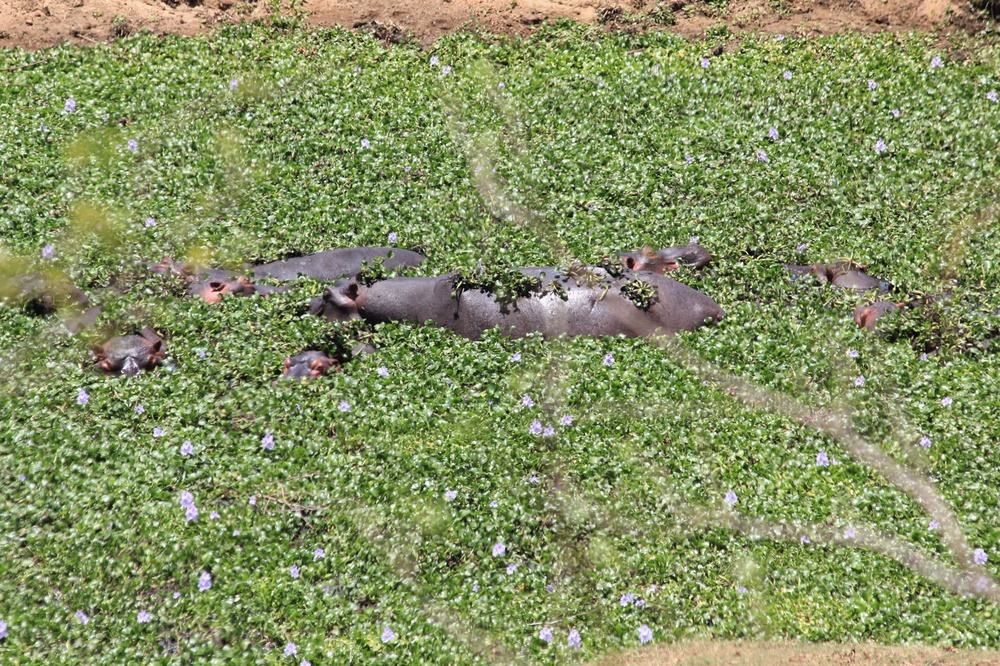
The proliferation of invasive alien species, introduced intentionally or not, outside their natural range and that compete with native species, is considered one of the major threats to global biodiversity.
However, the assessment of impacts has been uneven, with most studies conducted in Global North countries, such as North America and Europe, leaving out the Global South, where impacts can be much greater.
In a paper published recently in the journal Science, researchers from Switzerland, the Czech Republic and Germany argue that in the Global South invasive alien species cause damage that is significantly higher than in the Global North. And they explain that this is due to the combination of rapid economic growth with a weak capacity to prevent and respond to biological invasions.
To reach this conclusion, the trio of scientists, instead of merely counting invasive species, created a new metric they named “average impact gravity,” which relates the number of severe impacts, such as local extinctions of endemic populations, with all locally reported ecological impacts.
The researchers believe that, with this approach, it is possible to have a clearer and more in-depth understanding of the real impacts of invasive species on the planet’s biodiversity. Although the number of reported invasive species is greater in the Global North, the relative severity of the impacts, they explain, is more pronounced in the Global South.
“Invasive species that cause damage in both the Global South and the Global North cause 50% more damage in Global South countries compared with Global North,” explains Hanno Seebens, of Justus Liebig University Giessen and co-author of the study.
“Especially in emerging economies of South America, Africa and Asia, invasions frequently have catastrophic ecological consequences,” he adds.
High rates of economic growth and intense global trade, which promote the introduction of new species, combined with underdeveloped state structures, with high levels of corruption and weak capacity to deal with biological invasions, make Global South countries particularly vulnerable to the impacts of invasive species, the researchers highlight.
“Although Global North countries have many invasive species, intensive ecosystem management prevents them from having massive impacts,” says Sven Bacher, of the University of Freiburg and the first author of the article.
“In contrast, the growing economic potential of emerging economies acts as a driver for the introduction of invasive species, while the institutional capacity to respond lags behind,” he stresses.
The researchers say that prevention is the best way to avoid the impacts of biological invasions, but that this requires effective ecosystem management structures in all countries and “intensive international cooperation.”
“If we want to overcome the global biodiversity crisis, we must bridge the management gap between the North and the South and stop marginalizing the regions most affected by invasive species,” concludes Bacher.