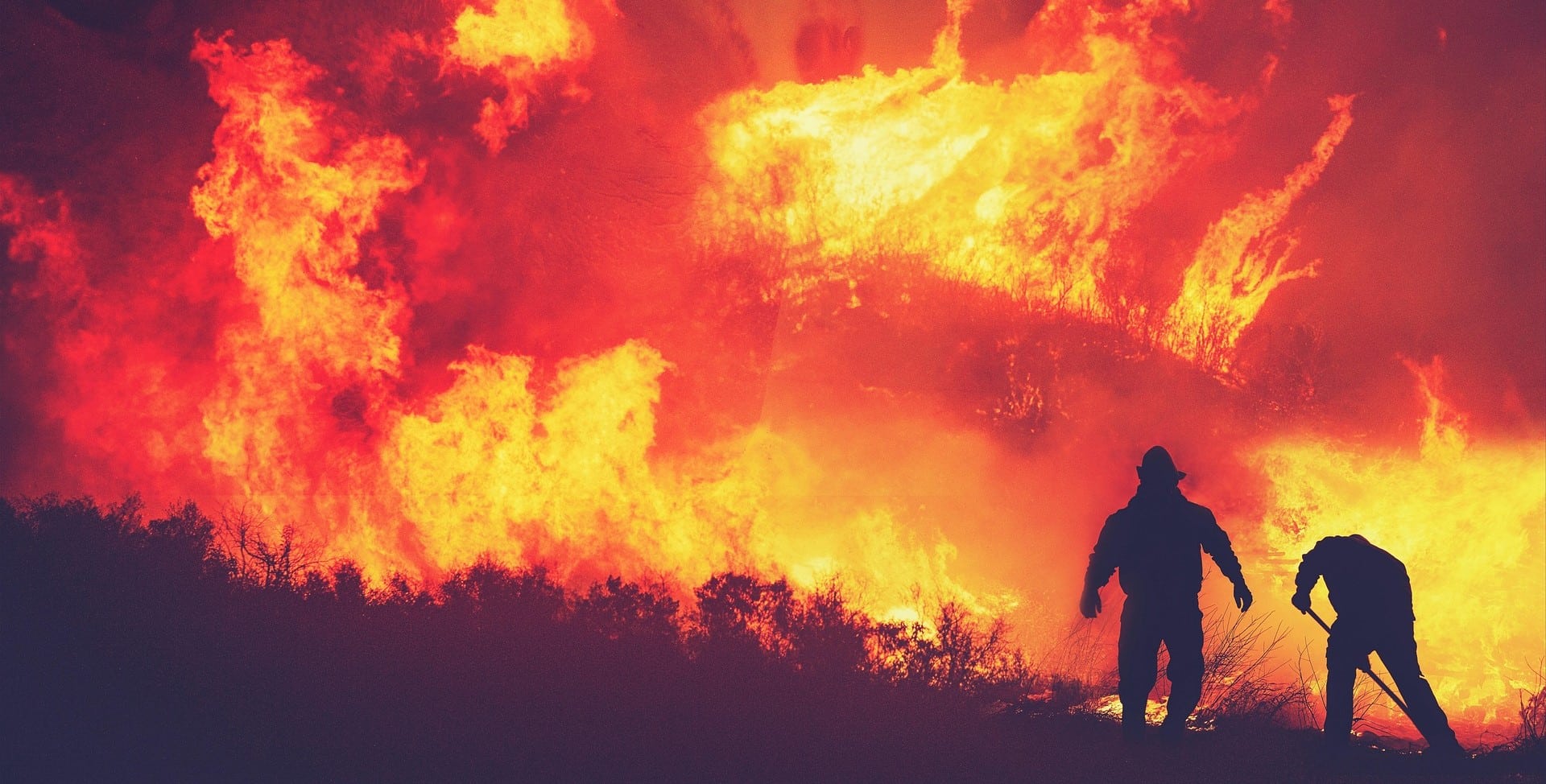
Portugal has for decades faced a problem of rural fires without “political investment” proportional to their severity, warned the Independent Technical Commission created by Parliament to assess the 2025 fires, proposing 20 recommendations that it considers priorities.
“Portugal has for decades had a problem with rural fires far greater than that of any other European country, without there having been to date a political investment proportional to the importance and severity of the problem,” states the report of the Independent Technical Commission (CTI), which evaluated the rural fires of August 2025 and the evolution of the system since 2017.
In the document, delivered last week to Parliament, the 12 specialists who analyzed the response to the 2025 fires present 20 recommendations “assumed as priority and feasible,” considering that “there is little point in increasing investment in fuel management if the suppression system does not know how to make full use of the opportunities created by that investment.”
Among the recommendations, the CTI proposes that the Government, with the Parliament’s oversight, adopt a program for the implementation of the three base principles of the National Plan for Integrated Management of Rural Fires (PNGIFR) – “the closer integration of prevention and suppression, professionalization and qualification, and intervention specialization” – centered on concrete measures with operational impact.
The specialists also argue that the operational structure of the National Authority for Emergency and Civil Protection (ANEPC) “evolve from a model based predominantly on appointed positions to a career model” and call for a review of the training and qualification requirements needed to access command roles.
The CTI also proposes that the funding model for the firefighting teams evolve to multi-year programme contracts that “fund availability, readiness, qualification, maintenance and effective operational performance,” and that prolonged operations have sufficient personnel to guarantee the full replacement of the teams involved, without compromising the minimum rest and recovery periods for the operators.
The experts also argue that there should remain at each fire a single ultimate person in charge, who is responsible “for commanding the entirety of the operation, establishing priorities, coordinating sectors and ensuring planning, safety, communications and shared logistics,” in addition to stating that the personnel involved in the fight must know the territory.
Reviewing the operations management system, improving the information supporting operational management and the registry of major fires, rationalizing the initial attack according to the potential for fire expansion, adopting an Operational Communications Strategic Plan during emergencies, expanding the Safe Village and Safe People programs, and approving a national framework of capabilities and qualifications for Municipal Civil Protection Services are other recommendations proposed by the CTI.
The report concluded that the reform introduced after the 2017 fires failed, showing that the country did not have the capacity to respond to the major fires of the past year.
The document notes that, despite the two independent commissions created after the Pedrógão Grande tragedies and the October 2017 fires, as well as the legislative changes approved to reform the rural fire prevention and suppression system, the years 2022, 2024 and 2025 demonstrated that the changes implemented since 2018 did not significantly reduce large fires or their impacts.
Among the identified failures, the report points to the incapacity to control fires in the early moments, the fact that the fire remained out of control for several days (in 2025, the duration of fires was four times longer than normal), difficulties in managing the fires, as well as a poorly defined command structure, a lack of aerial resources and exhausted operational personnel with insufficient preparation for large-scale fires.
Last year there were 8,256 rural fires and 271,587 hectares burned, corresponding to the fourth largest area burned since official records began, and the Pedrógão fire, in the municipality of Arganil, with more than 65,000 hectares, was the largest recorded in Portugal.