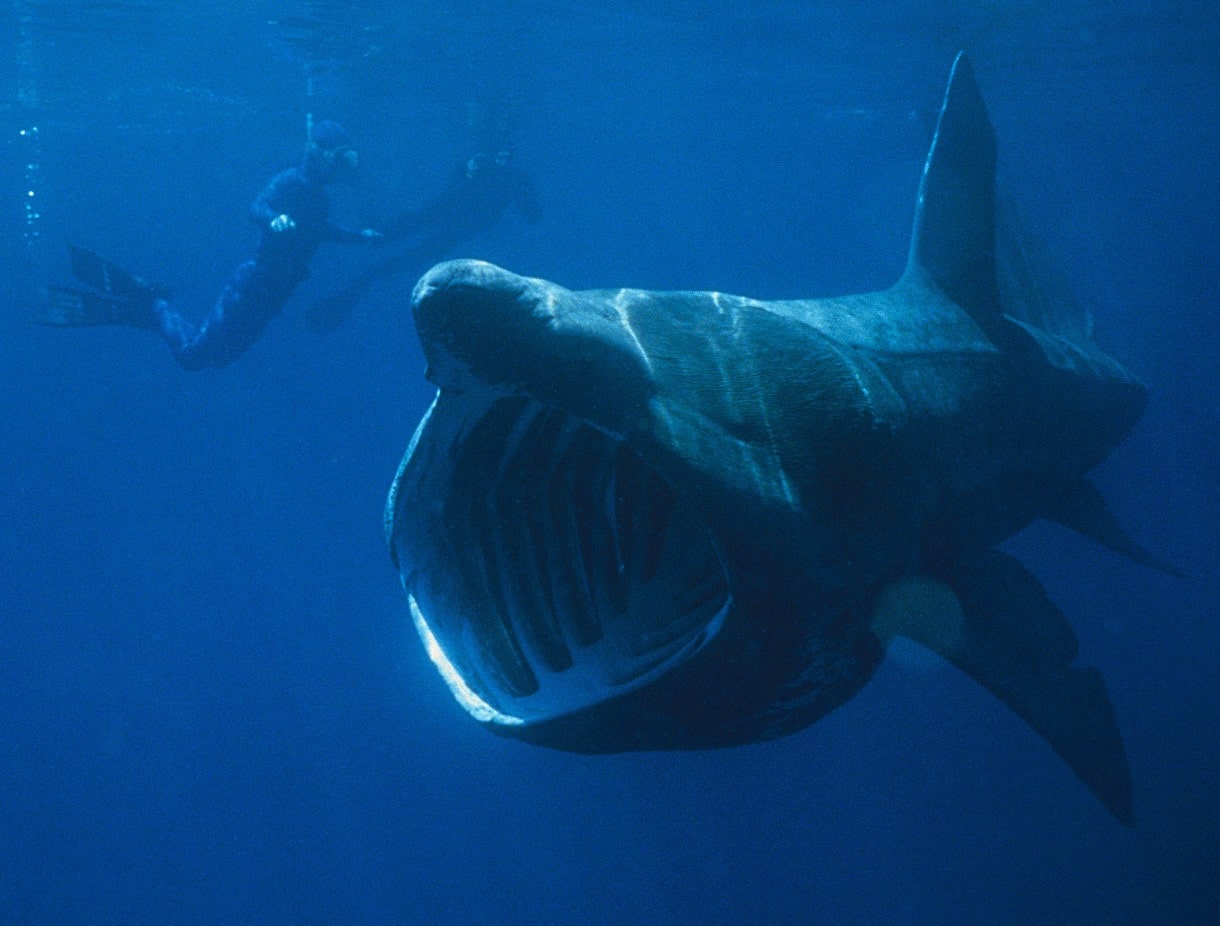
The basking shark (Cetorhinus maximus), known for swimming slowly with its large gaping mouth to filter the zooplankton it feeds on, is the second-largest fish in the world, second only to the whale shark.
It is listed as “Endangered” on the IUCN Red List, with a global population trend in decline. Among the major threats are bycatch in fishing gear, the hunting for its fins, and collisions with vessels.
Contrary to some regions within its range, in the waters of the Republic of Ireland basking sharks find what scientists describe as an “important seasonal refuge.” This statement, put forward in an article published in the journal Endangered Species Research, is based on the analysis of 2,718 sightings recorded between 1978 and 2024.
The work, led by University College Dublin and the Irish Basking Shark Group, reveals that every year the sharks return to the Irish sea, especially to waters around the Blasket Islands, the southern coast of County Cork, the Inishowen Peninsula, and the Malin Head region in County Donegal.
The peak of observations occurs each year, in the spring and summer months, the researchers explain, suggesting that this may be related to peaks in zooplankton abundance in the Irish marine waters.
“Our results suggest that, contrary to what happens in many other parts of the world, basking sharks continue to be present in Irish waters,” says Alexandra McInturf, first author of the paper and coordinator of the Irish Basking Shark Group.
“This is a good sign for the status of their population in this area and also suggests that Ireland constitutes an important habitat for this globally endangered species,” she adds.
In addition to identifying the locations that appear to be most important for basking sharks, the researchers were also able to discern that both the number of sightings recorded and the size of the concentrations of these animals have increased over the years.
“It is difficult to know what has driven the rise in basking shark sightings in Irish waters in recent years, but it could be due, at least in part, to natural phenomena such as shifts in the main feeding areas used by basking sharks in the Northeast Atlantic, or changes in other behaviours,” speculates Ruth Leeney, of University College Dublin and who also co-authors this article.
“We still have much to learn about these gentle giants that live along our coast, and it will be essential that future investigations include detailed data on environmental factors, such as the distribution of the zooplankton on which basking sharks feed,” says the researcher.
The authors of the study argue that protecting these seasonal refuges can help safeguard important habitats for the species and assist in efforts to conserve it.