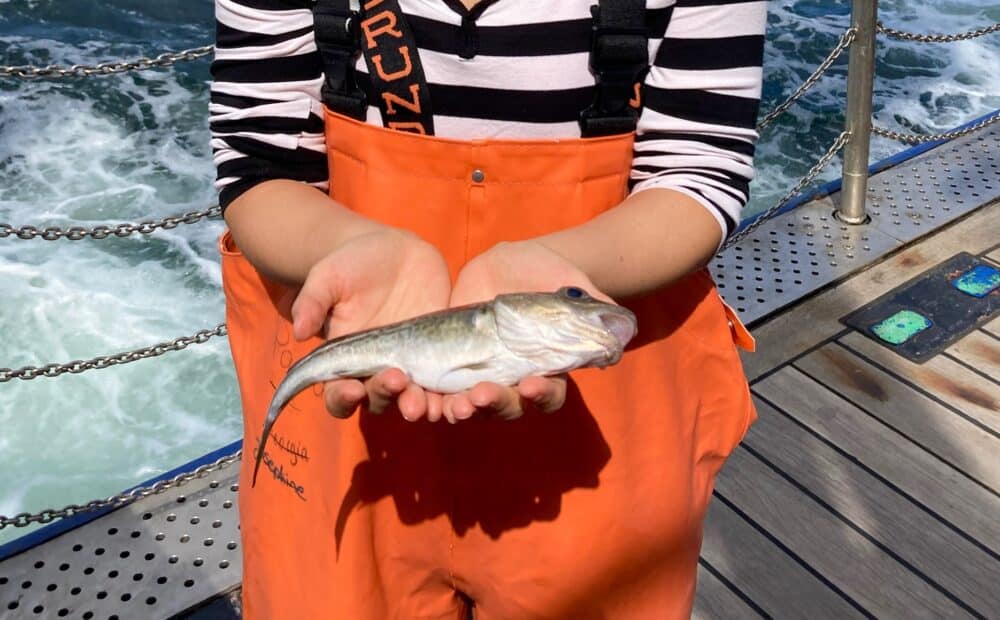
Between 1996 and 2019, the average length of the Atlantic cod (Gadus morhua) in the Baltic Sea declined by 48%, from around 40 centimeters to 20 centimeters. And the cause was overfishing.
Since 2019, directed fishing of this species has been prohibited in this marine region, in an attempt to recover its populations, which were nearly driven to collapse due to overexploitation.
A study led by GEOMAR – Helmholtz Centre for Ocean Research Kiel (Germany), whose results were published in the journal Science Advances, reveals that the reduction in both the size of the Baltic cod population and the length of the fish themselves “is the result of human influence.” Decades of intensive fishing “profoundly affected” the genetic composition of an entire species, which “used to be giants.”
The scientists compare otoliths to the rings in tree trunks, since they also serve as records of the growth of the animals.

Through genetic analyses, the researchers concluded that Atlantic cod with fast-growing genomes have virtually disappeared, the result of overexploitation in that region of the world. Therefore, only slow-growing cod remained, which reach reproductive age earlier, and with smaller sizes. As they are smaller, they have been spared, unlike the larger fish.
“When the larger individuals are systematically removed from the population for many years, smaller fish that mature more quickly gain an evolutionary advantage,” explains Thorsten Reusch, one of the study’s lead coauthors.
“What we are observing is evolution in action, caused by human activity. It is scientifically fascinating, but ecologically very worrying,” acknowledges the researcher.
The smaller Atlantic cod that survive produce fewer offspring, and it is believed that the genetic traits that code for faster growth and slower maturation may have even disappeared from this Baltic population.
All evidence suggests that, despite the fishing ban, the Eastern Baltic cod remain small, showing that the recovery of lost traits takes much longer than their decline, when recovery is possible.
“Our results demonstrate the profound impact of human activities on wild populations, even at the level of their DNA,” emphasizes Han. “And they also highlight that sustainable fishing is not only an economic issue, but also a matter of conserving biodiversity, including genetic resources.”