The feces of the earliest animals may have played a far more important role in the evolution of life than previously thought. An international study led by Flinders University in Australia proposes that a true ‘fecal revolution’ contributed to triggering the so-called Cambrian Explosion, one of the most remarkable periods in Earth’s history.
The investigation, published in the scientific journal Trends in Ecology & Evolution, presents a new perspective on the events that occurred about 540 million years ago, when most major animal groups emerged and the first complex marine ecosystems developed.
Until now, this phenomenon had been explained largely by the increase in oxygen levels in the oceans and by other environmental changes. However, the researchers argue that the growing production of fecal matter by the earliest animals may also have been decisive.
According to the authors, the emergence of more complex digestive systems led to the production of larger quantities of waste rich in organic matter and nutrients, which came to be distributed across the seabeds.
These nutrients would function as a kind of natural fertilizer, enriching ecosystems and creating favorable conditions for the emergence and diversification of new life forms.
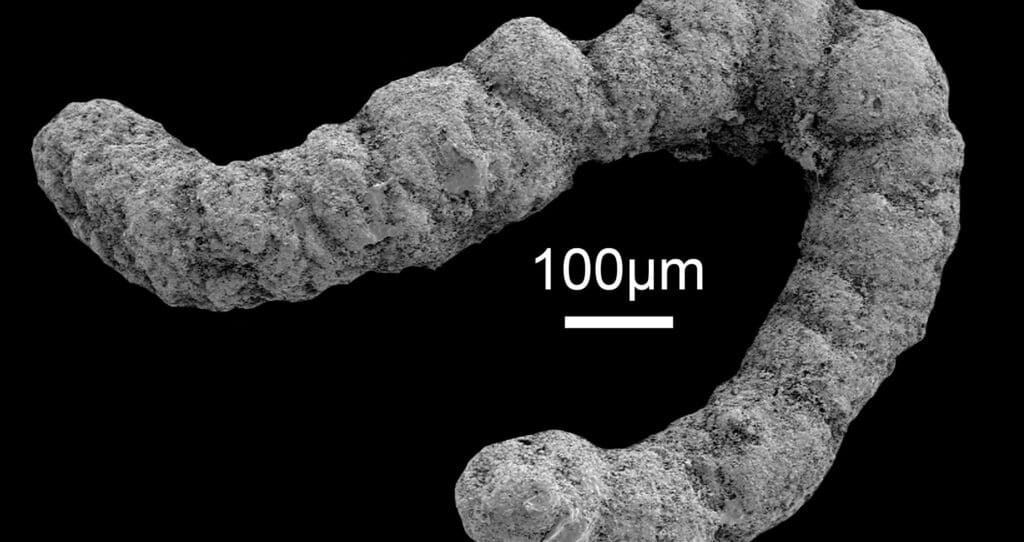
The team based its conclusions on the study of coprolites — fossilized feces — and digestive systems preserved in fossils from more than 35 deposits spread across the world.
As the Cambrian period progressed, both coprolites and the digestive apparatus became more varied and sophisticated. The researchers identified everything from tiny microscopic particles to fossilized feces several centimeters long containing fragments of shells and remains of other animals.
According to Russell Bicknell of Flinders University, this evolution reveals that the early arthropods and other organisms developed increasingly diversified feeding strategies and digestive systems capable of processing a greater variety of foods.
The authors argue that this shift significantly increased the circulation of organic carbon and nutrients in primitive oceans, accelerating ecosystem development and fostering the rapid diversification of animal life.
Although the rise in oxygen levels continues to be regarded as a fundamental factor in the Cambrian Explosion, the researchers suggest that the role played by feces has been underestimated and should become part of the explanations for this important chapter in Earth’s life evolution.
For the team, understanding how nutrients circulated in the oceans hundreds of millions of years ago also helps explain the origin of the biogeochemical cycles that continue today to sustain the planet’s ecosystems.