One of the things you learn in science class is that nature constantly tries to kill us, says RealClear. However, there are creatures that, faced with the harshest conditions for life, would hardly die. Meet the true survivors, here.
1. Devil worm (Halicephalobus mephisto)
Survives: high temperatures, lack of oxygen, and high pressure
This species of organisms, belonging to the phylum Nematoda, was only discovered in 2011 and was found more than 3.5 kilometers deep. These organisms spend their entire lives in total darkness, feeding on water more than 12,000 years old and small bacteria.
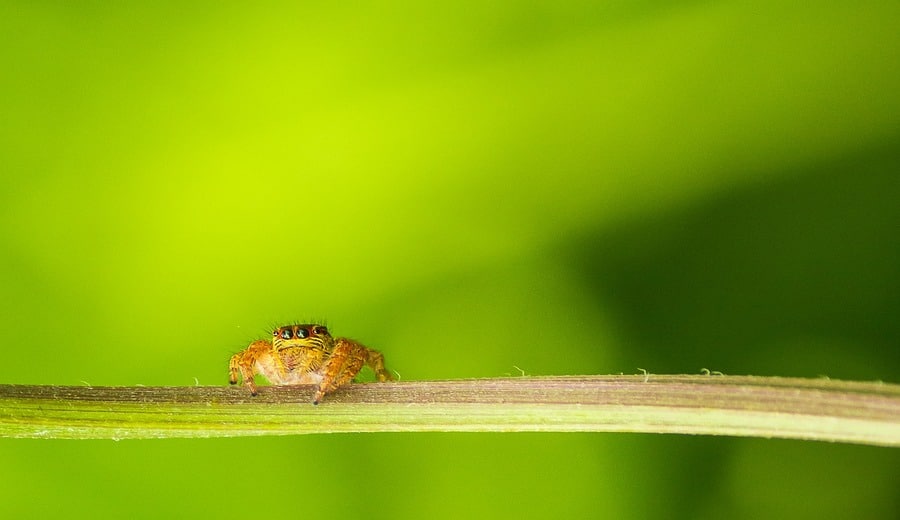
2. Himalayan jumping spider (Euophrys omnisuperstes)
Survives: low pressures, low temperatures
The Himalayan jumping spider is the animal that lives at the greatest altitude, about 6.6 kilometers above sea level. It can survive long periods without food and withstand temperatures well below zero degrees Celsius. It is also prepared to endure low atmospheric pressures. The only source of food for this animal are small insects, which are carried to high altitudes by the wind.

3. Immortal jellyfish (Turritopsis dohrnii)
Survives: natural aging process
This jellyfish has the ability to revert to its juvenile stage in adverse conditions, which makes it theoretically immortal. According to studies conducted on this jellyfish species, there seems to be no limit to the time this regressive aging can occur. However, when returning to the earliest stages of life, these animals become vulnerable to disease and predators.

4. Red flat-carapace beetle (Cucujidae clavipes)
Survives: freezing temperatures
This insect, native to places such as Alaska and Canada, can survive freezing temperatures down to around minus 150 degrees Celsius. This beetle produces a protein that prevents its blood from freezing. In turn, the blood of this animal is enriched with glycerol that slows the freezing process.

5. Pompeii worm (Alvinella pompejana)
Survives: high temperatures, large temperature fluctuations
This ocean worm lives exclusively in deep-sea hydrothermal vents. When hunting, Pompeii worms leave half of their body inside the hydrothermal vent, which means that the tail is subjected to temperatures around 80 degrees Celsius, while the head remains outside the vent, thus at a much lower temperature. It has a coating on the surface of its body of specialized bacteria that allows this being to withstand large temperature variations.

6. Tardigrade
Survives: almost everything
Tardigrades are a phylum of small segmented animals, relatives of arthropods, commonly known as water bears. Microscopic in size, these beings can live in almost all conditions. They can survive temperatures from zero to 149 degrees Celsius, atmospheric pressures 1,200 times higher than normal. They also survive dehydration, since they can go ten years without water. As for radiation, they withstand a lethal dose a thousand times higher than the lethal dose for humans. To test the tardigrade’s resilience, in 2007, RealClear notes, a group of scientists sent these creatures into space. The animals returned completely unscathed. When observed under a microscope, these beings have a strangely adorable appearance.