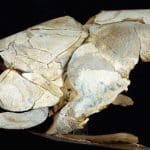
A study about the saber-toothed tiger Megantereon, predator the size of the modern jaguar that lived during the Pliocene and Pleistocene in Eurasia, Africa and North America, confirmed that it had upper canines that remained exposed even when the mouth was closed.
Scientists arrived at this conclusion after the detailed study of how the facial muscles and associated soft tissues would be organized, as well as the cranial and mandibular anatomy of these felids, which would have this feature, unlike other saber-toothed cats such as Machairodus and Homotherium.
The results of this investigation, led by the National Museum of Natural Sciences (MNCN-CSIC) and in which the Teruel-Dinópolis Joint Paleontological Foundation participated, revealed how the upper canines remained outside the mouth in certain species of felids.
Megantereon had very long upper canines that were laterally compressed and a jaw with a strong ventral projection from its anterior part, nearly as long as the canines themselves, the Government of Aragon detailed in a statement.
Data obtained from contemporary species were compared with those provided by several Megantereon skulls from Chinese and French sites, which allowed the study of cranial proportions and the inference of the structure and arrangement of the facial muscles and lips.
The work is part of the COEVOFEL project – Cone-toothed felids vs. saber-toothed tigers: origin, coevolution and paleobiology, awarded by the Ministry of Science, Innovation and Universities, and led by Manuel Salesa (MNCN-CSIC).