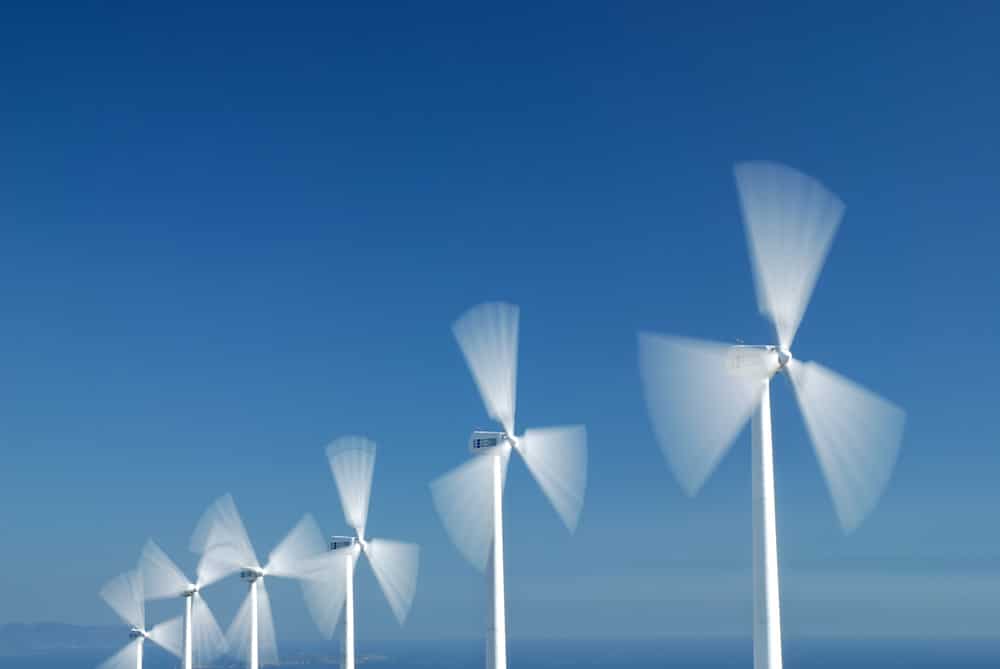
The proposed scope definition for the Chaves Highlands Wind Farm project, which envisages the installation of 20 wind turbines, is now open for public consultation, according to the Participa portal.
The project proposed by AER SOLÉIR Investments Portugal, Unipessoal, Lda. is located in the municipality of Chaves, in the Vila Real district, covering the parishes of Faiões and Águas Frias, the Union of Parishes of Eiras, São Julião de Montenegro and Cela, and the Union of Parishes of Planalto de Monforte.
The study area covers the Chaves Highlands Wind Farm and two corridors for the development of the electrical connection to the Public Service Electric Network (RESP), designated Corridor A and Corridor B, which will extend through the municipalities of Chaves and Valpaços.
The scope definition proposal (PDA) is a preliminary and mandatory phase of the Environmental Impact Assessment (AIA) procedure for renewable energy production centers, with which the aim is to determine the scope of the Environmental Impact Study (EIA) to be developed in a subsequent phase.
According to the document consulted by the Lusa agency, the project consists of the installation of a renewable energy production center comprising a wind farm, to be developed on a contracted area of 668 hectares, with the installation of 20 wind turbines, each with a capacity of seven megawatts (MW).
The wind farm will be implemented on four contiguous common lands located in the Chaves Highlands, namely the common lands of Faiões, Sobreira, São Julião de Montenegro and Avelelas.
The rights for licensing, construction and operation for a period of 40 years are secured with the common lands of São Julião and Avelelas since 2024 and with the common lands of Faiões and Sobreira in 2025, via contract of exploitation cession of the common lands.
The energy produced at the wind farm, estimated at around 231 gigawatts (GWh), will be injected into the public electrical grid through an overhead transmission line, the technical solution of which, notably with regard to the nominal voltage and the connection point to the RESP, is still under definition.
It is estimated that the construction phase will last approximately 17 months and, for the operation phase of the wind farm, an estimated lifespan between 35 and 40 years is considered.
The positive impacts on reducing greenhouse gas emissions are highlighted, especially in a global context marked by a significant energy crisis and the worsening impacts of climate change, along with the socio-economic benefits (direct and indirect) for the populations that will be felt already in the construction phase and will extend into the operation phase (increased income for landowners, job creation, stimulation of the economy).
Regarding the negative impacts, among others, are noted effects on terrain morphology, soil loss, changes in natural water drainage and quality, as well as loss of habitat and fauna.
In May, a study directed at the Iberian wolf was started, which is being conducted monthly, with three days of fieldwork per month, consisting of the detection of signs, for example droppings, and the monitoring of the species using camera trapping.
There are currently 10 cameras placed, four of which are located near the project area, and preliminary data point to the existence of at least one pair of adult wolves using the planned wind park area, as well as the recording of two cubs in late August, confirming the occurrence of pack reproduction.
The public consultation runs until the 25th.
The licensing authority for this Project is the Directorate-General for Energy and Geology (DGEG), with the Portuguese Environment Agency (APA) acting as the Environmental Impact Assessment Authority (AIA).