|
Country Information |
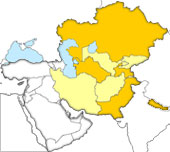
Kazakhstan
is a sparsely populated, multiethnic society. It hosted
some 20,000 refugees at the end of 2000, most of whom were
Chechens from the Russian Federation. A new land ownership
law came into effect in February 2001, allowing individuals
to buy land for small holdings, industrial or building purposes.
All land had been owned by the state. HIV infection is on
the rise because of the proliferation of intravenous drug
use.
As
part of a growing trend towards authoritarianism throughout
Central Asia, Kazakhstan's parliament in 2000 overwhelmingly
voted to grant President Nursultan Nazarbayev lifelong powers
and privileges. Nazarbayev was initially elected in 1991.
He dissolved parliament and called for a referendum in 1995
to extend his term until 2000. The country is struggling
to establish a cohesive national identity, develop its vast
energy resources and strengthen relations with neighbouring
states and other foreign powers. In recent months there
has been growing evidence of an emerging opposition movement
which Nazarbayev is attempting to silence. Senior opposition
figures have been arrested.
The
indigenous Kazakhs, a mix of Turkic and Mongol nomadic tribes
who migrated into the region in the 13th century were rarely
united as a single nation. Conquered by Russia in the 18th
century, Kazakhstan became a Soviet republic in 1936. During
the 1950's and 1960's agricultural "virgin lands" programme,
Soviet citizens were encouraged to help cultivate Kazakhstan's
northern pastures. This influx of immigrants (mostly Russian,
but also some deported nationalities) changed the ethnic
mix, resulting in non-Kazakhs outnumbering native Kazakhs.
Following the demise of the Soviet Union and independence,
many of the newcomers to the country have chosen to emigrate.
Kazakhstan
has the potential to be a world-class oil exporter. An oil
pipeline linking Kazakhstan and the Russian Black Sea coast
officially opened in November 2001. Financed by a consortium
including the American, Russian and Kazakh governments,
the pipeline could provide 20 million tonnes of oil per
year by 2002. American companies have invested more than
one billion dollars in the project. Kazakhstan's economy
grew sharply in 2000, aided by increased prices on world
markets for its leading exports of oil, metals and grain.
Despite its resources and foreign investment, serious economic
hardship persists for the majority of the population.
|
|
| Country
Data |
| Capital |
Astana |
|
|
| Population |
16.7 million
|
|
|
| Life Expectancy |
63.38 |
|
|
| GDP |
$98.1 billion (purchasing power parity)
|
|
|
| GDP per capita |
$5,900 (purchasing power parity) |
|
|
| Political structure |
Presidential (dominant party) |
|
|
| Independence |
16 December 1991 (from the Soviet Union) |
|
|
| Ethnic Groups |
Kazakh (51 percent), Russian (30 percent), Ukrainian (3 percent),
Uzbek (2 percent), Tatar (1 percent), other (13 percent) |
|
|
| Religions |
Sunni Muslim (47 percent), Russian Orthodox (44 percent), Protestant
(2 percent), other (7 percent) |
|
|
| Geography |
Extends east to west from the Caspian Sea to the Altay Mountains
and north to south from the plains of Western Siberia
to the oasis and desert of Central Asia. |
|
|
| Border countries |
Russia, Uzbekistan, China, Kyrgyzstan, Turkmenistan |
|
|
| Natural resources |
Petroleum, natural gas, coal, iron ore, manganese, chrome ore, nickel, cobalt, copper, molybdenum, lead, zinc, bauxite, gold, uranium |
|
|
| Agriculture products |
Grain,
wool, meat |
|
|
| Other products |
Machinery,
chemicals |
|
|
| Literacy rate |
99.1 percent (male)
97.7 percent (female) |
|
|
| Under five mortality rate |
58.95 (per 1,000 live births) |
|
|
| HIV/AIDS prevalence |
0.04 percent (adults) |
|
|
| External debt |
$11.6 billion (2001) |
|
|
| Economic aid |
No recent data available |
|
|
| Internally displaced |
Not applicable |
|
|
| Refugees |
Kazakhstan
hosts about 12,000 refugees from the Russian Federation
(mainly Chechnya), 5,000 from Tajikistan (mostly ethnic
Kazakhs), 2,500 from Afghanistan and about 500 from other
countries. |
|
|
Note:
Kazakhstan ranked 78 on the UN Development Program's Human
Development Index for 2003.
Additional details
|
|
|
| Links
|
Links to other sources
Interactive Central Asia Resource Project
US Committee for Refugees
US State Department Background Notes
|
|
Top
of the Page 
|
| ? |
|
View enlarged map
|