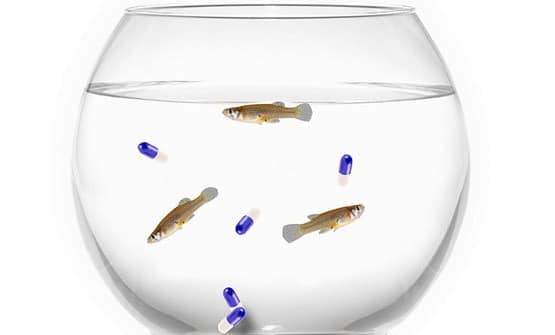
An international study conducted by biologists from Monash University and the University of Tuscia reveals how prolonged exposure to pharmaceutical pollutants is drastically altering the behavior, life history, and reproductive traits of fish.
A five-year investigation, focused on fish species caught in the wild and exposed to the antidepressant fluoxetine (Prozac), widely prescribed, highlights the deep and interconnected effects of this pollutant on aquatic ecosystems.
The study, led by Upama Aich from the School of Biological Sciences at Monash University and Assistant Professor Giovanni Polverino from the University of Tuscia, was published in the Journal of Animal Ecology.
Pharmaceutical pollutants, especially antidepressants such as fluoxetine, have become a widespread problem in bodies of water around the world. These pollutants, often introduced through wastewater discharge, persist at low levels in rivers, lakes, and oceans.
Despite their widespread presence, the total impact of these chemicals on aquatic wildlife, particularly on behavior and reproductive success, has remained poorly understood.
“Even at low concentrations, fluoxetine altered the body condition of the fish and increased the size of their gonopodium—while simultaneously reducing sperm velocity—a factor essential for reproductive success,” says Aich, from the School of Biological Sciences at Monash University.
“Exposure to fluoxetine also significantly reduced the behavioral plasticity of the fish, leading to a lower capacity for individuals to adjust their own activity and risk-taking behaviors in different contexts,” adds Assistant Professor Giovanni Polverino, from the University of Tuscia.
To explore the effects of antidepressant pollution, the research team exposed the animals to three environmentally relevant concentrations of fluoxetine over several generations. Subsequently, the team meticulously tested the fish’s behavior, physical condition, and reproductive health after five years of exposure to the pollutants.
The focus was on male fish, due to their greater sensitivity to environmental changes, particularly in traits related to behavior, body condition, and reproduction.
The investigators measured key life-history traits, such as body condition, coloration, and the size of the gonopodium (a modified anal fin used as a reproductive organ in males), together with critical sperm characteristics, including vitality, count, and speed.
Fluoxetine exposure disrupted the natural correlations between key traits. For example, the expected relationship between activity levels and body condition, and between gonopodium size and sperm vitality, was altered. This disruption indicates that the pollutant is interfering with the natural trade-offs that fish make between survival and reproduction.
The study reveals the extensive and nuanced impacts of pharmaceutical pollutants on aquatic life.
“Disruption of behavioral plasticity and the altered correlations between critical traits may compromise the ability of fish populations to adapt to environmental challenges, threatening their long-term survival,” says Professor Bob Wong, from the Faculty of Biological Sciences and senior author of the study.
These results underscore the need for a more comprehensive approach to evaluating the ecological and evolutionary consequences of pharmaceutical pollution.
As human activities continue to introduce new pollutants into the environment, understanding their effects on wildlife is crucial to preserving biodiversity and ensuring the health of ecosystems.
This investigation provides vital information on how chronic exposure to common pharmaceutical pollutants, such as fluoxetine, can fundamentally alter the traits that fish rely on for their survival and reproduction.
The results emphasize the need to address pharmaceutical pollution and to implement stricter regulations to protect aquatic life from this threat.