A block of ice that broke loose from a glacier and fell from several thousand meters in altitude into a river may be the origin of the catastrophe that occurred in Nepal and Tibet.
The theory about the catastrophe that caused hundreds of deaths and thousands of missing people, in a tally that is continually changing, is taking shape among scientists.
Here is how the catastrophe is believed to have unfolded, in a piece by the French AFP agency:
Glacier Collapse
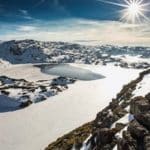
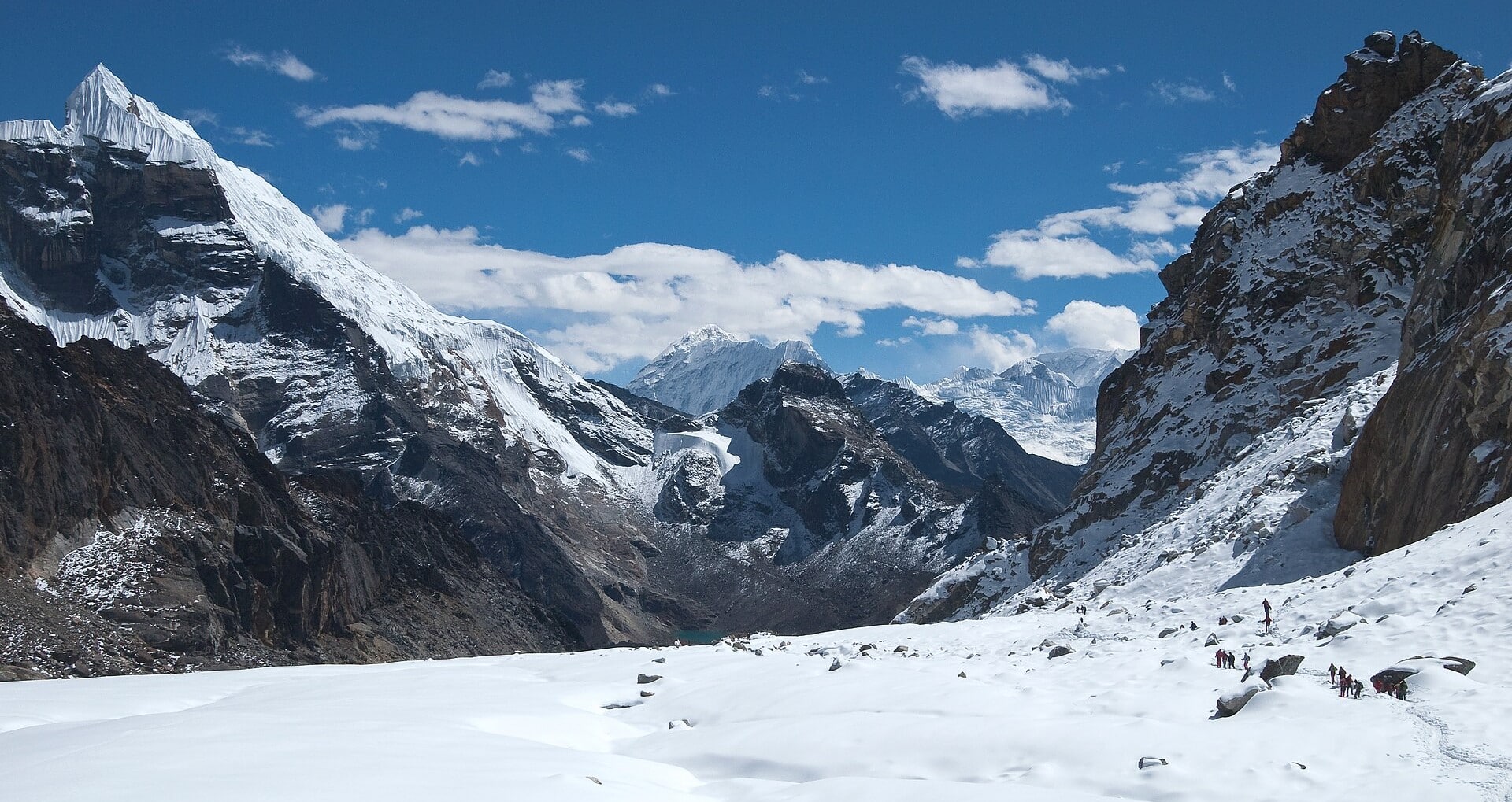
The collapse of a glacier in the Nepalese Himalayas, near the border with Chinese Tibet, seems to be the origin of the catastrophe.
“An enormous block of ice broke away from a glacier at about 5,200 meters above sea level” and fell into a valley, according to scientist Simon Cox of the New Zealand institute GNS Science.
At that moment, “it transformed into an out-of-control mass of debris (…) dragging rocks, sediments, trees and everything in its path, before rushing down the gorge,” he told AFP.
A massive brown surge first struck a border outpost, as shown by surveillance footage from the Chinese side, in which one can see a towering building and several people trying to flee as they were swallowed up in seconds.
The surge continued downstream in Nepal, dragging houses and their occupants.
Seismic Activity
The glacier collapse was so violent that it was mistakenly recorded as a seismic event of magnitude 5.2, occurring at 08:37 local time (03:52 in Lisbon).
However, after analyses, the United States Geological Survey (USGS) determined that “the seismic event was in fact a glacier collapse accompanied by a debris flow, and that no earthquake occurred.”
An assessment of the scale of the collapse will take time, Cox said, but could lie between “half a million cubic meters and several tens of millions of cubic meters.”
Glacial Lake Outburst Flood
Early hypotheses favored the possibility of a sudden discharge from a glacial lake, known by the acronym GLOF (Glacial Lake Outburst Flood), whose frequency and risk are increasing with climate change.
A GLOF occurs when a fragile natural barrier of debris that holds back a lake formed by glacier melt suddenly gives way, releasing the waters it contained.
According to several specialists, a GLOF could have contributed to triggering the catastrophe.
“The only reason why a large amount of water could have descended suddenly through the valley is that it was released all at once,” said Adrian McCallum, glaciologist at the University of the Sunshine Coast in Australia.
“Water flows inside and beneath glaciers,” he explained.
The ice block may also have briefly formed a natural barrier in the river, holding back water upstream before it gave way and released it all at once.
River levels are high at this season due to summer glacier melt upstream and the monsoon rains.
The volume of the surge was then amplified by mud and debris carried along for several kilometers as it advanced, Cox added.
Alerts
Nepalese authorities, informed of the first floods around 09:00 local time, immediately warned populations living along the river to “stay in safe zones.”
It is difficult to know how many people received the alert and how much time they had to put themselves out of danger.
Nevertheless, residents who receive alerts have few options, according to Hatim Sharif, a hydrologist at the University of Texas at San Antonio.
“Running will not help,” he said, nor “trying to drive away,” as the mud and the fast-advancing water form a deadly combination akin to “liquid cement.”
For the specialist, the only solution is to take refuge on a hill at least six meters high.
Climate Change
Although it is difficult to attribute at this stage a potential link between climate change and this catastrophe, planetary warming is a persistent pressure on the ancient ice rivers, experts explain.
The retreat of glaciers increases the risk of disasters, but also threatens the water resources on which downstream populations depend.
“The best way to reduce the risks would be to cut our greenhouse gas emissions to limit warming,” said glaciologist Lauren Vargo of Victoria University of Wellington, New Zealand.