The pronounced growth, in the last two to three years, of an invasive alga over extensive areas of the seabed off the coast of Sines is raising concern about its impact on biodiversity, a researcher warned today.
“This invasive alga, Rugulopteryx (okamurae), was detected about 10 years ago in the area of the Marina of the Port of Sines, in the Setúbal district, and since then there have been constant records,” explained Joaquim Parrinha to the Lusa agency.
According to the researcher from the University of Coimbra and the Center for Marine Sciences and Environment (MARE), “in the last two to three years,” the presence of this species “has grown quite a lot,” reaching “very large volumes.”
“With the increase in water temperature, there has been an exponential ‘boom’ in all zones down to 12 meters depth,” he explained, adding that in the shallower areas “everything is occupied” by this invasive alga.
And he cited Pessegueiro Island, in Porto Covo, where he conducts frequent dives: “The forest formed by this alga, while it is beautiful, is not natural for native species and it greatly hinders their development,” stated the also-owner of the Ecoalga company.
According to the researcher, the species is believed to have reached the Portuguese coast from the Mediterranean, first establishing itself in the Algarve and then moving northward.
The strong accumulation recently observed on some beaches in the municipality of Sines results, according to Joaquim Parrinha, from the sea’s agitation, which pulled part of the algae from the seabed and transported them to the coast.
“The sea moved a little, pulled some of the algae, and the result is a coast completely covered,” he summarized.
According to the researcher, the accumulation blocks light and reduces the availability of oxygen near the seabed, thus affecting species such as “the coralline algae, Sargassum, Laminaria and Codium.”
“They do not receive light, they do not receive oxygen and they die,” he explained, warning of biodiversity reduction and the occupation of “ecological niches” by this species.
Under these masses of algae, gas pockets form that “cause the eutrophication of the various underwater lagoons in the areas where it gets trapped.”
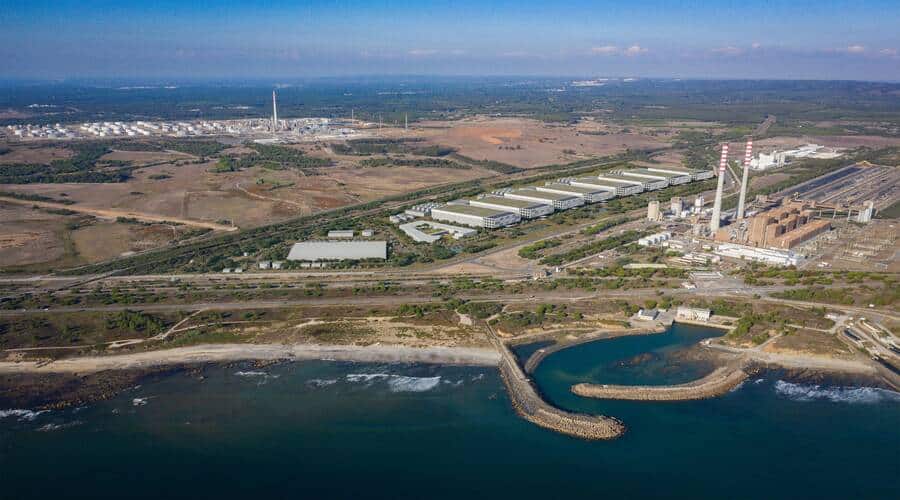
Joaquim Parrinha said he found the species along the stretch of coast between Melides, in the municipality of Grândola, Setúbal district, and Azenha do Mar, in the municipality of Odemira, Beja district, albeit with different levels of concentration.
The São Torpes area and Pessegueiro Island are among the most affected, he pointed out.
Despite the warnings, the researcher advocated removing the accumulated biomass from the beaches and studying its agricultural use, after being “properly washed to remove the salt.”
“The other option is, on land or underwater, to harvest this alga so that we have again the rock clean and free for the native algae, which we are interested in, if they attach and continue their normal life cycle,” he suggested.