

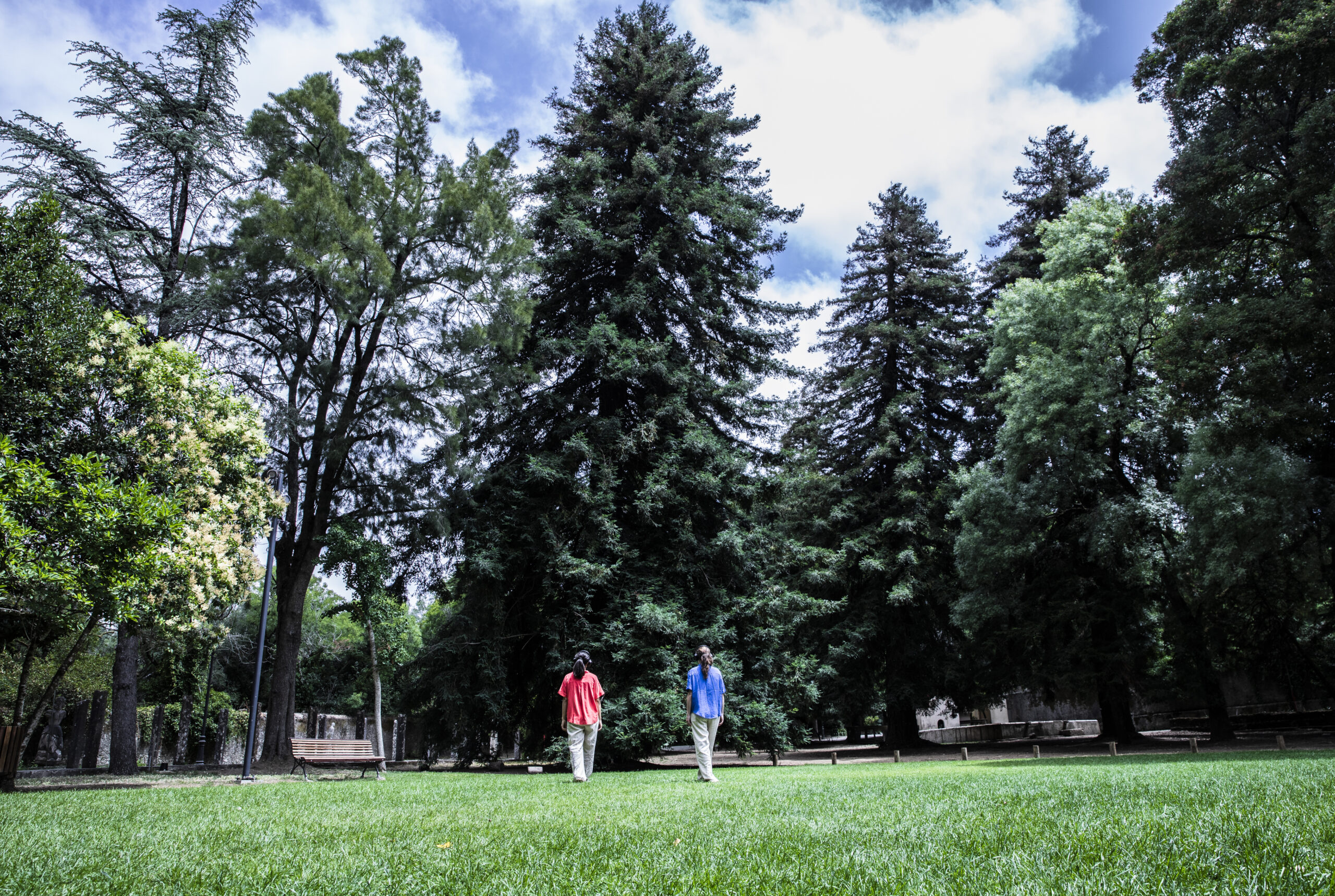
In a landscape marked by biodiversity loss, the fragmentation of natural habitats, and the growing impacts of climate change, the way we relate to forests gains renewed importance. It is precisely from this relationship — often distant and superficial — that Between the Trees, the latest show by Chão de Oliva, begins, inviting the audience to walk through Quinta da Ribafria, in Sintra, in an experience that crosses artistic creation, scientific knowledge, and direct contact with nature.
In an interview with Green Savers, artistic director Susana C. Gaspar explains how this project was born, inspired by the complexity of the plant world and the invisible connections that sustain forest ecosystems. Through a sensory and participatory approach, the show seeks to awaken curiosity about the life of trees and to encourage a deeper reflection on the need to protect the natural systems on which we depend.
Between the Trees proposes an immersive experience in direct contact with nature. How did the idea of creating a show centered on the relationship between trees and the forms of communication they establish among themselves come about?
In 2026, Chão de Oliva is dedicating its artistic production to the theme “ecogeographies,” where we establish a direct relationship between art and science and devote ourselves to an artistic research on biodiversity and climate change.
The theme we propose to address in the show Between the Trees thus arises in a very natural way. Trees are complex beings that, besides being fundamental to human life and to the rest of biodiversity, communicate in unexpected ways with one another. They have sensitivity, memories, and live in community. The show begins from this scientific discovery, but aims to go beyond information. We were interested in creating a sensory and poetic experience that invites the audience to know and interact with the forest in a different way.
A peça inspira-se em obras científicas, literárias e poéticas, bem como em testemunhos de profissionais ligados às florestas. Como foi desenvolvido o processo de investigação e de que forma estas diferentes fontes influenciaram a criação artística?
The original text draws on scientific literature, books such as The Wisdom of Trees by Peter Wohlleben or How to Read a Tree by Tristan Gooley, excerpts of poetry, original texts, and reports with statistical data and information on the current threats to biodiversity. It also drew inspiration from the book The Utility of Trees, by Mário de Azevedo Gomes, published by the Sintra City Council, which allows for an even more direct connection with the territory where this first piece is staged. These different books and voices, and the conversations we had with some people, inspired the dramaturgical process. It was difficult to select all the material and reach the “final assembly,” as everything fascinated us. Still, we are happy with the result. With the different texts and testimonials, we managed to express the plurality of the characteristics of trees and approach them from another perspective.
Nos últimos anos, tem aumentado o interesse público pelo chamado “mundo invisível” das árvores e das florestas. De que forma procuraram traduzir para o palco – ou, neste caso, para a paisagem – conceitos científicos complexos sem perder o rigor nem a dimensão poética?
Nature is an inexhaustible source of new knowledge and scientific understanding. That more technical language, however, can cause resistance from the general public. We believe that the approach in books such as The Secret Life of Trees or How to Read a Tree has helped spark interest in more people. It is no accident that some of these books have become bestsellers. There is also a growing curiosity among people, because they are not always taught in school or because scientific language is not always clear enough. Since we are not specialists, we are not biologists; our process was a kind of filter. We had to understand everything, and then explain it in our own words.
We believe that this distanced gaze, and also the poetic approach, can help other people better grasp some of these concepts as well. The poetic dimension has always been present in our approach. We let the landscape awaken our imagination without losing scientific rigor. We also had the premise from the start of reaching different audiences. And that is why the general version for adults and the version adapted for children emerged. They are experiences that happen simultaneously for adults and children, who have access to the same information, but with distinct languages (one more poetic, the other lighter and playful).
The show challenges the audience to interact with the natural space of Quinta da Ribafria. What role do the spectators play in shaping the experience, and how does this participation influence each session?
Yes, there is an invitation to this proximity with nature. To touch the trunk of trees, to smell, to feel. It is also a very sensory experience. Since groups are small in each session, there is a very strong complicity between the actresses and the audience and among the audience members themselves. There is constant sharing — everyone is guided through the sound experience in a kind of “bubble” within the landscape. We believe that each session will be different, depending on the interaction of the audience. If we have another season in a different space the impact will certainly be different, because the natural context around us will also be distinct. It is, therefore, a very flexible show that could accommodate different approaches.
The relationship between art and nature is at the center of the Ecogeographies cycle. What potential do you see in performing arts to promote greater environmental awareness and a deeper connection to ecosystems?
Nature and art have a deep historical bond. For centuries we have found them in dialogue in different formats, whether in paintings, sculptures, or even in theatre. Performing arts have the power to create a direct and emotional connection with the audience. We want, therefore, this to be a space of sharing, awareness, but also to create memories and action among the audience, so that it is possible to spark small changes in how each person relates to the planet and, more concretely, to trees and forests.
A escolha da Quinta da Ribafria, em Sintra, parece particularmente simbólica para este projeto. De que forma é que as características deste espaço influenciaram a dramaturgia, a encenação e o percurso proposto ao público?
The choice of Quinta da Ribafria, in Sintra, seems particularly symbolic for this project. How did the characteristics of this space influence the dramaturgy, the staging, and the route proposed to the audience?
The choice of Quinta da Ribafria was determining from the very start of the creative process. In developing a site-specific show, we sought that each moment dialogued with the characteristics of this space, valuing its natural heritage and creating a close relationship between the spectators and the landscape. The trees, the paths, the light, the natural sounds, and the history of this space influenced the way the narrative was constructed and how the audience experiences it.
Além disso, é um lugar que tem uma identidade própria e uma forte ligação ao território de Sintra, local com o qual o Chão de Oliva e a Companhia de Teatro de Sintra também têm uma ligação muito forte, pelo que fazia todo o sentido que fosse também um dos protagonistas deste espetáculo.
Moreover, it is a place with its own identity and a strong connection to the Sintra region, a place with which Chão de Oliva and the Sintra Theatre Company also have a very strong link, so it made perfect sense that it would also be one of the protagonists of this show.
Num contexto marcado pela perda de biodiversidade e pelos impactos das alterações climáticas, acredita que o teatro pode contribuir para uma reflexão mais ampla sobre a forma como nos relacionamos com o mundo natural?
We believe so. Theatre has the ability to transform complex themes into human and emotional experiences. While it does not, by itself, solve the environmental challenges we face, it can create spaces for reflection, dialogue, and questioning that help spark new ways of looking at the world.
O teatro tem ainda uma dimensão coletiva muito importante. É uma experiência vivida em comunidade, onde diferentes pessoas partilham o mesmo tempo e o mesmo espaço. Isso torna-o um lugar privilegiado para pensar os grandes desafios do presente e imaginar, em conjunto, formas mais sustentáveis de habitar o planeta.
Theatre also has a very important collective dimension. It is a community-lived experience, where different people share the same time and space. This makes it a privileged place to think about the great challenges of the present and to imagine, together, more sustainable ways of inhabiting the planet.
O espetáculo foi concebido para públicos de diferentes idades e inclui versões áudio adaptadas para crianças e adultos. Quais foram os principais desafios de criar uma experiência simultaneamente acessível, educativa e artisticamente estimulante para toda a família?
The show was designed for audiences of different ages and includes audio versions adapted for children and adults. What were the main challenges of creating an experience that is simultaneously accessible, educational, and artistically stimulating for the whole family?
The biggest challenge was finding a language that could engage different audiences without oversimplifying the content or losing the artistic dimension of the creation. We sought to build a show that would awaken children’s curiosity, but also provide moments of reflection for adults.
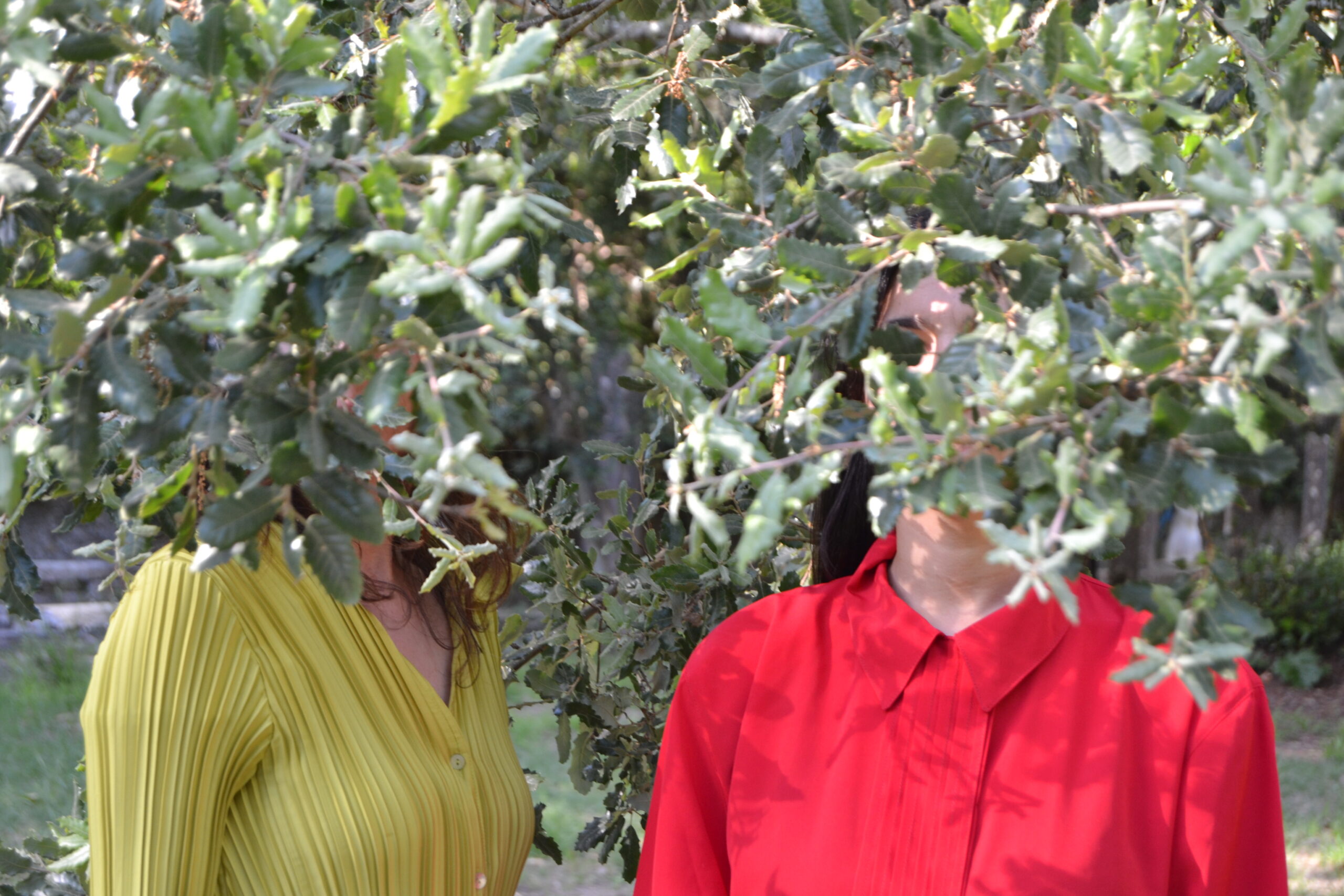
The adapted audio versions precisely allow responding to the different ways of receiving the show, making the experience more inclusive and suitable for various ages. Our goal was never to create a show “for children” or “for adults,” but a shared experience, where each person, based on their sensitivity and knowledge, can establish their own relationship with the trees, with the forest, and with the environmental issues raised by the show.
Entre as Árvores integra várias medidas de acessibilidade, incluindo folhas de sala em braille, percurso adaptado e interpretação em Língua Gestual Portuguesa. Até que ponto a inclusão tem sido uma preocupação crescente nas criações do Chão de Oliva?
Inclusion and accessibility have been a concern in the most recent work developed by Chão de Oliva and are part of the way we think about our projects from the start. More than adding accessibility measures at the end of the process, we seek for them to be integrated into the artistic conception of each creation, allowing an increasing number of people to fully enjoy the experience. We are still learning to do this, in a trial-and-error process, but we have been making that effort, following the work that other artistic entities have been doing as well.
In Between the Trees, this concern translates into different accessibility responses, such as Braille program sheets, interpretation in Portuguese Sign Language (to be on July 25) and audio resources designed for different audiences (audio description, general version, children’s version, and English version). These measures reflect the commitment to making culture more inclusive and to eliminating barriers that continue to limit access to performing arts for many people. We believe that a work of art is truly complete only when it can be lived by diverse audiences.
Depois de mergulharem no universo das árvores e das florestas durante este processo criativo, que mensagem ou sensação gostariam que os espectadores levassem consigo quando regressarem ao quotidiano?
We would like viewers to leave Quinta da Ribafria with a different gaze on the trees and the nature that surrounds them. We often pass daily by these living beings without noticing their importance, their complexity, or how they sustain life on the planet.
Se o espetáculo conseguir despertar mais curiosidade, mais atenção e um maior sentimento de pertença em relação ao mundo natural, acreditamos que já terá cumprido uma parte importante da sua missão. Não esperamos que o público saia com respostas fechadas, porém com vontade de observar, de fazer perguntas e de estabelecer uma relação mais próxima e consciente com as árvores e com os ecossistemas de que fazemos parte.
No fundo, esperamos que esta experiência permaneça para além da última cena e que funcione como um convite a cuidar da natureza, reconhecendo que o nosso futuro está profundamente ligado ao equilíbrio e à preservação da biodiversidade. Além disso, queremos também que seja um incentivo para as pessoas continuarem a visitar o património natural de Sintra, em particular a Quinta da Ribafria. É um espaço rico em biodiversidade e história que merece ser (re)descoberto.





