
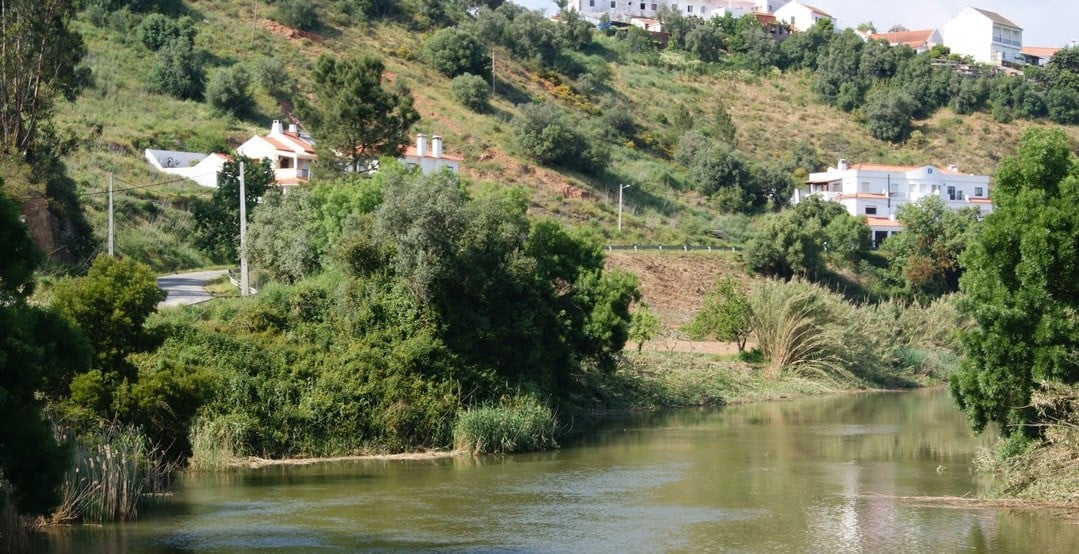
The Rio Mira, which crosses the municipality of Odemira, in the Beja district, will be dredged, in an investment valued at around 2.8 million euros and which should be completed by the end of next year.
The Technical Collaboration Protocol for the Ecological Restoration Intervention of the Rio Mira was signed this afternoon by the Odemira City Council and the Portuguese Environment Agency (APA), at a ceremony held in the Alentejo coastal town and attended by the Minister of the Environment and Energy, Maria da Graça Carvalho.
“It is a project that the people of Odemira have been waiting for a long time to make the river more navigable and also to renaturalize its banks and recover the ecosystems along the Mira,” the minister told the Lusa agency at the end of the ceremony.
The minister explained that, by the end of 2026, the execution project will be developed, in an investment valued at around 300 thousand euros and financed by the Environmental Fund.
The dredging works will take place over 2027, with an estimated cost of 2.5 million euros that will be submitted to the Sustainable 2030 thematic program or, alternatively, covered by the Environmental Fund, she added.
For Maria da Graça Carvalho, the Rio Mira “is a wonder and a sanctuary of nature, of beauty and of biodiversity”.
Moreover, she added, “it is a tourist attraction and [an] extremely important resource for this entire region.”
“Odemira lives very much around its river, as does Vila Nova Milfontes, hence the importance of this protocol,” she emphasised.
The Minister of the Environment and Energy also revealed to Lusa that the municipality of Odemira and Mértola, also in Beja district, may join the new National Restoration Plan as “pilot projects” for nature restoration.
For the President of the Odemira City Council, Hélder Guerreiro (PS), the dredging of the Rio Mira is “a very important investment” for the municipality, since it will allow the creation of “navigable conditions of the river, which is one of the main factors of cohesion in the territory”.
“That will also bring us new opportunities to enhance the river as a means of achieving more tourism, a differentiated tourism linked to the river and to nature,” he added.
The signing of the Technical Collaboration Protocol for the Rio Mira Ecological Restoration Intervention was the last moment of the visit by the Minister of the Environment and Energy to the municipality of Odemira.
The initiative included, in the morning, a technical visit to the Rio Mira, with the minister traveling by boat between Vila Nova de Milfontes and Odemira.
Then, in the afternoon, Maria da Graça Carvalho chaired a meeting in Odemira with the entities that make up the Mira Pact to analyze the status of the action plan for valorizing the river.
According to the minister told Lusa, during the meeting there were some concerns raised about the removal of the Blue Flag from Franquia Beach, in Vila Nova de Milfontes, and the state of some wastewater treatment plants.
The current situation of the Santa Clara dam, in this coastal Alentejo municipality, was also discussed, with Maria da Graça Carvalho arguing that “a careful management” of this infrastructure is necessary.
“There was an APA inspection in May and everything is functioning well and that is good, because we do not know what the winter will be like. There may be a severe drought as there could be a flood, therefore it is important to have everything functioning well and prepared for the scenario that may come,” she concluded.





