The City Hall of Idanha-a-Nova, in the district of Castelo Branco, voiced its opposition to the Sectoral Program for Zones of Accelerated Deployment of Renewable Energies (PSZAER) due to permanent and irreversible environmental impacts.
In a statement, the Idanha-a-Nova municipality says that it formalized the submission of an unfavorable opinion on the PSZAER official platform, expressing its opposition “to changes in the energy transition that would cause permanent and irreversible environmental impacts”.
The public discussion of PSZAER is ongoing until the 15th on the Participa Portal and constitutes a fundamental step for the participation of citizens, municipalities, environmental entities, promoters, associations and other interested parties in the process of defining the Renewable Energy Acceleration Zones (ZAER) on mainland Portugal.
A technical assessment of the proposed renewable acceleration zones identifies about 7% of the continental territory with potential to accelerate solar and wind projects, but warns that implementation depends on grid, licensing, market and public acceptance.
The conclusion is contained in the Strategic Environmental Assessment and the proposed Sector Program of ZAER, a technical work placed in public consultation regarding the final delimitation of the areas.
“The preservation of the landscape takes on a crucial importance for the municipality of Idanha-a-Nova, hence the municipality contests the visual degradation and the morphological disfigurement resulting from the installation of megacentres,” she stressed.
According to the local authority, these infrastructures foresee a cumulative impact of 5,351 hectares, which corresponds to about 4% of the municipality’s total area, which clashes with the well-being of local populations.
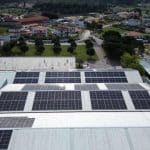
However, it reaffirmed the defense of the transition to clean energy sources based on decentralized production models, the use of built-up zones, the promotion of self-consumption and small-scale energy communities.
“These options ensure that the conflict with nature and with people is smaller.”
The municipality of Idanha-a-Nova reiterates its opposition “to the implementation of mass-scale projects that disfigure the natural heritage and compromise local progress.”
The President of the Municipal Chamber, Elza Gonçalves, assumes the purpose of “defending with uncompromising insistence the quality of life of the people of Idanha and of future generations” and rejects the premise that national decarbonization targets legitimize the sacrifice of the endogenous resources of local power.