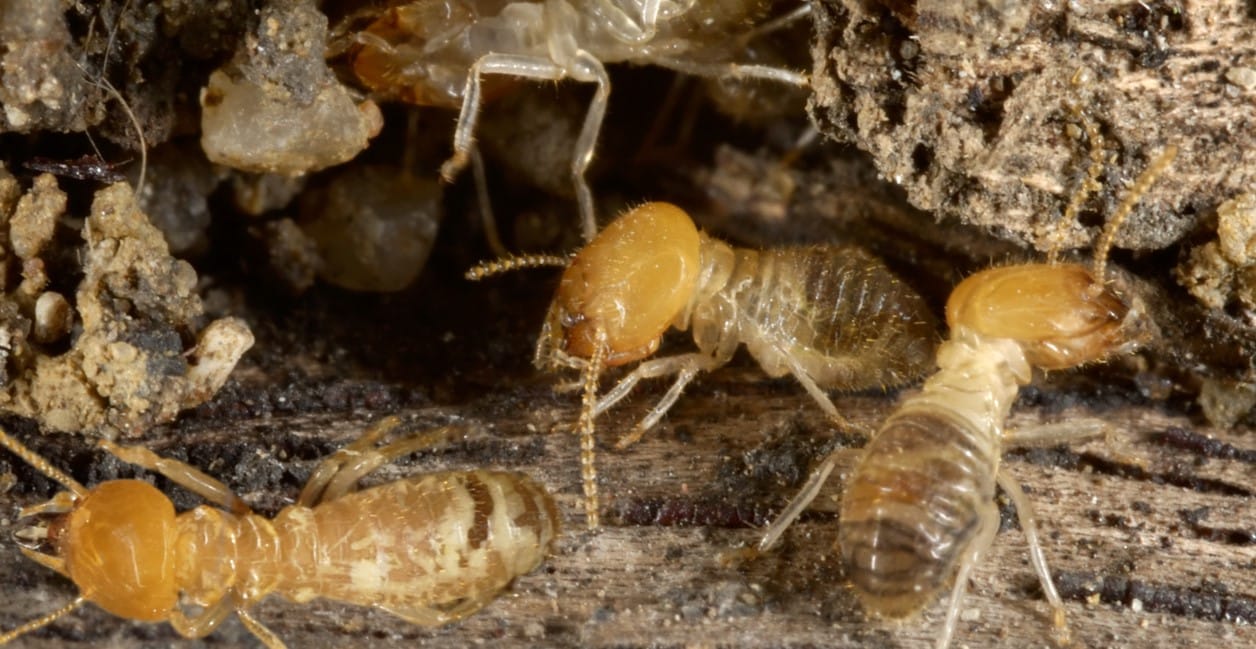
Non-monogamy and colony inheritance are the main causes of conflict among termites, but these social insects prove that you don’t always need a big brain to peacefully resolve even the most complex problems, according to an investigation by Charles Darwin University (CDU).
The author of the study, Judith Korb, a researcher at CDU and the University of Freiburg, studied a species of termite found in Darwin and its mangroves to analyze what mechanisms these invertebrates have developed to resolve conflicts.
Korb says that termites rarely deal with conflicts in an aggressive manner — most of the time, problems are resolved indirectly.
For example, she said that in cases of non-monogamous colonies with limited resources, termites resort to nepotism to keep their closest relatives fed and healthy.
“Non-monogamy among termites generally occurs when a colony is founded by more than one breeding pair or if ‘new blood’ is brought in due to fusion with neighboring colonies,” she explains.
“In a situation where there are several kings and queens — non-monogamy — and food is limited, that is where nepotism enters as a source of conflict,” she adds.
But when there is an abundance of food, they basically do not care whether there are several kings and queens and feed all nestmates, regardless of how close they are.
Alternatively, termites resort to direct conflict — head-butting and biting — when colony inheritance causes tension within the community.
Korb notes that worker termites can become the new king or queen when the previous one dies, with those who display the most dominant behavior inheriting the reproductive position.
However, they will only succeed in establishing themselves as royal members if they abundantly feed their nestmates — otherwise, they will be killed.
“This ensures that only the fittest individuals in good physiological condition will become the new king or queen,” she says.
Korb considers it important to understand the conflicts and resolutions of creatures like termites, because the evolutionary principles underlying their conflicts contain lessons for us, human beings.
“For example, there is conflict between human siblings, just as there is among termite siblings — although that tension in the first case today is more related to resources than to reproduction,” she says.
“By analyzing the difficulties of termites, we learn which mechanisms may evolve to resolve conflicts between small-brained species, so that they can live together socially,” she adds.
“I find it exciting how evolution always finds a way, and you don’t need a big brain to resolve conflicts. I even think that we, as human beings, don’t use our brains very often to solve problems, but we react emotionally,” she says again.