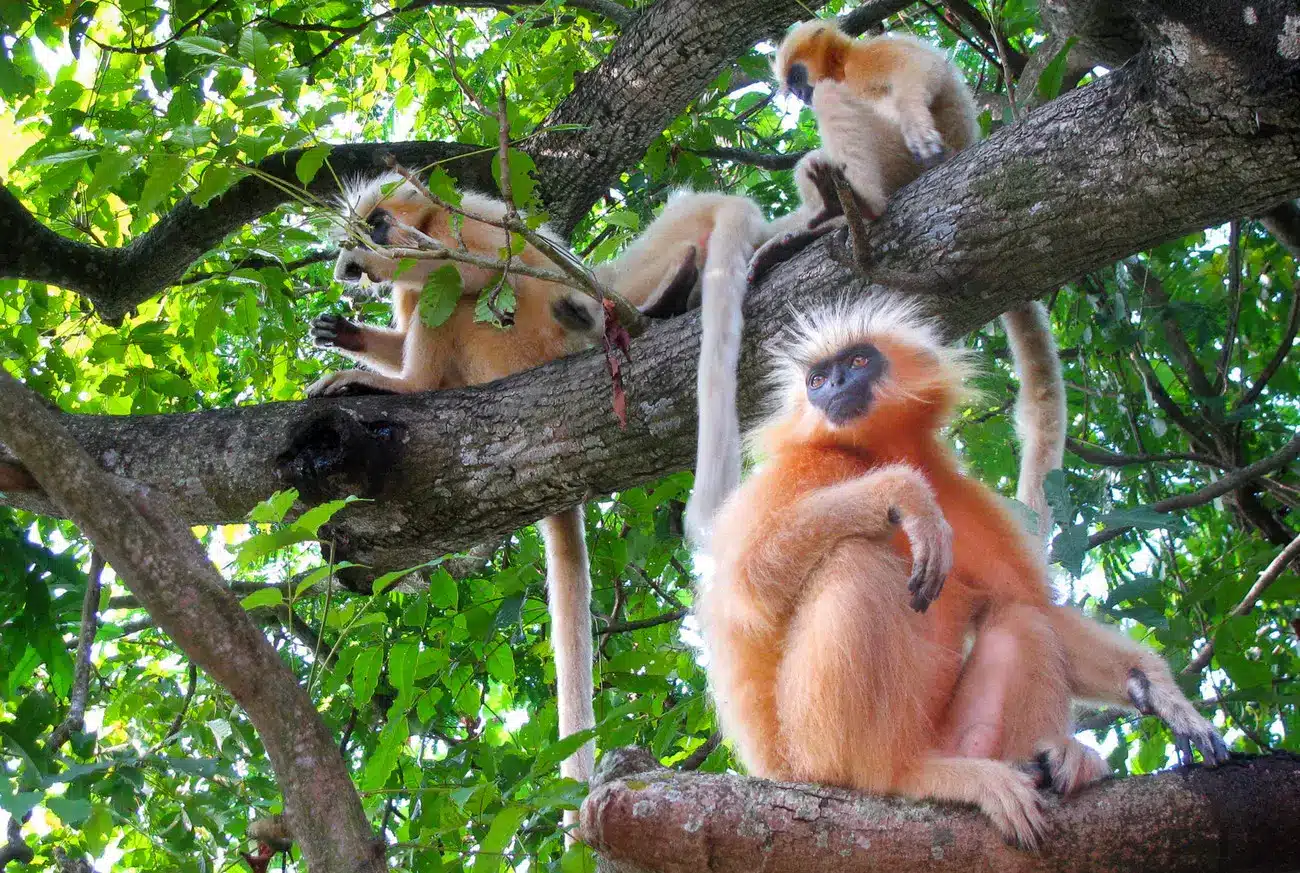
Seven golden langurs (Trachypithecus geei) were recently returned to the wild after an operation that dismantled a transnational wildlife trafficking network operating between India and Bangladesh.
The primates were seized on June 20 on a highway in the Indian region of Assam based on information gathered by the conservation organization Wildlife Trust of India.
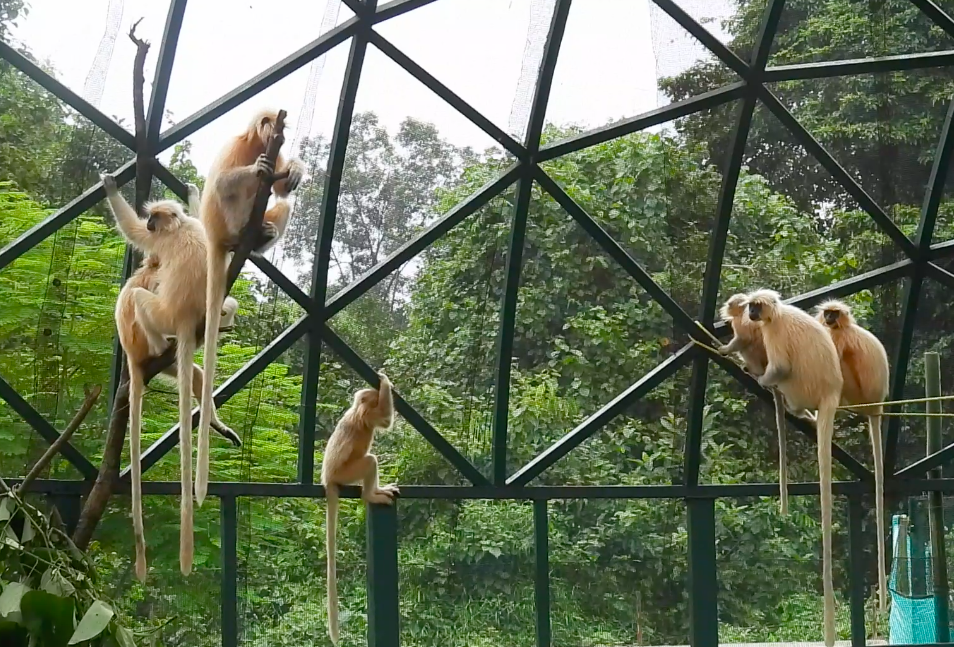
The suspects were illegally transporting eight golden langurs and, at the time of interception, one had already died. The remaining seven – two males, four females and one juvenile – were placed in the care of the Assam Forest Department and taken to a fenced enclosure in the Ultapani forest, in Sikhna Jwhwlao National Park, along the border with Bhutan, where they were temporarily housed.
There, they received veterinary care from teams of Wildlife Trust of India and also from the International Fund for Animal Welfare (IFAW). Meanwhile, investigations into the trafficking network continued.
The operation also led to the arrest of 11 people from India and Bangladesh linked to a wildlife trafficking network that operates in the Indian states of Assam and West Bengal and also in parts of Bangladesh. According to IFAW, authorities are continuing to search for other individuals suspected of belonging to this trafficking network.
Sanatan Deka, head of Wildlife Trust of India, says the traffickers relied on the cooperation of residents in the states where they operated, who captured the langurs in the wild. It is believed the animals were captured in Sikhna Jwhwlao National Park, which, after the incident, is said to have stepped up anti-poaching patrols.
The golden langurs are classified as “Endangered” on the IUCN Red List, with a declining population trend, numbering fewer than 14,000 individuals.
The species also has an extremely restricted distribution, limited to Assam in India and Bhutan, and continues to be under pressure, particularly due to habitat loss and the expansion of infrastructure such as roads and power lines.
“Combining poaching and trafficking with the list of threats to the species is extremely worrying,” says Deka.
After a period of recovery, the seven survivors were released and settled in the Ultapani forest, where they continue to be monitored by specialists to track their health and adaptation to the area. According to IFAW, the group remains together and is thriving.