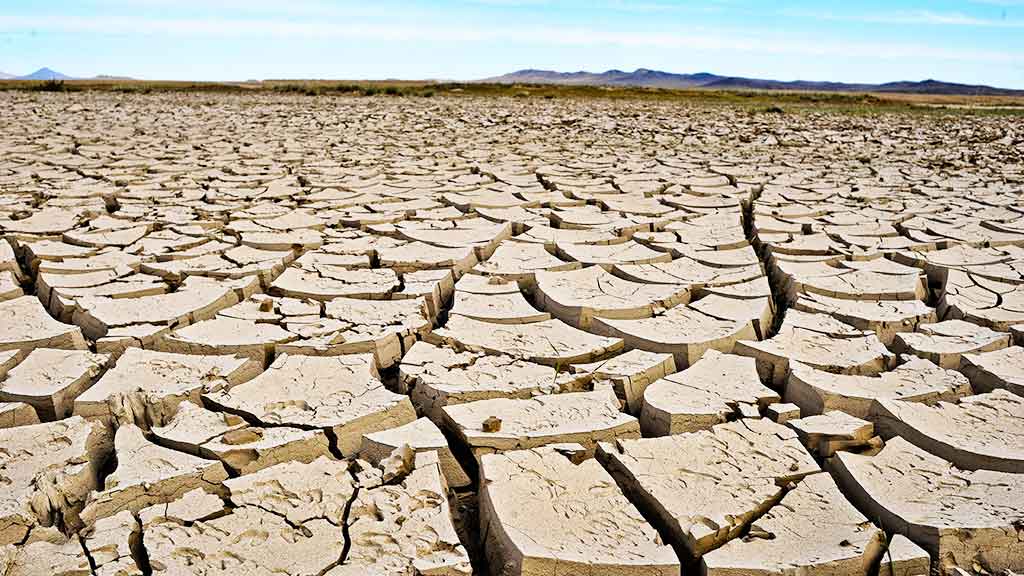
The record global heat triggered by the El Niño climate phenomenon, together with droughts, fires and fewer water resources, could cause up to 451,000 additional deaths worldwide by the end of February, a report released today warns.
The research from the Climate Impact Lab at the University of Chicago, in the United States, states that “up to 451,000 additional heat-related deaths between June and the end of February, compared with the expected number in a normal year, can be attributed to El Niño,” according to the American news agency Associated Press (AP).
It notes that the greatest number of victims is expected in the poorer countries, which are already facing food insecurity and high energy costs, partly due to climate change and the consequences of the war in Iran.
The study combines seasonal temperature forecasts with localized estimates of how high temperatures affect mortality in more than 24,000 regions worldwide.
Michael Greenstone, cofounder of the group and coauthor of the study, said that the danger of heat is likely to continue after February, although this El Niño is expected to end by then, adding that the consequences of the climate phenomenon could be felt until next summer.
The research shows that heat is more dangerous in places that are already hot and relatively poor, the scientist notes.
“If you are already in a hot place, a few extra degrees will be much more dangerous,” he said, cited by AP, adding that in wealthier places there is generally “greater access to air conditioning, a reliable water supply and functional health systems.”
According to the report, the Sahel region in Africa, which includes the countries along the semi-arid southern edge of the Sahara Desert, is expected to be the most affected, with about 66,800 additional deaths.
In the case of South and Southeast Asia and parts of Latin America, the researchers estimated about 19,400 heat-related deaths in the Philippines, Vietnam, Thailand and Cambodia, as well as 19,300 in Indonesia, 15,800 in India and 13,300 in Brazil, noting that heat alerts and cooling centers could prevent thousands of deaths.
El Niño normally occurs every two to seven years and lasts nine to twelve months, with the last one, in 2023 and 2024, making these two years the warmest on record.
According to the World Meteorological Organization, there is no evidence that climate change increases the frequency or intensity of El Niño events, but it is known that they can amplify their impacts.
The Climate Impact Lab indicated that Earth’s global temperatures during this El Niño could be about 1.2 degrees Celsius higher and cause “about 44% more extremely hot days than in a normal year.”
Noting that these temperature increases may reflect conditions that climate change could make common within about 20 years, the authors of the report consider that this El Niño is also an opportunity for decision-makers “to see exactly where actions can be taken now to save tens of thousands of lives,” AP reports.