It is already next Sunday, at Eduardo VII Park in Lisbon, that the international school Aprendizes (Cascais) marks a double presence at Cidade do Zero, the country’s largest sustainability event: Chef Joana Xardoné, responsible for the school’s kitchen (a waste-free, 100% organic kitchen built around local partners), presents a show cooking session on the full use of foods, and Eunice Maia, the school’s pedagogical director, participates in a round-table on the role of the school of the future. The two activities are free to attend and no registration is required, as announced in a statement.
Show cooking: learning to waste less
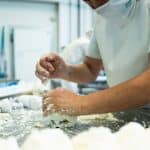
According to the same source, around 10:30 a.m., Joana Xardoné will present a show cooking session dedicated to reducing food waste. The chef prepares daily meals for about 550 students at the Aprendizes school, where the kitchen functions as an extension of the classroom: the foods used in daily meals come from local, organic and seasonal sources, including products from the school’s own garden.
In Cidade do Zero, she will prepare a seasonal recipe live, exploring techniques for the full use of ingredients and sharing practical suggestions to reduce food waste in everyday life.
It is worth noting that in Portugal, food waste continues to be a structural problem. According to data from the National Statistics Institute for 2024, each Portuguese person wasted more than 161.2 kg of food.
Round-table: what school for the future?
At 12:00, Eunice Maia joins representatives from the Mendes Gonçalves Foundation and from Educa-te in a round-table discussion about the role of the school in a world marked by the climate crisis, social inequalities and profound technological and cultural transformations.
From the humanist tradition to active learning, through pedagogical innovation and the promotion of reading, the conversation seeks to understand how to form more autonomous, responsible, participatory citizens who are attentive to the world around them, addressing topics such as critical thinking, education for citizenship and sustainability, the relationship between school, families and the local community, contact with nature and the role of educational spaces in children’s well-being and learning.
At the Aprendizes school, this double presence, in the kitchen and in the debate, reflects the same educational principle: linking learning, sustainability and citizenship inside and outside the classroom, through experience.
[Image]
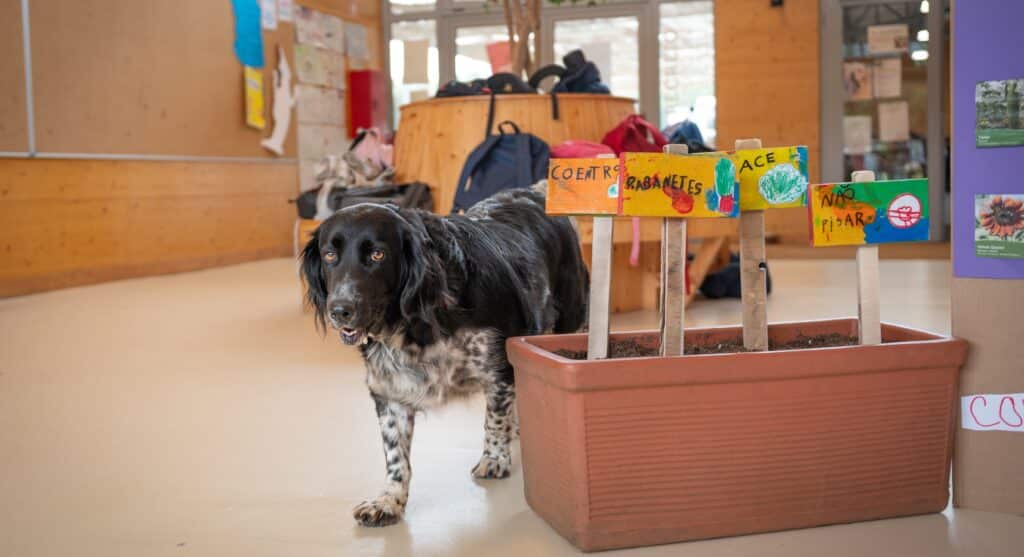
Some of the foods that reach the Aprendizes kitchen come from the garden and orchard maintained by the students themselves.
From the garden to the kitchen: a sustainable cycle
Zero-waste in the Aprendizes kitchen begins even before any meal is prepared, in the school’s garden. André Maciel, a specialist in organic agriculture and head of the school garden, runs garden classes and promotes the use of kitchen bio-waste in composting, closing a cycle that involves students, staff and families. The process culminates in the production of vegetables and greens used in the school’s meals and made available to the community at the Aprendizes Biomarkets.
The fight against waste continues in the kitchen. Peels, stems and leaves are reused in the preparation of meals. Leftovers go to composting and to the school’s animals. When there is extra prepared food, it is made available to the staff. Currently, these practices are being studied within a European project, which aims to gather solutions applicable to other European Union schools.
Food is part of the school’s educational project from preschool through secondary school. The menus, plant-based and Mediterranean in origin, privilege organic, fresh foods and, whenever possible, local, in some cases coming from the garden and orchard maintained by the students themselves.
“We work a lot on flavor: we combine spices, aromatic herbs and culinary techniques that preserve the nutritional value of foods without resorting to additives,” explains Chef Joana Xardoné. “Texture, color and presentation are also fundamental. We want children to feel attracted to the food and for the mealtime to be a positive experience.”
In the canteen, students serve themselves, or, at younger ages, with the help of a class supervisor, learning to manage portions in a conscious way. At the end of the meal, they separate the waste, tidy the cutlery and place the dishes in the dishwasher.