The Deposit and Refund System (SDR) has collected more than 10 million packaging units since it began operating two months ago at more than 2,500 points Volta distributed across the country, the managing body announced on Wednesday.
In a statement, SDR Portugal — a non-profit association responsible for the implementation and management of the system, which has been operational since April 10 — says that “this milestone, reached even during the transition phase of operation, demonstrates the effective initial adherence of citizens to the ‘Volta’.”
“June 10, 10 million inhabitants, 10 million packaging returned: a symbolic coincidence that marks consumers’ uptake of ‘Volta’,” emphasizes.
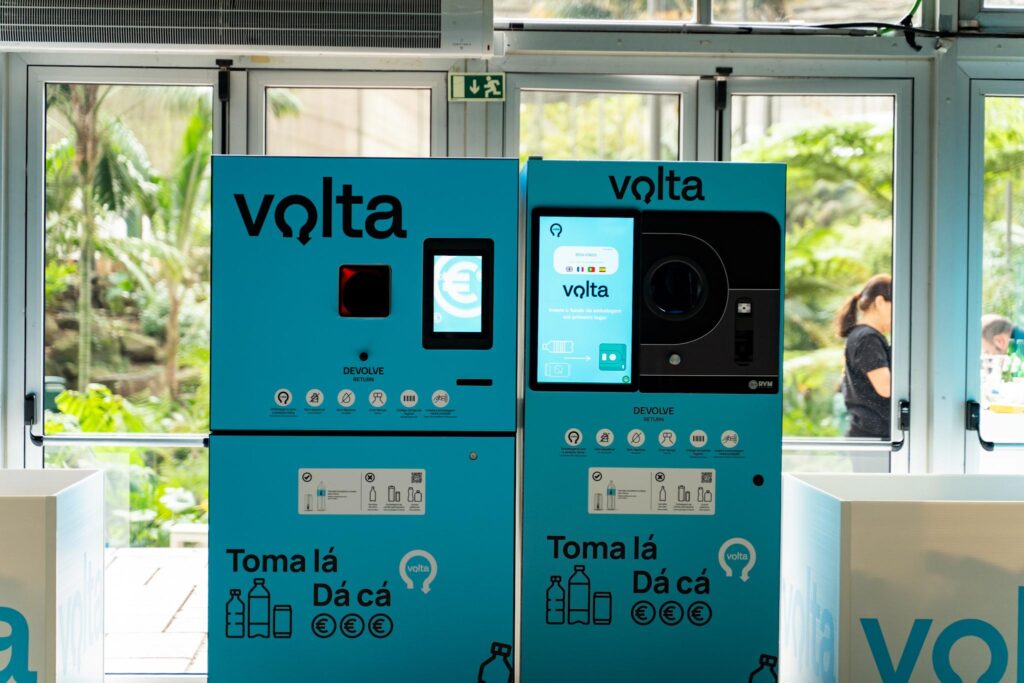
The system allows consumers to reclaim the deposit value of 10 euro cents per packaging paid at the time of purchase for single-use bottles and cans, made of plastic, metal and aluminum and under three liters, by returning them at the more than 2,500 points ‘Volta’ existing in continental Portugal, the Azores and Madeira, a number that is expected to increase to more than 3,000 in the coming months.
In addition, 50 kiosks ‘Volta’ have been added, chiefly in areas with a strong presence of the hospitality sector, including hotels, restaurants and cafés.
For SDR Portugal, this result “assumes particular relevance given that the system is still in a transition phase, with the progressive entry into the market of packaging identified with the ‘Volta’ symbol.”
“The value reached — 10,006,067 packaging items collected in just two months — reflects the significant participation of consumers and the commitment of SDR member entities in stabilizing a national collection network, operational and efficient,” he states.
Cited in the press release, the president of SDR Portugal highlights that this number “corresponds, on average, to a package returned per citizen, but represents much more than a statistical milestone.”
“We are witnessing the outset of a change in behavior and are confident that Portugal will follow the path of Europe’s most successful deposit and refund systems, contributing to meeting Europe’s demanding circularity and sustainability targets,” says Leonardo Mathias.
The operation data released this Wednesday indicate that returns occur more frequently over the weekend, especially on Sundays, with SDR Portugal noting this as evidence of “the system’s progressive adaptation to the population’s routines.”
Until August 9, the system is in a transition period, during which packaging with and without the ‘Volta’ symbol coexist in the market, as the products available are progressively replaced by the new packaging integrated into the operation.
Thus, the acquisition of packaging without the ‘Volta’ symbol does not involve payment of the associated deposit, and these are not accepted by the system, being directed instead to the respective eco-points.
The automatic ‘Volta’ points in supermarkets and hypermarkets and the kiosks recognize eligible packaging and allow the refund of the deposit value in various forms: a voucher convertible to cash, a discount voucher at the point of sale, loaded onto a loyalty card, or through other digital solutions, still under development. It is also possible to opt for donations to social-oriented institutions.
Packaging can be returned at any point or kiosk, regardless of where it was purchased, and packaging purchased in establishments such as cafes, restaurants or bars can also be delivered there.
To be eligible, bottles and cans must bear the ‘Volta’ symbol, have a legible barcode, be empty, not dented or crushed, and, in the case of bottles, with a cap.
According to the managing entity, the SDR is “essential for Portugal to meet Europe’s targets for selective collection and recycling of single-use beverage packaging, including the objective of reaching 90% collection by 2029.”