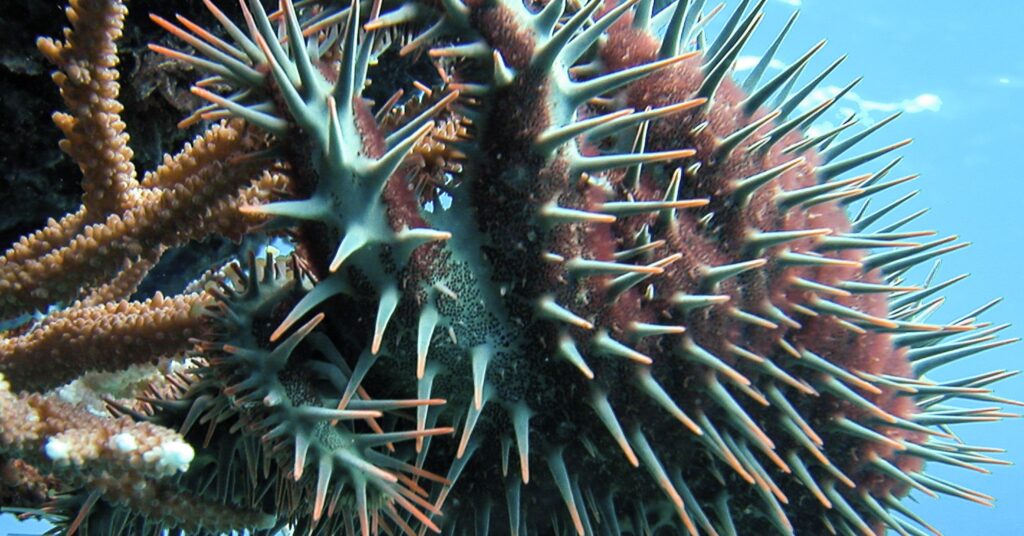
A study found that starfish adapt their genome to the specific conditions of the region where they live, so specimens of the same species have almost 19% of their chromosomes “inverted”.
The investigation by the Doñana Biological Station and the University of Barcelona showed how the populations of spiny starfish that inhabit both the Mediterranean and the British Isles have different genomes, despite belonging to the same species.
“The most interesting thing is that the variants of these inversions are not distributed randomly across the studied populations, but rather seem to be associated with different geographic regions,” explained Carlos Leiva of the Doñana Biological Station, quoted on Monday by the Efe agency.
These chromosomal changes adapt the starfish to respond to “thermal stress, osmoregulation, immune response and environmental perception”, aspects that the researchers will need to validate with experimental studies.
Thanks to this research, scientists can study how a species adapts to different environments, even when its populations are highly interconnected, as is the case with the spiny starfish.
Adult starfish have limited mobility, but their larvae travel hundreds of kilometers aided by ocean currents, continually mixing their populations, the researchers explained.
Because of this interconnection of habitats, it would be difficult to have significant adaptive differences between regions for the same species, but the study shows that there are regions of the genome that escape this mixing and change depending on the place where the adult population lives.
The study revealed that certain regions of the genome recombine, or “mix”, much less than others, which keeps them distinct among populations.
“These regions act as building blocks that are inherited together, thus preserving combinations of genes beneficial for life in specific environmental conditions, with differences in temperature or salinity,” explained Marta Martín Huete, a researcher at the University of Barcelona.
The study was conducted by analyzing about 300 specimens of the starfish Marthasterias glacialis, from 19 localities distributed across the Northeast Atlantic and the Western Mediterranean.
“These results pave the way for new studies aimed at verifying whether these chromosomal inversions translate, in fact, into biological differences between individuals, such as greater heat tolerance, resistance to changes in salinity, variations in growth or reproduction,” Carlos Leiva also explained.