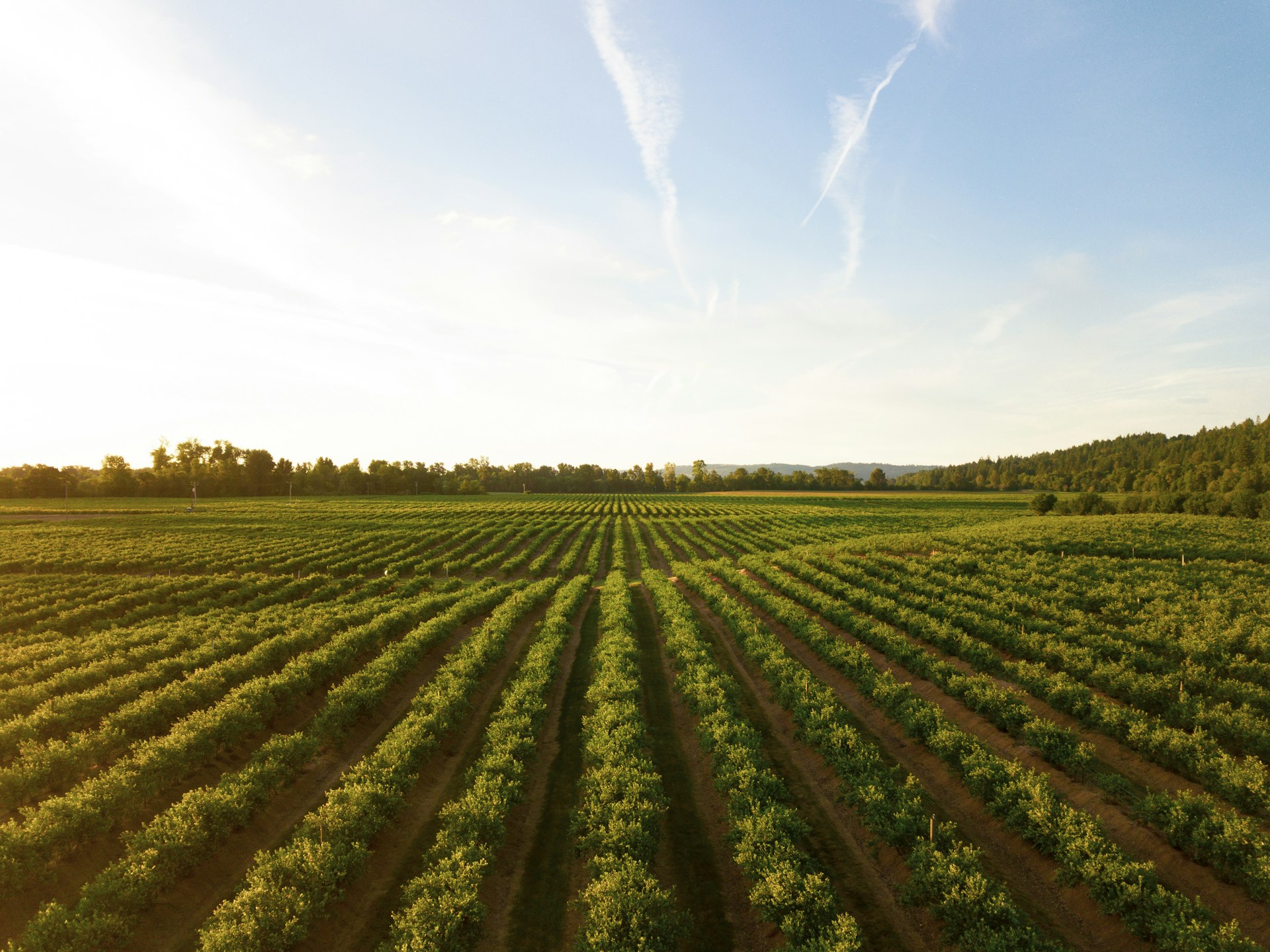
Erosion, water loss and soil compaction are among the factors that are undermining global food production and supply, affecting a large portion of the world’s population.
The warning comes from an international team of scientists, who embarked on a quest to uncover the effects of soil degradation on agricultural productivity.
In a paper published in the journal Nature Food, they say that if the degradation caused by humans were reversed by 10%, it is likely, at least mathematically, that Earth’s arable soils would be capable of feeding nearly 70 million more people.
The group, led by the University of Bonn (Germany), says that not only the burning that clears land for crops, the overuse of fertilizers and large-scale monocultures are threatening biodiversity, but that “many farming practices today are also causing long-lasting damage to soil quality”.
All these pressures are often amplified by “human-caused crises”, such as climate change, the researchers stress, who, for example, point out that strong and more frequent storms and heavy rainfall destroy or erode the shallower and most fertile layers of soil. Furthermore, groundwater aquifers are globally running dry, largely due to intense rainfall events and degraded soils that do not allow water to infiltrate, causing it instead to run off and eventually evaporate or concentrate on impermeable surfaces, such as roads.
Dividing the planet’s arable lands into squares 10 kilometres on a side, the researchers calculated the yields of these soils. In this way, they were able to identify those with the highest yields, which, they say, are also the ones that have suffered the least damage so far.
“Thus, these areas give us a reference as to what is possible in soils that have not been degraded or influenced in any way,” explains David Wuepper, the study’s lead co-author.
From there, they calculated, with the help of AI-powered models, the yield losses of degraded soils, using parameters such as erosion, water scarcity, compaction caused by the widespread use of heavy agricultural machinery, the loss of soil carbon dioxide and a minimum vegetation cover.
Looking at the whole and drawing generalizations, they estimate that a 10% increase in the rate of degradation reduces, on average, soil productivity by 2%.
“Conversely, if we managed to reduce degradation by 10% globally, crop yields would increase to such an extent that it would be possible to feed an additional 70 million people,” notes Hadi Hadi, the paper’s first author.
“In general, the results show how important soil quality is for the supply of agricultural products,” concludes Wuepper.