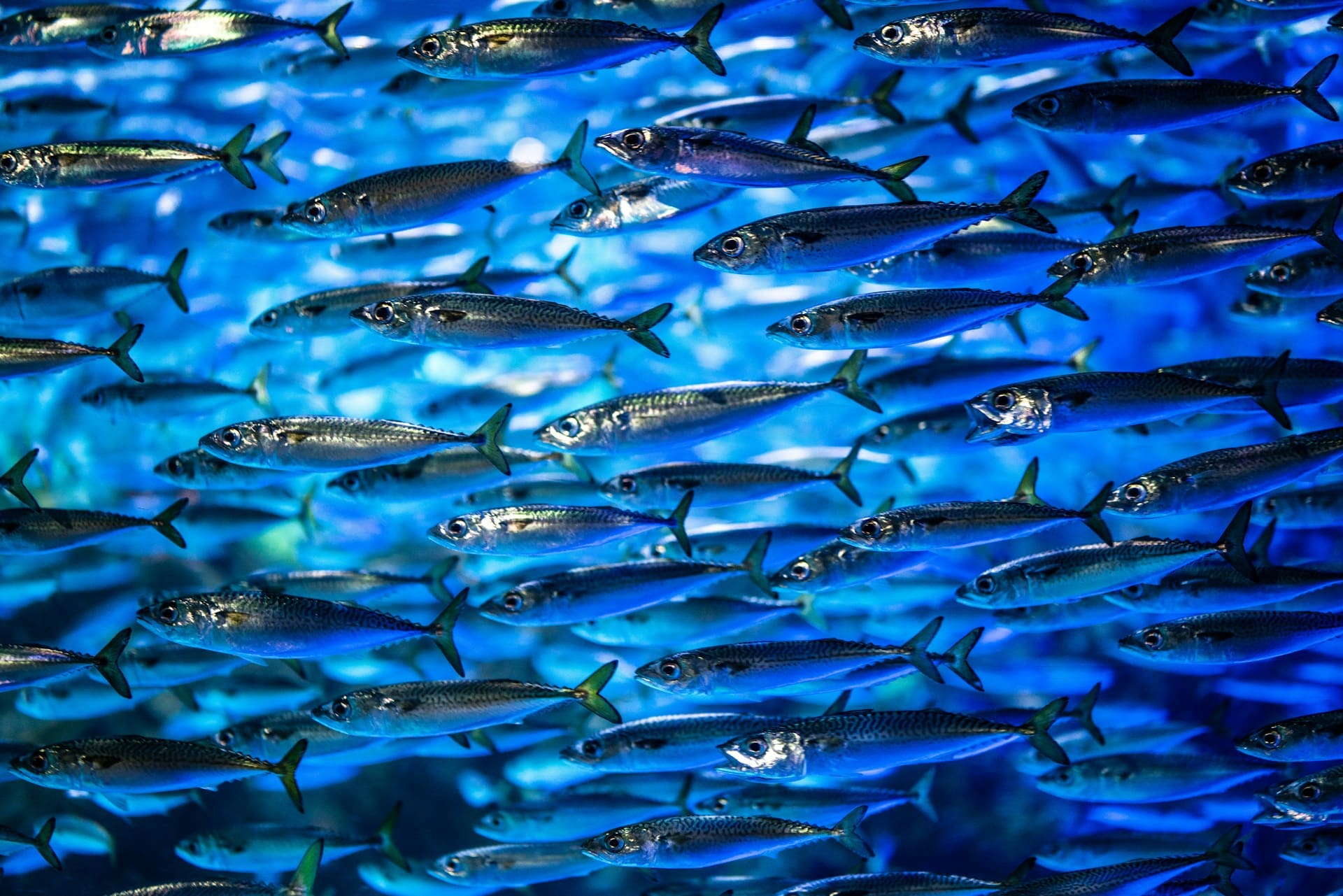
The sardine, one of Portugal’s most emblematic species, has practically quadrupled its adult population since 2015.
According to the information advanced in the MSC’s “Fishing for the Future” report, published on World Ocean Day, June 8, the recovery is due to a “joint management plan in which Portuguese fishermen worked side by side with Spaniards according to scientific criteria.”
The organization, which assigns the blue label for sustainable fishing, says that this finding contrasts with the fact that four in ten Portuguese (38%) think that a fish population cannot recover once overfished.
Furthermore, among the Portuguese surveyed, only 33% know that fish populations can indeed recover, while 28% admit they do not know.
Results also point to other conclusions. About 85% of Portuguese know that the ocean covers more of the planet’s surface than dry land, and 71% are aware that there is more overfishing today than 50 years ago, one of the highest levels of awareness in Europe.
However, there remains some lack of knowledge: more than half (58%) of Portuguese do not know from which ocean most of the tuna consumed worldwide comes, and 38% are unaware that the deepest part of the ocean is deeper than Mount Everest’s height.
Public concern about the state of the ocean is high: climate change, pollution and the decline of fish populations are among the main worries of citizens.
“Our work with fisheries around the world shows that, despite the magnitude of the challenge, recovery is possible,” says Alberto Martín.
For the MSC director in Spain and Portugal, “the Iberian sardine is an example we have on our own coast: with science-based management, collaboration and long-term commitment, the seas can again fill with life. It is a message of hope, and we need more people to hear it and act accordingly.”
The report “Fishing for the Future” brings together other cases pointing in the same direction. The Atlantic bluefin tuna, in the Eastern Atlantic, on the brink of collapse at the end of the 20th century, recovered to its highest levels since the 1960s thanks to a rebuilding plan with strict rules for the countries that catch it.
It also presents the case of hake, overfished and in decline in the early 1990s, which recovered and remains at healthy levels after changes in management, such as increasing the mesh size of nets.
In the preface to the report, Manuel Barange, Director of Fisheries and Aquaculture at the United Nations Food and Agriculture Organization (FAO), underscores that “the examples in this report show how progress is possible in different contexts when science, political commitment and stakeholders work hand in hand.”
“The priority now is to consolidate and broaden these gains, ensuring that fishing resources continue to sustain ecosystems, economies and future generations,” he emphasizes.