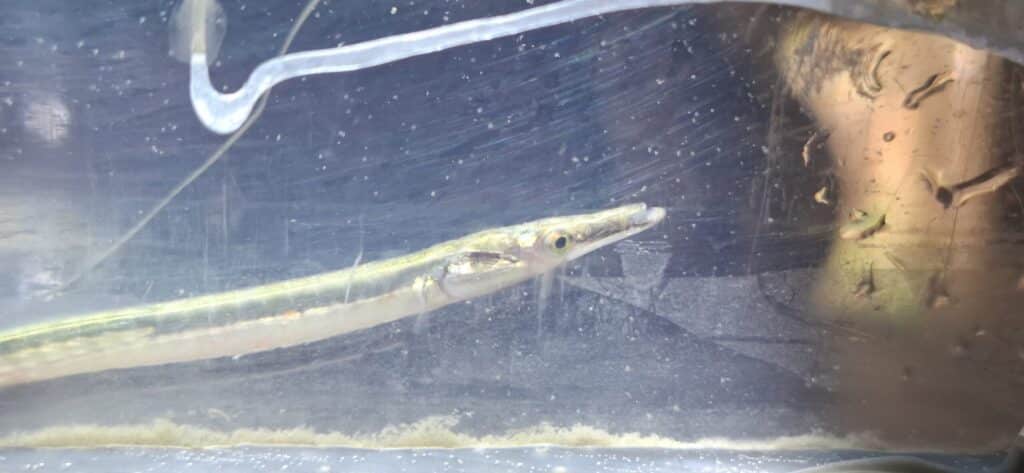
Since the 1980s there had been no scientific records of the fish Microphis spinachioides, a member of the seahorse family (Syngnathidae), native to Papua New Guinea and found only in the Sepik River.
In June, a team of researchers from the New Guinea Binatang Research Centre embarked on a search for the mysterious animal, about which very little is still known, along the watercourse spanning more than a thousand kilometres that crosses the north of that southwest Pacific country.
Over two weeks, the scientists Jerrica Agebigo and Roger Maikei traversed the river in motorized canoes, traveling between the communities that live on the banks of the Sepik and some of its tributaries, such as the Porapora, Keram and Yuat rivers. They spoke with local communities, explored the rivers and visited local markets to examine the fish caught.
The researchers showed images of the cryptic fish to elders, fishermen and traders, both men and women, in the hope of obtaining information from those who know the territory most intimately. Some people recognized the animal and even had their own names for it, such as “Karuweng”, “Inap”, “Karuwena” and “Sako”.
The big discovery (or rediscovery) happened when the team visited the village of Imbando and met Helen Asu, a crustacean fisher on the Sepik River. Upon seeing the images that were shown to her, Asu recognized the fish and agreed to keep an eye out for it the next time she went fishing.
Early the following morning, Asu called the researchers and showed them two slender fish she had caught in her “umben”, a traditional handheld net used to catch shrimp and other small aquatic animals in the river.
The scientists photographed the captured specimens and sent the images to Gerald Allen, an Australian fish specialist, who confirmed that it was indeed the mysterious animal thought to have been extinct for more than 40 years.
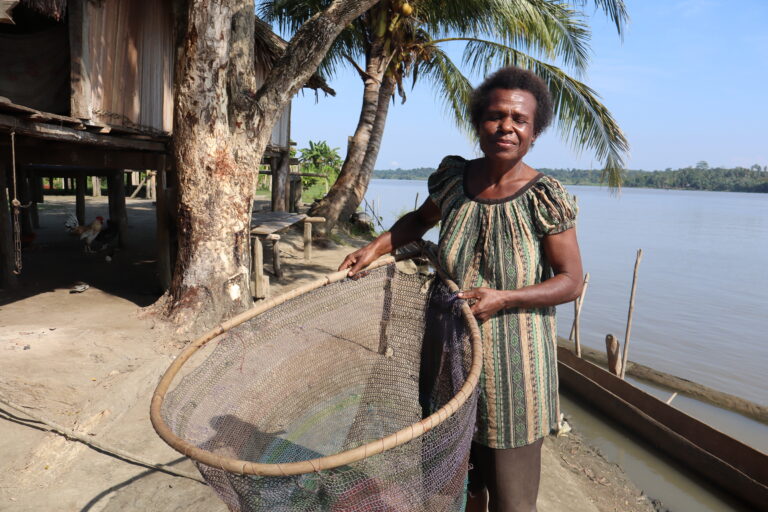
“Without her knowledge, initiative and willingness to help, the rediscovery might not have been possible,” says Agebigo, referring to Helen Asu.
The fish Microphis spinachioides, unlike other members of its family, which live in tropical and temperate marine waters, inhabits freshwater environments. However, like the seahorses and pipefishes, the males also carry and incubate the eggs transferred to their bodies by the females.
Because it is difficult to find, there is currently not enough data on Microphis spinachioides to assess the conservation status of the species, and it is therefore unknown whether it is at risk of extinction.
For the researchers, this work makes clear the importance of involving local communities and their knowledge in scientific research projects.
Microphis spinachioides was one of the most sought-after species in the initiative “Search for the Lost Fishes” (the English original), launched in 2021 by SHOAL and Re:wild. The aim is to rediscover “lost” fish species, i.e., those with no formal scientific records for more than 10 years, but that have not yet been declared extinct.
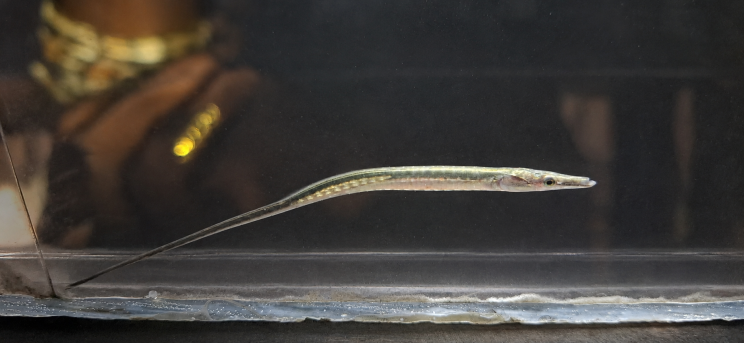
Now, Microphis spinachioides has become the third on the list of the ten most sought-after fishes to be rediscovered.
“Each rediscovery reminds us that there is still hope, but also underscores how little we know about the freshwater biodiversity of the world’s species and how urgently these ecosystems need greater protection,” emphasizes Mike Baltzer, executive director of SHOAL, who supported this investigation.
“This success shows what can be achieved when local knowledge, scientific expertise, and conservation organizations work together toward a common goal,” he adds.
The researchers now want to gather more data on the species, such as its distribution range in the Sepik River, the size of the population and which conditions are most favorable to it.