Quercus issued an unfavorable opinion regarding the installation of 22 large-scale wind turbines in the municipalities of Odemira and Ourique, in Beja district, and advocated revising the Mira Wind Park project, promoted by Galp.
Quercus’ position, sent today to the Lusa agency, arises within the framework of the Scope Definition Proposal (PDA) phase of the Environmental Impact Study for the Mira Wind Park project – Hybridization of the Ourique Photovoltaic Plant, promoted by Galp, and whose public consultation ended on Thursday.
The project, according to the environmental association, presents “incompatibility with territorial management instruments.”
This is because, he continued, some wind turbines “are planned for rustic soil areas in the municipality of Ourique, where the installation of renewable energy projects is currently prohibited by preventive/suspension partial measures” in the Municipal Master Plan (PDM).
On July 22, in a written clarification, Galp explained to Lusa that the project foresees the “hybridization of a photovoltaic plant under development in the Ourique region”, combining the “production of [energy] solar and wind in the same area.”
“In a preliminary configuration, the project contemplates up to 22 wind turbines, corresponding to an installed capacity of about 158 MW [megawatts],” added Galp.
According to the oil company, construction of this park should not begin “before 2029”, given the different licensing and development phases still underway.
In today’s statement, besides the PDM issue, Quercus argued that the project also implies “impacts on sensitive ecological areas and protected species,” given its proximity to the Special Protection Areas (ZPE) of Castro Verde and Piçarras and to the Special Conservation Area (ZEC) of the southwestern coast.
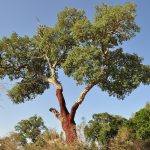
On the other hand, she added, “the opening of new access routes and the installation of crane-support platforms will entail the cutting of several protected forest species, such as cork oaks and holm oaks, contributing to the worsening desertification and soil erosion in the Alentejo.”
Quercus also said it fears that the investment could contribute to the fragmentation of the habitat of vulnerable species, namely raptors and steppe species, as well as bat populations.
The future wind park could also increase “the risk of erosion and the affectation of water resources” and have “negative consequences … on the quality of life of local populations,” the statement reads.
The environmental association therefore advocates “the revision of the project,” notably of its layout, and that “the prohibited areas be excluded, removing or relocating the wind turbines.”
The implementation “of a continuous 12-month monitoring plan for birds and bats before licensing, with special attention to steppe species,” and a cumulative impacts assessment, which integrates “all existing or planned photovoltaic plants and high-voltage lines within a 15 km radius,” are among the other proposals.
The environmentalists also want the ecological corridor “the Ourique Belt” preserved, prioritizing the strict use of existing paths and minimizing the opening of new access routes.
And that real-time detection and monitoring technology be used on wind turbine towers, for automatic shutdown in case of approaching endangered avifauna/chiroptera specimens.
According to Galp, the PDA was submitted to the Portuguese Environment Agency in June this year, which constituted the first stage of the environmental impact assessment process.
This proposal aims to “collect contributions from the competent entities” “on the topics that should be studied and the methodologies that should be used in the future Environmental Impact Assessment (EIA),” the company added.
Only after the completion of this stage will the EIA be developed, in which the “potential impacts of the project, alternatives considered” and “the measures to be implemented to eliminate environmental risks” will be evaluated, the company indicated.