
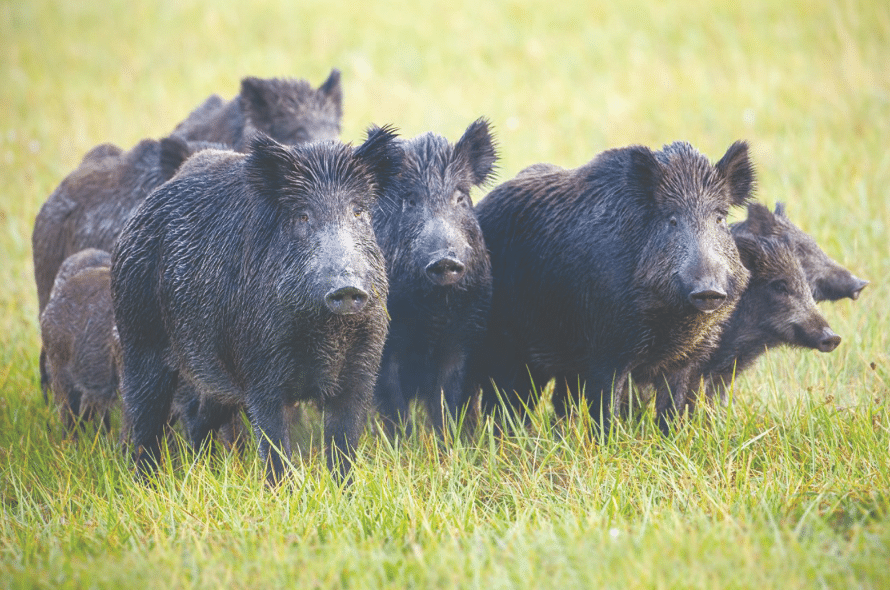
The Municipality of Mação will hold a meeting with the ICNF and the local hunting associations of the municipality to seek a response to the growing presence of wild boars in the villages and the damages caused by the animals, said today the mayor of the municipality.
Asked about the localities affected by the presence of wild boars, José Fernando Martins (PS) said that the problem covers the entire municipality of Mação, in the Santarém district.
“In general, all localities in the municipality have been affected. The reports we receive are more on one side than the other, but they are more or less uniform across the municipality,” he told Lusa.
According to the mayor of Mação, wild boars have been entering the villages, destroying small crops and causing damage to municipal property, with there also being records of road accidents involving the animals.
The municipality scheduled a meeting for September 11 with the five hunting associations in the municipality, which the Institute for Nature Conservation and Forests (ICNF) is expected to join.
José Fernando Martins said he had received the institute’s willingness to collaborate and participate in the meeting, considering it important to involve the body with competences in this matter in the search for solutions.
“We already have the ICNF involved in this issue as well. We will now wait for the 11th, hope that there aren’t many losses by then, and hope that from that meeting some white smoke will come out so we can try to solve the problem,” he said.
The council had already announced its intention to discuss with the hunting associations ways to control the boar population and seek a response that covers the entire municipal territory.
Asked about the evolution of the situation, José Fernando Martins said that the problems caused by the animals are not new, but there is a perception that the number of wild boars has increased year after year.
The mayor also linked the greater presence in the localities to the progressive abandonment of agricultural lands, which reduced the food sources available in areas farther from homes.
“Before they lived in 400 square kilometres, which is the municipality’s territory, and those 400 square kilometres had a lot of farming, they had a lot of food,” he explained.
With fewer cultivated lands, he added, crops are now concentrated near the localities, leading the animals to approach houses in search of food.
“The boars enter the village, go next to the garbage containers, go to people’s gardens near the villages,” he said.
The mayor said he has no knowledge of attacks on people, but reported damage to walls and other structures and situations that can hinder road traffic, in addition to accidents caused by animals crossing roads at night.
“This is also what we must try at all costs to prevent,” he said, defending the need to reduce the density of wild boars in the territory.
Until a strategy is defined, the Council urged the population not to feed the animals and to keep garbage and food leftovers properly contained in the bins.
“The closer they are to the villages and to the houses, the more dangerous they can become,” he warned.
The issue of wild boars has been signaled for several years in the region, with farmers from Abrantes, Constância, Sardoal and Mação reporting damage to crops and small gardens.
The ICNF admits that the wild boar population currently numbers around 300,000 animals in mainland Portugal.





