
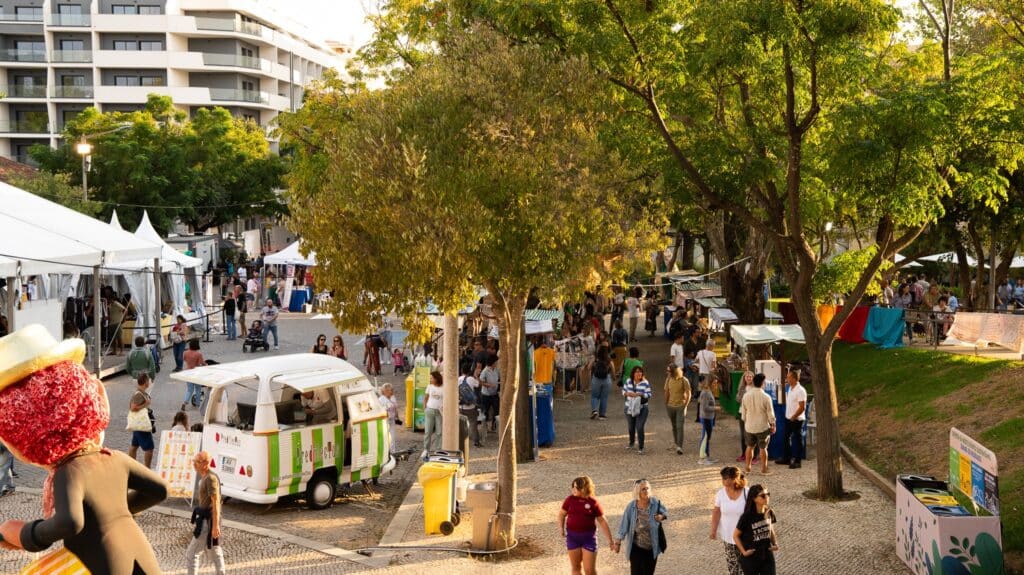
The seventh edition of FAVA – the Algarve Environment and Vegan Fair – takes place at the Loulé Municipal Park from September 18 to 20. It will be three days dedicated to sustainability, plant-based eating, conscious consumption, and well-being, according to a press release.
According to the same source, the 2026 edition expects to welcome thousands of visitors from various regions of the country, who will be able to enjoy a diverse and completely free program in an eco-friendly venue spanning more than 14,000 square meters.
Launched in 2018, FAVA is a project that brings together the actions of the Benfazer Association and has the support of the Loulé City Hall. Social, environmental, and animal welfare govern the event. Therefore, all initiatives are designed to value care for the body and mind, protect the environment, and respect animal life.
Over the three days, visitors will have access to more than 100 exhibitors from 20 different sectors – from agriculture and food to crafts, gardening, books, and clothing.
There are also several snack bars and food trucks where it will be possible to sample different plant-based food proposals, such as francesinhas, burgers, pizzas and other hot dishes, as well as pastries, cakes, tarts, and ice creams. In addition to foods, there are also spice teas, smoothies, craft beers and other plant-based drinks. In total, there are more than 30 stalls just for food and drink, with which the organizers expect to surpass the 4,125 meals served in the previous edition.
More than 100 activities completely free
Moreover, this year’s edition maintains the commitment to a diverse program that brings together sport, culture, gastronomy and entertainment for all ages. Among the initiatives, there will be 17 performances of theatre, poetry, live music, dance and magic in collaboration with different partner organizations and local artists.
Additionally, personalities linked to veganism will take the stage to perform showcookings and lectures. There are sessions scheduled with Victoria Ye, a reference influencer in vegan Asian cuisine, with the team of Desafio Vegetariano PT and Inês Lapa, from Nutricionista Explica.
Pilates, yoga, capoeira, dance and Tai Chi classes are also part of FAVA 2026’s programming. For children, there will be activities with the Casa da Primeira Infância, traditional games, chess, and workshops.
“We have reports from tourists who travel to vegan events across Europe and say they have never seen anything like this. It is a very diversified event, with small stages spread around and various activities and performances happening simultaneously,” says Domingos Pereira, the fair’s coordinator.
There will also be a clothing, footwear, accessories and books swap market, aimed at promoting the reuse of second-hand items in good condition. There is also the Repair Café, where visitors can bring broken objects and, with the help of skilled volunteers, learn to repair them rather than throw them away.
A Sustainable Fair On and Off the Plate
Despite the scale of the event, the commitment to sustainability remains one of FAVA’s priorities. Therefore, the organizers focus on reduction, reuse and recycling to minimize environmental impact.
The fair does not rely on fuel-powered generators as most events of this size do, and all tableware is compostable or reusable. There are no disposable plastic cups or bottles and instead of plastic bags, reusable fabric bags are distributed.
“In our communication, we encourage visitors to bring their own cup to use at the stalls and we provide free drinking water fountains throughout the venue. Our goal is to combat disposable plastic,” says Domingos Pereira.
Not to mention that all of FAVA’s gastronomic offerings are 100% plant-based, contributing to reducing the event’s environmental footprint. According to a study published in Nature Food, vegan diets have about 75% lower greenhouse gas emissions and 75% less land use than diets with high meat consumption.
In the previous edition, the fair brought together 140 exhibitors and presented 135 activities and performances to the public, resulting from the collaboration with around 50 partner entities. According to the organizers, during the preparation week and throughout the event, the fair involved a team of nearly fifty people.
“From the volunteers to the teams of electricity, sanitation, cleaning, audiovisual, security and logistics, organizing this event requires tight resource management and rigorous planning,” adds Domingos Pereira, who also concludes that the aim of the initiative “is to demonstrate that it is possible to host a big event, capable of satisfying thousands of visitors, while protecting animals and saving the planet.”





