
The current El Niño episode could be “the most intense” of the last forty years, since measurements of this climate phenomenon began, announced today the United Nations World Meteorological Organization (WMO).
“[The current episode] could be more intense than anything we’ve observed since the beginning of our records, to the point of literally surpassing the limits of the charts we’ve used for four decades,” said the WMO Secretary-General, Celeste Saulo, during a press conference following the presentation of the quarterly bulletin on the evolution of El Niño.
The WMO warned today about the intensification of the El Niño phenomenon in the coming months, noting that it is “firmly established” and is expected to intensify, with a probability “nearly 100%” of lasting until February 2027.
At the press conference, Celeste Saulo urged calm and the adoption of preventive measures in response to the approaching El Niño phenomenon, whose early signs are already felt and which will be very intense in the coming months.
“I’ve said this before and I will say it again: El Niño does not have to be synonymous with disaster. We have the forecasts and the anticipatory capacity needed to save lives and protect livelihoods,” said the WMO Secretary-General.
She insisted that, in addition to confirming that El Niño will intensify until it becomes a very strong phenomenon, what she intended to convey today is an “appeal to action.”
“Science is clear. We have the knowledge and the tools necessary to prevent the dangers associated with El Niño from turning into a crisis,” she declared.
In this sense, she presented journalists with examples such as the states of emergency declared in Panama and Peru, the guidance that national meteorological and hydrological services are giving to various governments in Asia, or the national plan for heatwave response that Singapore is implementing.
The WMO’s Climate Prediction lead, Wilfran Moufouma-Okia, said at the same press conference that forecasts indicate a probability close to 100% that the El Niño phenomenon will persist through September and November and remain active until February 2027.
“This does not mean there is a 100% probability that flooding, drought or even a heatwave will occur in a given country,” he said.
According to the WMO bulletin, the intensity that El Niño will reach will partly originate in the exceptionally high temperatures in the tropical Pacific — which, on the Latin American side, bathes the coasts of Ecuador, Colombia, and Peru, among other countries.
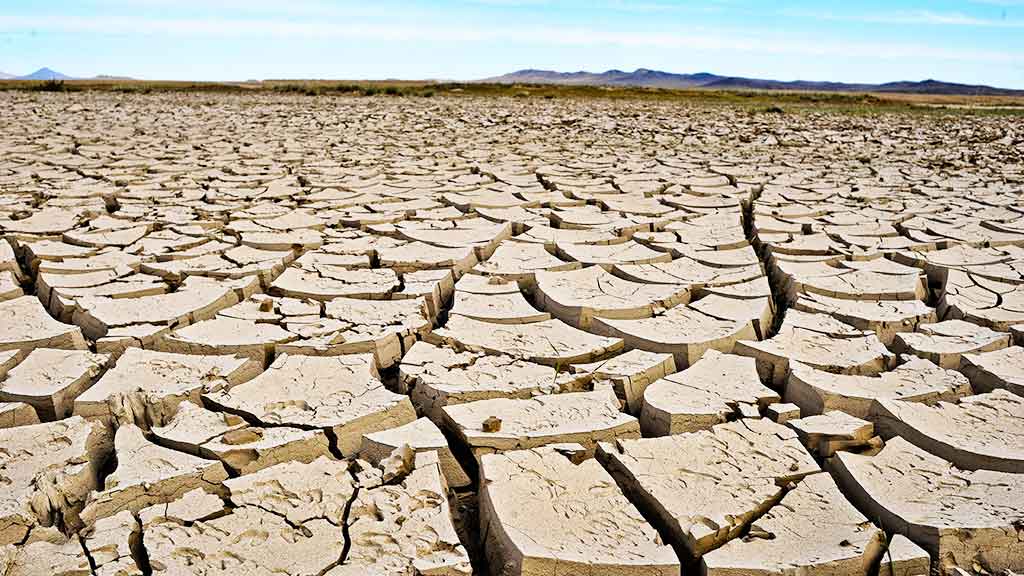
From a social perspective, the most severe impact will be the decrease in agricultural production, which will cause communities to lose access to food and prices to rise, putting millions of people worldwide in a situation of food insecurity.
Therefore, Celeste Saulo argued that the time has come for governments to make decisions on agricultural production, choosing — for example — what kinds of seeds are appropriate to plant if more rain is forecast or, conversely, if water scarcity or higher temperatures are anticipated.
One of the values causing the most concern among scientists is the excessive rise in sea temperatures, not only at the surface but also below it.
On the surface, normal values have been widely exceeded, with an increase of up to an additional 2.6 degrees Celsius and values that have continued to rise in recent weeks.
But beneath the surface of the ocean, “the accumulated heat reaches an even more exceptional magnitude,” since in some areas temperatures exceeded the average by more than 8 degrees.





