The Azorean government revealed today that around 17,000 specimens of native and endemic Azorean species have been planted, aiming to eradicate invasive exotic species in the Lagoa do Fogo nature reserve.
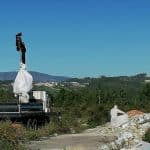
On World Nature Conservation Day, which is observed today, the regional secretary for Environment and Climate Action, Alonso Miguel, referred that the intervention in Lagoa do Fogo covers an area of about eight hectares, where various control and removal interventions of cryptomeria and invasive exotic species have been carried out.
Alonso Miguel noted that, to date, “around 17,000 specimens of native and endemic Azorean species have been planted, such as heather, the mountain cedar, the whitebeam, the holly, the mountain grape or the earth beech.”
During a visit to the renaturalization works underway in the Lagoa do Fogo nature reserve, developed within the LIFE IP Azores Natura project, Alonso Miguel stated that this is “a very significant effort of ecological restoration, which requires high levels of technical and operational capacity.”
The head of the Environment portfolio noted that “it is evident that, as a result of the works carried out within the scope of this project, very positive results are already being observed in habitat restoration, given the survival rate recorded in the plantings, about 80%.”
“But, above all, there is already spontaneous and natural emergence of a significant number of individuals of endemic and native species, fulfilling one of the main objectives of this nature conservation project,” he stressed.
According to Alonso Miguel, “the conservation of these ecosystems requires continuous, persistent work based on scientific knowledge.”
The official also advanced that the LIFE IP Azores Natura project, coordinated by the Regional Secretariat for Environment and Climate Action, is the first integrated project approved in Portugal and the largest nature conservation project ever conceived for the Azores.
The project provides 19.1 million euros, co-financed by the European Union at 60%, with the aim of “improving the conservation status of habitats and species, at all Natura 2000 sites in the Azores.”
The Lagoa do Fogo nature reserve is classified as a Special Conservation Area under the Natura 2000 network, being one of the most visited natural monuments in terms of tourism.