Conflicts between humans and wild animals are as old as the very history of agriculture and husbandry. Since our species adopted more sedentary lives and began to need to protect cattle and crops, negative and even violent interactions with predators and herbivores have become frequent.
With the growth of human populations and the consequent destruction of natural habitats, such as forests, to make way for the expansion of agricultural areas, pastures and housing, infrastructures and the increase in resource exploitation, these conflicts have been increasing somewhat worldwide and are already considered one of the major obstacles to biodiversity conservation. Africa is no exception.
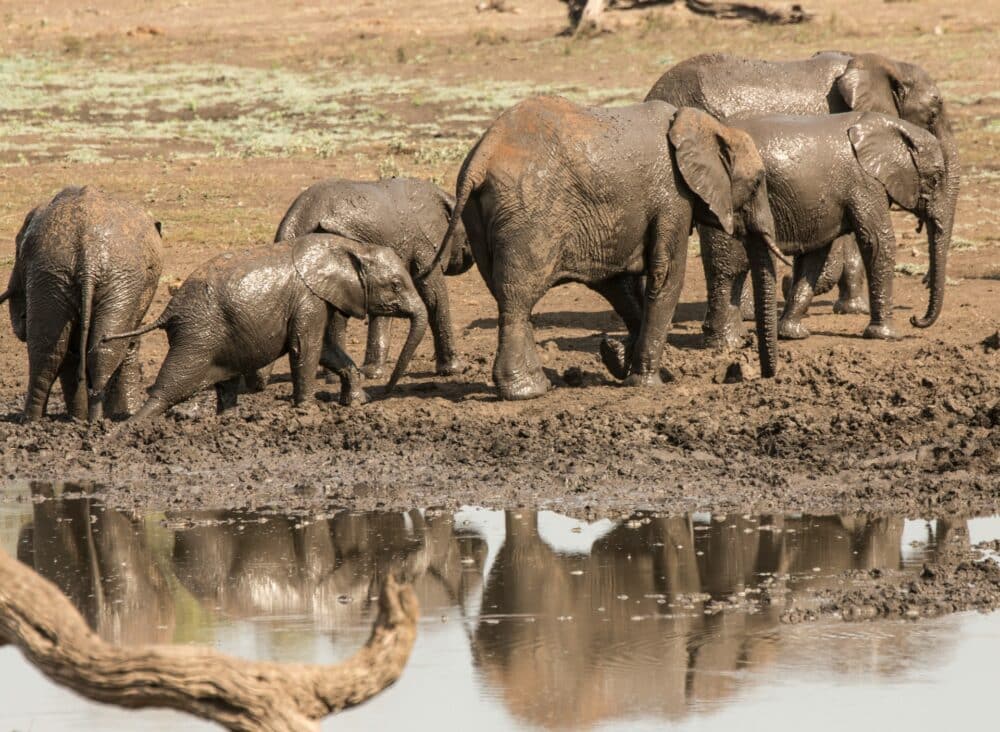
A recent investigation focused on the north of Namibia and Botswana and parts of Angola and Zambia to understand how humans and elephants live side by side in the landscapes shared by both species. It is estimated that about 290,000 African elephants (Loxodonta africana) coexist with a growing number of farmers in that African region, and the conflicts are increasing.
In an article published in the journal ‘PNAS Nexus’, a team of researchers led by the University of California in Santa Barbara (United States of America) used statistics and AI-based models to analyze data on damage caused by elephants to crops between 2004 and 2020.
The major conclusion of the study is that human-elephant conflicts could double by the end of this century, driven by the growth of the human population and agricultural areas in the region, as well as by the worsening droughts in conservation areas designed to protect these animals.
Thus, with humans and climate change making their natural habitats uninhabitable and reducing their sources of wild food, elephants find themselves forced to draw closer to human communities and to feed on cultivated plants. Taken together, all these factors increase both the likelihood and the frequency of negative and dangerous encounters, for one species and for the other.
Although in large parts of Namibia, and in the neighboring countries that form part of this study, wildlife reserves, as a rule, are not fenced, which allows the animals to roam freely, the fences that do exist push them toward “chokepoints” where conflicts are amplified.
Thus, the researchers say there is an urgent need for changes in land-use planning and development strategies, such as in infrastructure planning and in agricultural expansion and settlements.
Among the recommendations, the team notes, for example, that development projects should be kept away from the reserves and movement corridors of elephants, to avoid the overlap of areas used by the two species and, in this way, attenuate the risk of conflicts. Furthermore, they say that agricultural expansion should avoid zones with a higher probability of negative human-elephant interactions.