Researchers from Queensland University of Technology (QUT) identified the essential biological processes that enable corals to attach themselves to reefs — a discovery that could transform restoration efforts for marine ecosystems worldwide.
The study, published in the journal Royal Society Open Science and led by Brett Lewis, from the QUT School of Earth and Atmospheric Sciences, analyzed how fragments from three coral species — Montipora mollis, Pocillopora verrucosa and Acropora millepora — are able to establish an autonomous and enduring connection with the reef surface.
“Coral reefs are declining globally, and their recovery often depends on the ability of broken fragments to reattach and grow. But that process is much more complex than it seems,” explains Lewis.
Despite decades of research, the exact way in which corals re-anchor to the reef remained poorly understood. The QUT team — which also included Professor Peter Prentis, Associate Professor Luke Nothdurft, Crystal Cooper (University of Western Australia) and Professor David Suggett (University of Technology Sydney) — used advanced microscopy techniques to unravel the process.
Three stages for the coral to “take root”
The scientists observed that the attachment occurs in three main stages:
-
Initial immune response: upon contacting the reef surface, the coral responds through a process similar to turning itself inside out, reorganizing its tissues.
-
Soft-tissue anchoring: the coral forms a flexible layer that allows it to grip the substrate firmly.
-
Skeleton construction: finally, it forms a calcareous structure on the reef, using a specialized appendage that “creeps” across the surface, growing and removing harmful microorganisms along the way.
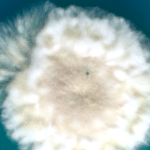
These phases were observed with high-resolution images, revealing details never seen before in coral biology.
Differences between species influence the success of attachment
The study showed that, although the general mechanism of attachment is common to several species, there are significant biological differences that determine the speed and robustness with which the coral establishes itself.
In the case of Montipora mollis, the attachment appendage proved larger and more complex, resulting in a faster and stronger connection. By contrast, Pocillopora verrucosa displayed a thinner appendage with slower development, which explains an initially weaker attachment.
The researchers also found that small internal structures called mesenterial filaments play a more important role than previously thought: they help the coral “digest” damaged or unnecessary tissues, enabling it to regenerate and resist environmental stress better.
“This shows that the process serves not only for attachment, but also for recovery and resilience of corals in situations of damage or change,” emphasizes Lewis.
Practical applications in reef restoration
With this new information, scientists believe it is possible to move away from the “one-size-fits-all” approach currently applied to coral restoration.
“By understanding the cellular and structural differences between species, we can select the most suitable corals for each environment and predict which will grow most quickly. This will enable more effective and tailored restoration strategies,” concludes the researcher.