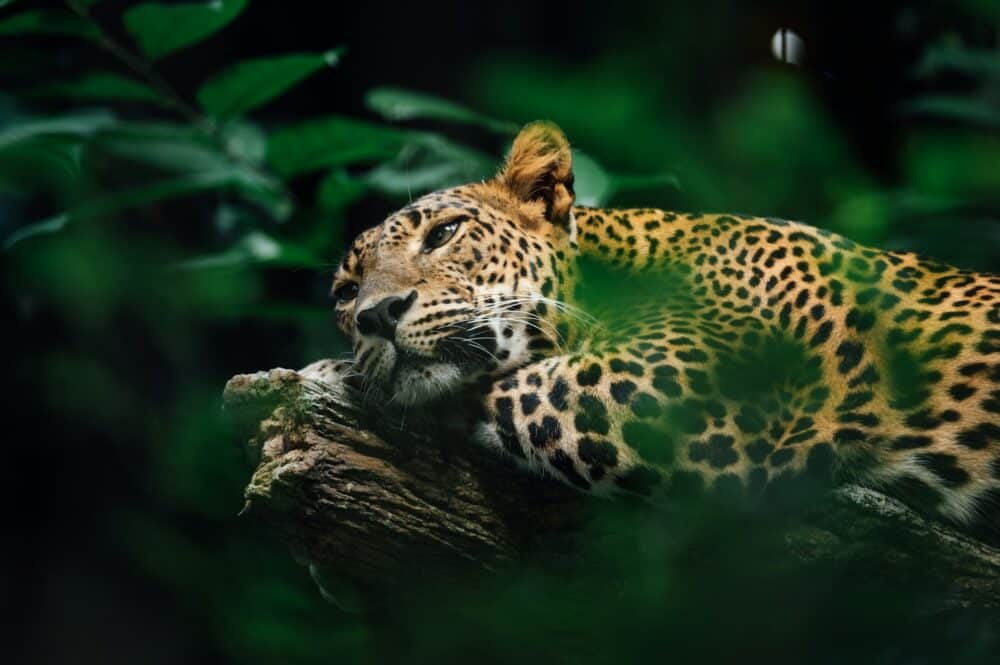
Between November 11, 2024 and November 27, 2025, a jaguar (Panthera onca) entered the history books of ecology by traveling 2,122 kilometers in Brazil, between the biomes of the Amazon and the Cerrado.
Named “Gaspar,” the animal is an adult male weighing about 92 kilograms, equipped with a GPS collar that allowed scientists to track its movements and this long dispersal, which they consider unprecedented.
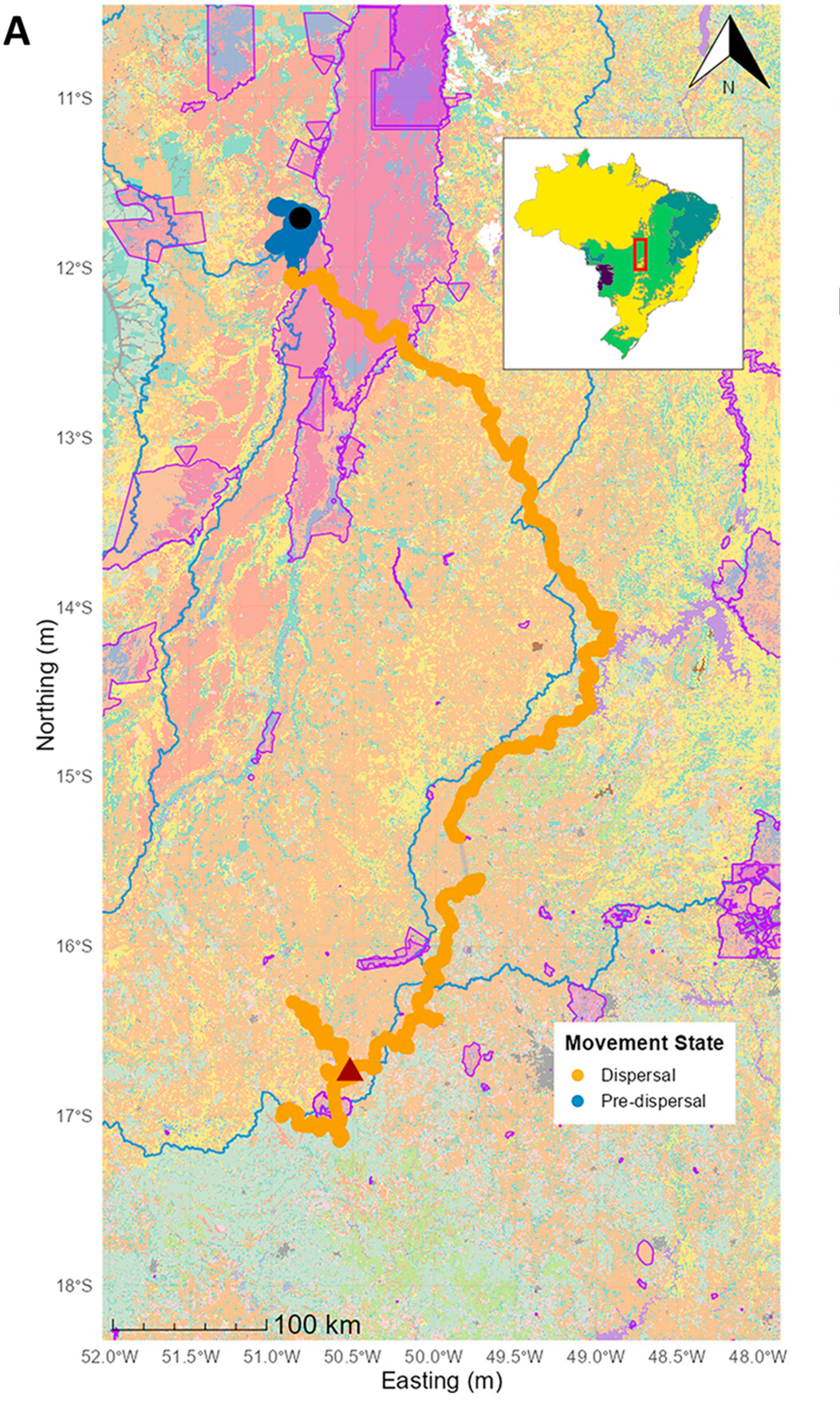
In an article published in the journal Ecology, it is explained that Gaspar’s monitoring was part of a project implemented in Brazil to study how jaguars use space along the Araguaia River, regarded as an important corridor for the species that links the Cerrado savanna with the humid forest of the Amazon.
The great journey of this wild feline lasted 381 days, during which it traveled an average of 9.79 kilometers per day at a speed of about 0.4 kilometers per hour. There have been other reported cases of jaguars with greater distances traveled per day, including animals in the same region, but what distinguishes Gaspar from these other members of his species is the long distance covered and the fact that he traveled several kilometers per day for months on end.
Therefore, scientists say that “Gaspar’s 2,100-kilometer dispersal represents one of the longest dispersal events recorded for a neotropical felid,” adding that it far exceeds distances recorded so far for jaguars, being comparable to the longest dispersal of a male puma that traveled 2,700 kilometers from South Dakota to Connecticut, in the United States of America.
Thus, the authors state that Gaspar’s great adventure is “truly exceptional,” and during this journey he crossed not only areas of natural vegetation but also human-modified areas, such as pastures and crops, for example rice and sugarcane. This shows, according to the researchers, “remarkable persistence and behavioral plasticity in the face of anthropogenic barriers and habitat fragmentation.”
However, they emphasize that the Amazon and Pantanal regions, where the region’s main jaguar populations reside, are increasingly threatened by deforestation, agricultural expansion, and the development of infrastructure such as roads. And these same factors also affect the Cerrado and the Mata Atlântica, where smaller and more isolated populations survive.
Looking at the route taken by Gaspar, it is easy to see the dangers that he and his species, and others, face: it is estimated that the Amazon has lost more than 33% of its original natural area, including forests, and that the Cerrado has lost 46% of its native vegetation due to agriculture, creating “a highly fragmented landscape that impedes the movement of large carnivores,” reads the study.
As such, this team draws attention to the importance of linking all these areas and jaguar populations, allowing gene flow between cores, giving individuals and, ultimately, the species the resilience needed to survive in an increasingly human-modified landscape.
Given Gaspar’s wide-ranging movement pattern, and that of other large carnivores, researchers say that traditional protected areas may not be sufficient to conserve these highly mobile species. Part of the solution, they argue, should be to remove barriers to the safe movement of wild animals, even in zones with human presence, such as agricultural lands, enabling the linking of landscapes, and also to invest in promoting measures to mitigate conflicts between jaguars and cattle ranchers to reduce the risk of mortality.
“As habitat fragmentation accelerates across the neotropical region, understanding and protecting the movement corridors revealed by individuals like ‘Gaspar’ becomes increasingly important for the persistence of jaguar populations and for maintaining the integrity of ecosystems in South America’s landscapes of greatest biodiversity,” the scientists conclude.