About 66 million years ago, a gigantic asteroid struck Earth and dictated the extinction of non-avian dinosaurs, and also wiped out most of the large marine reptiles.
A long-standing theory suggests that the disappearance of these animals created opportunities for the rapid evolution of tunas and other large and fast warm-blooded marine predators, occupying ecological niches left vacant by their gigantic predecessors. Just as on land, where mammals occupied the niches of the dinosaurs in the wake of the mass extinction event marking the Cretaceous–Paleogene transition, also known as the K-Pg.
But a recent study led by Yale University (United States of America) is calling that idea into question.
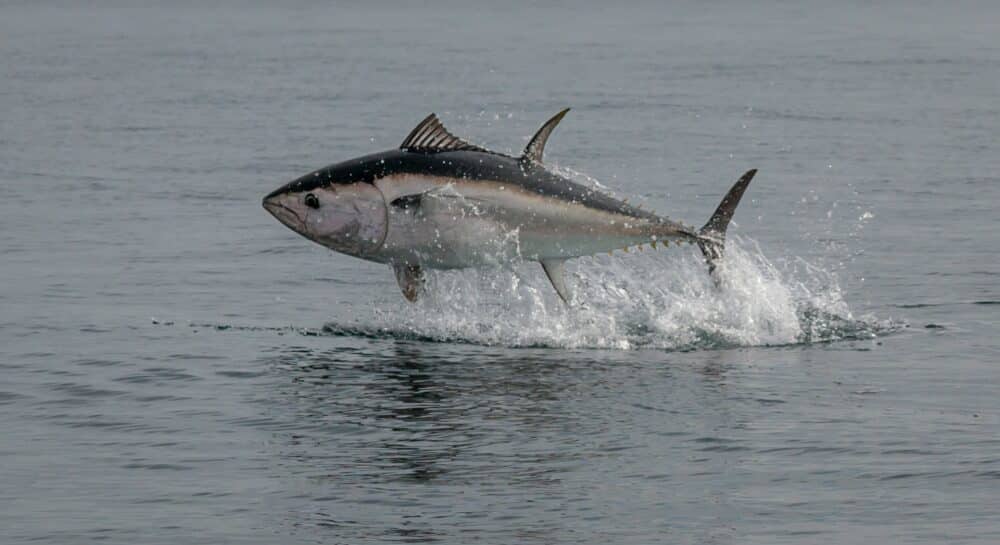
The scientists combined fossil genetic data to construct what they describe as the most complete ‘time-calibrated’ evolutionary tree currently available for the family Scombridae, which includes tunas, king mackerels, and almost half of the living species of warm-blooded ray-finned fishes.
The analysis reveals that Scombridae emerged around the time of the asteroid impact, but shows that tunas, cavallas, and other predatory fishes independently evolved their large body sizes and the capacity to regulate their internal body temperature (endothermy) long after that extinction event.
“Our results demonstrate that the K-Pg extinction did not trigger the evolution of tunas and other large endothermic predators related to them,” says Chase Brownstein, the paper’s lead author, published this month in the journal ‘Proceedings of the Royal Society B’.
“We show that the body plans of these predators evolved over tens of millions of years and that there is no link between the origins of endothermy and large body sizes in these lineages,” explains the researcher.
The study suggests that different forms of endothermy evolved independently three times within the Scombridae, and that at least two of them occurred 10 to 15 million years after the asteroid impact.
The authors say that it was believed that the large bodies of these fishes and their ability to regulate body temperature were linked, but what they found does not explain this relationship.
“Understanding that endothermy evolved independently several times in tunas and king mackerels allows us to understand the fundamental mechanisms underlying metabolism and thermoregulation,” says Thomas Near, a coauthor of the article, who notes that these systems are central to human health, including issues such as obesity and diabetes.
Making clear that it is not yet possible to draw a direct link, the researcher notes that “studying how our biodiversity has dealt with similar challenges over time is relevant to better understanding human health.”