
The President of the European Commission today praised the response given by the European Civil Protection Mechanism this summer, considering that it proved that the Member States “can count on Europe” at a time of “increasingly frequent extreme events.”
In a speech at the end of a visit to the Emergency Response Coordination Centre (ERCC) in Brussels, Ursula von der Leyen emphasised that this year the fire season in Europe began exceptionally early, at the end of April, and placed national reserves under enormous pressure.
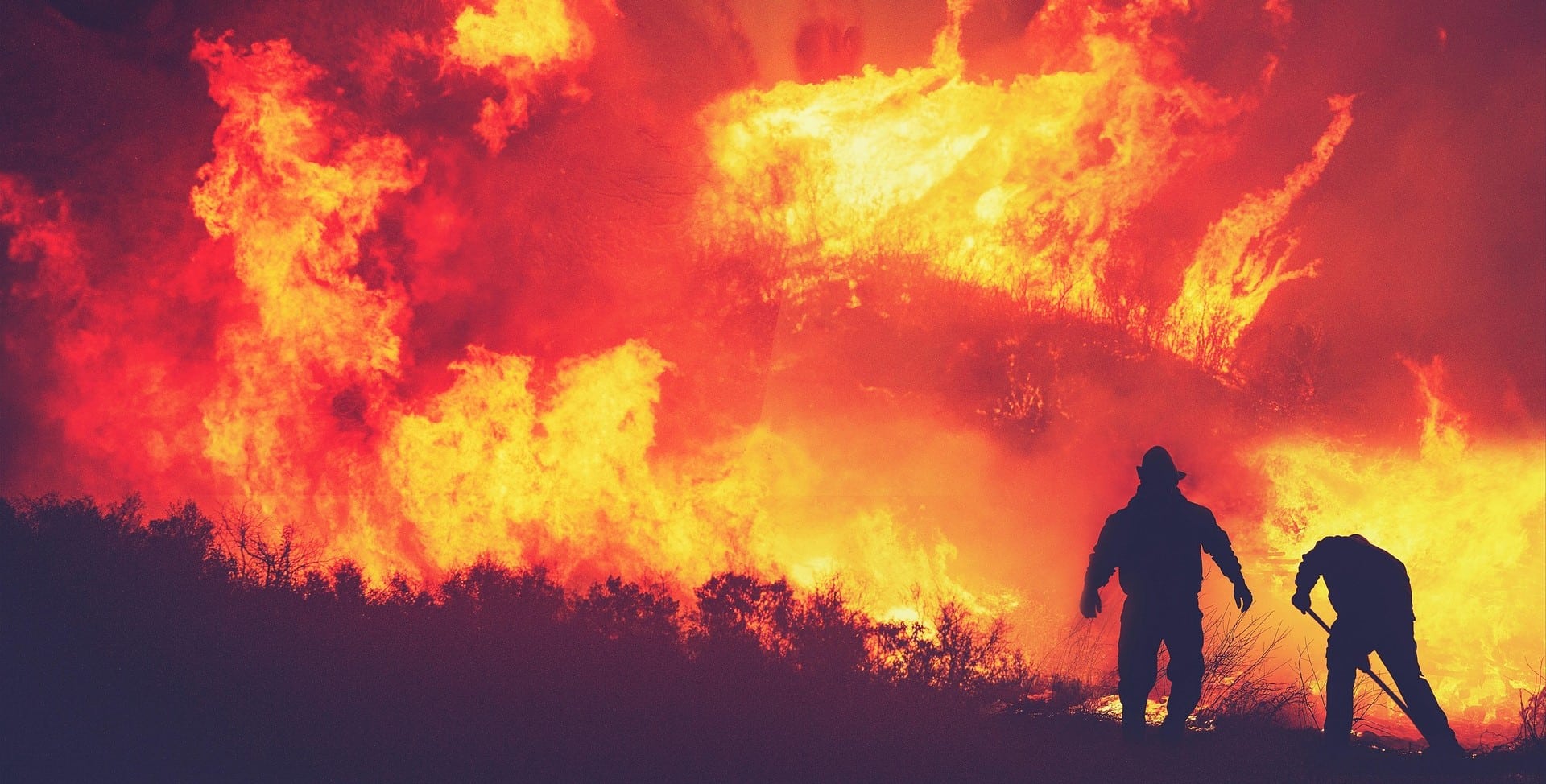
“Since April, the European Civil Protection Mechanism has been activated 10 times for fires in eight countries, often with incidents occurring simultaneously,” she highlighted, noting that 25 countries, including Ukraine for the first time, supplied national firefighting teams to combat incidents in other member states.
In front of ERCC staff, Von der Leyen stated that the work they do daily, “protects people and, more importantly, saves lives,” adding that it is concrete proof of European solidarity.
“When a country requests assistance, that request becomes action within a matter of hours. Aircraft take off, firefighters cross borders, and the Copernicus satellite system begins mapping the situation on the ground,” she said, stressing that the work done this summer showed how much Europe “depends” on the ERCC.
“When national capacities are exhausted, Europe steps in. You can count on Europe,” she summed up.
Von der Leyen emphasised that the ERCC’s work is not limited to fires nor does it cover only the European continent, recalling that the centre also coordinated the repatriation of Europeans who were on the Hondius cruise ship, where, in April and May, there was an outbreak of hantavirus.
Similarly, the ERCC coordinated the deployment of 750 specialists and rescuers from 11 countries after the earthquake in Venezuela, in addition to sending tents, water filters and essential goods to Colombia, after the August earthquake.
“Each crisis is different, and each crisis requires a specific response. But the most important thing is the general principle that, when assistance is needed, you can count on Europe,” she reiterated.
The President of the European Commission warned, however, that the crises witnessed around the world in recent months show that “risks are changing and are becoming more frequent, more complex and more severe.”
“We are witnessing a shift in global climate patterns, which is adding even more volatility. Extreme events are happening more often, more frequently, and at the same time. And the centre has once again shown that Europe can respond when crises occur, but that it also learns from each crisis,” she said.
Von der Leyen argued that now it is necessary to “turn these lessons into actions,” so that the EU can “adapt more quickly, strengthen prevention and act before an emergency turns into a disaster.”
Several EU member states registered new historic temperature records this summer, after several heatwaves had been observed on the continent in recent months.
These heatwaves, linked to the prolonged precipitation deficit, caused drought conditions in Central European countries, forcing the closure of nuclear power plants in Hungary and Romania.
Wildfires also raged across Europe, including what was considered the largest on record in Belgium, as well as in Germany, Greece, the United Kingdom, France, Spain, Portugal and Croatia.





