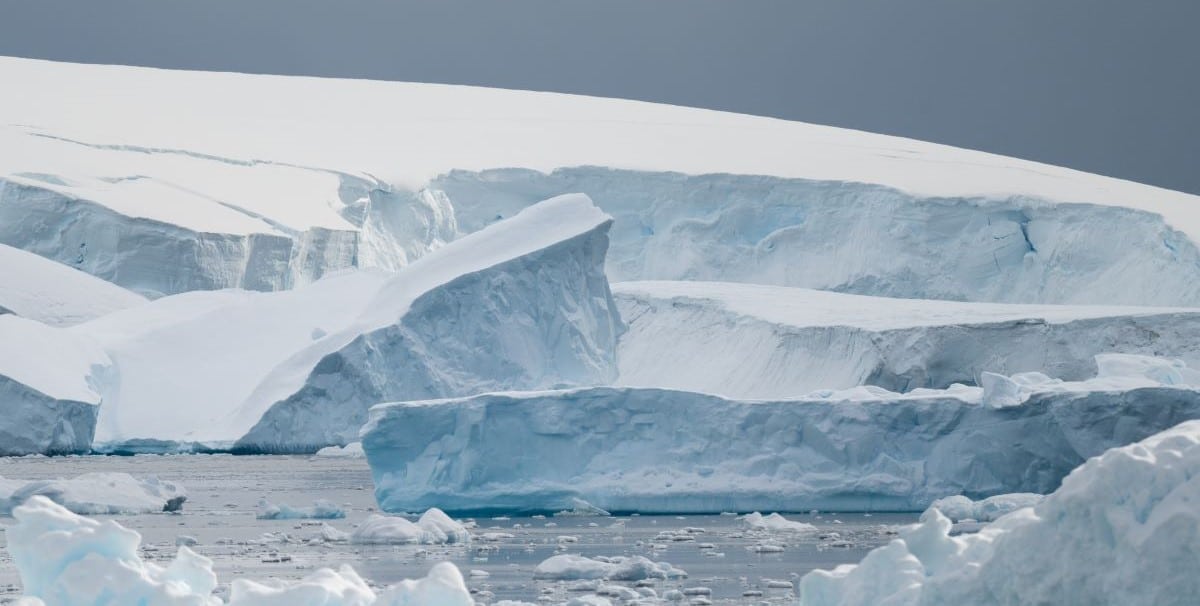
Data collected over a decade by the European Space Agency’s CryoSat satellite allowed researchers to identify 85 previously unknown lakes, located several kilometres below the icy surface around the South Pole.
The discovery increases the number of known active subglacial lakes beneath Antarctica to 231.
Hidden beneath Earth’s largest mass of ice, hundreds of subglacial lakes form a crucial part of Antarctica’s icy structure, affecting ice movement and glacier stability and, consequently, influencing global sea level rise.
The study, published in Nature Communications, is significant because active subglacial lakes, which drain and recharge cyclically, offer an exceptional view of what is happening in the depths below the surface, at the base of the ice sheet, ESA said on Friday.
The research also identified new drainage routes beneath the ice sheet, including five interconnected networks of subglacial lakes.
Lead author Sally Wilson, a PhD researcher at the University of Leeds, in England, explained that knowledge about subglacial lakes and their water flow is limited because they are buried under hundreds of metres of ice.
“It is incredibly difficult to observe filling and draining events of subglacial lakes under these conditions, especially because they take several months or years to fill and drain. Before our study, only 36 complete cycles, from the onset of subglacial filling to the end of draining, had been observed worldwide. We observed 12 more complete filling and draining events, bringing the total to 48,” she explained.
Using a decade of CryoSat observations, researchers detected localized changes in the height of the Antarctic ice surface, which rises and falls as the lakes fill and drain at the base of the ice sheet.
Subsequently, they were able to detect and map subglacial lakes and monitor their filling and draining cycles over time.
Subglacial meltwater forms due to the geothermal heat of the Earth’s bedrock and the frictional heat as the ice slides over it.
This meltwater can accumulate on the surface of the bedrock and drain periodically. This water flow has the potential to reduce the friction between the ice and the bedrock on which it rests, allowing the ice to slide more rapidly toward the ocean.
Not all subglacial lakes are considered active; many are regarded as stable because it is not known whether they fill or drain.
The largest known subglacial lake is Lake Vostok, located beneath the East Antarctic Ice Sheet. It contains between 5,000 and 65,000 km² of water beneath four kilometres of ice (water sufficient in Lake Vostok to fill the Grand Canyon and overflow by at least 25%).
Although it is considered stable, if it drained, it would affect the stability of the Antarctic ice sheet, the surrounding ocean circulation and marine habitats, as well as global sea level.
By monitoring these phenomena, scientists can deepen their understanding of the interactions between the ice sheet, the bedrock, the ocean, and the atmosphere, which is fundamental to understanding the future stability of the ice sheets.