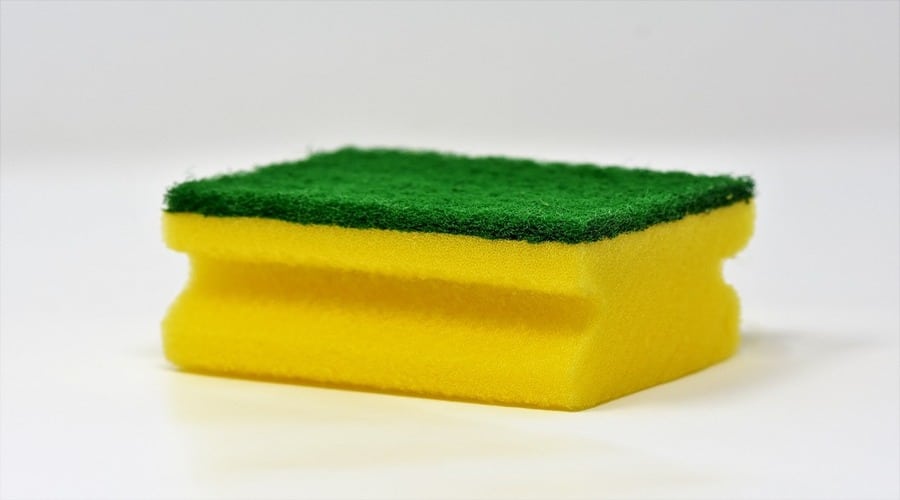
The dishwashing sponge with its scrubber is, in fact, a great place for microbes to gather. It makes sense that, as the sponge is used, it begins to look undesirable.
The main reason this cleaning accessory serves as a shelter for several bacterial communities lies in its structure: it has different layers of separation, which confer interconnected spaces of different sizes, just like healthy soil. It thus becomes a biodiversity-rich environment, where bacteria that thrive in diverse communities can live as well as bacteria that thrive in solitary forms.
“As can be seen, the sponge is a very simple way to implement a multi-level distribution to increase the microbial community overall,” says the author Lingchong You. “Perhaps it is, therefore, a truly dirty thing—the structure of a sponge is the perfect home for microbes.”
The study was developed by biomedical engineers at Duke University, in the United States, and published in the scientific journal Nature Chemical Biology.