The reintroduction of wild animals into nature, from which they were removed, usually while they were still young, can be a challenging process. After many years forced to live in captivity, far from their species, from their natural habitat and deprived of social learning, they may not be able to adapt to the home of their ancestors.
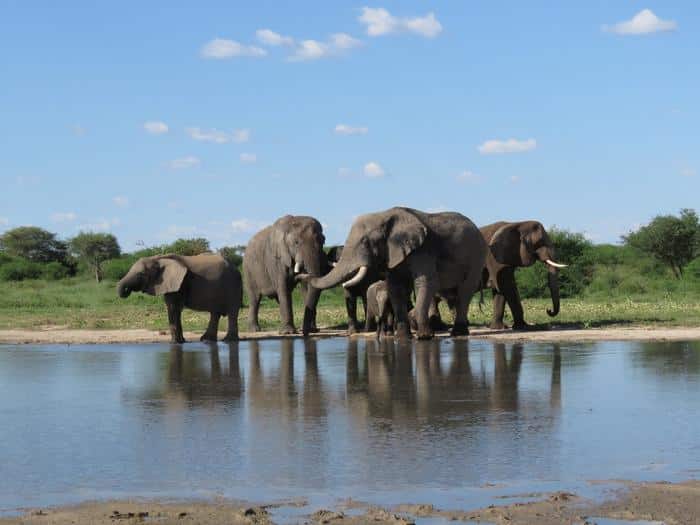
However, a group of 11 elephants, which lived in captivity and who, after being rescued, were released in South Africa, proved that there is still hope for those who, like them, were saved from forced confinement.
In an article published in the journal ‘PLOS One‘, a team of researchers led by the Elephant Reintegration Trust (ERT) followed the 11 elephants for five years after they were released in four reserves in South Africa.
Each of the animals was observed for three consecutive weeks at least once a year. The team looked for signs in behavior that could indicate that the elephants were uncomfortable in the wild environment, such as being constantly on alert or demonstrations of fear. In addition, they looked for marks left by captivity in behavior, such as abnormal aggression and excessive trunk touches on their own bodies.
The group of elephants that is the focus of this study consists of six adult males – Bully, Mabitsi, Mana, Sharu, Michael and Gobisa –, three adult females – Bonnie, Thembile and Chikwenya – and two young females named Tidimalo and Ngwedi, offspring of Chikwenya.
With the exception of Tidimalo and Ngwedi, who were born already in captivity, all the other elephants were captured in the wild when they were still young.
Mana, Sharu, Michael and Chikwenya spent about 27 years in captivity, Gobisa 24 years, Bonnie and Thembile 17 years, Bully and Mabitsi 15 years, and the young Tidimalo and Ngwedi six and three years, respectively.
In the article, the researchers reveal that some of the elephants were used for tourist rides by safari operators and the others were in circuses. All the facilities, they assure, are currently closed.
Overall, the researchers say that the behavior of the former inmates was very similar to that of elephants that have spent their entire lives living freely in their natural habitat.
Fecal samples were also collected to look for hormones typically associated with stress, and it was found that reintroduced animals, especially the females, exhibited higher levels than their wild counterparts, but still well within the parameters considered normal for wild elephants.
The results of this work show, according to its authors, that elephants who spent part of their lives in captivity can recover their “wild lives”. The researchers say, however, that each elephant adapts in a different way, which they understand to be related to the individual personality of each animal.
“What fascinated me the most was to see elephants that spent decades in captivity adapt so well to life in the wild,” says Tenisha Roos, the first author of the article.
“Seeing them respond to their environment and behave in a way very similar to wild elephants was truly impressive,” she confesses, adding that these results confirm “their remarkable resilience, adaptability and behavioral flexibility.”