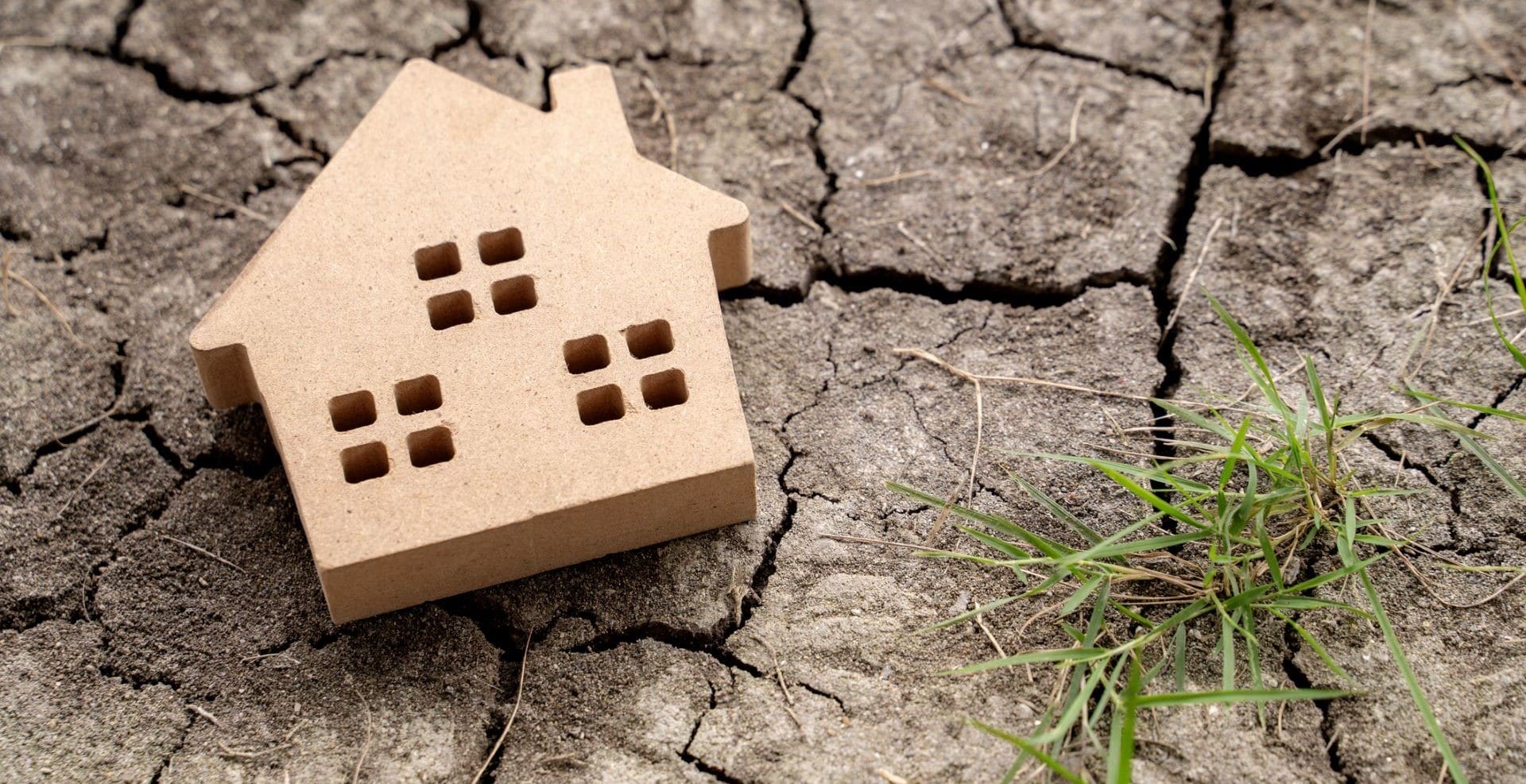
A change in precipitation patterns and rising temperatures may exacerbate movements of expansive soils and increase the risk of structural damage to homes, according to a study by Adelaide University in Australia. The researchers argue that new constructions should have foundations capable of withstanding more pronounced ground movements.
Between 20% and 30% of Australian surface soils are classified as expansive or reactive. These soils can shrink and swell in response to drying and wetting cycles, causing movements beneath the foundations of homes.
The study, based on computational modeling and field observations carried out over several years, also shows that cracks caused by soil shrinkage can be much deeper than they appear at the surface. The researchers identified cracks ranging from five to 40 millimeters in width and up to one meter in depth at a site in Adelaide, with the greatest depths recorded during the driest months, in March and April.
Some cracks narrowed or closed after rain, but others remained throughout the year. In one experiment, the researchers poured more than 30 liters of plaster into cracks, failing to fill them. When the ground was subsequently excavated, traces of plaster were found up to one meter deep, revealing the extent and connection between the cracks.
Modeling indicated that these structures can significantly alter the depth of soil affected by moisture variations. In soils without cracks, the movements associated with moisture were estimated to reach a depth of 3.8 meters, close to the four meters recommended for residential construction in Adelaide. When cracks were included in the models, the affected depth reached seven meters in the scenarios with the largest cracks.
“These fissures are not merely superficial features. They can extend deeply into the soil and create channels that allow water to penetrate much further into the ground,” explains Rajibul Karim, associate professor and senior author of the study, published in the Journal of Rock Mechanics and Geotechnical Engineering.
The results have implications for the design of foundations. In a hypothetical example analyzed by the researchers, a foundation that would require a beam 300 millimeters deep in crack-free soil would require a 550-millimeter-deep beam in one of the modeled cracking scenarios.
The situation is particularly relevant in South Australia, where reactive soils are common and the climate is relatively dry. A previous study, published in Australian Geomechanics, estimated that about 480,000 dwellings built in the state before 1981 had suffered structural damage caused by shrinkage cracks, with an estimated cost of AU$1.5 billion. There are no equivalent data for dwellings built after 1981.
For Bikash Devkota, the study’s lead author, the results show that subterranean conditions must be taken into account in the design of homes.
“A foundation suitable for crack-free ground may not perform the same when significant shrinkage cracks are present,” he says.
The researchers also warn that climate change could render this problem more relevant as precipitation patterns and temperatures change. They advocate further research into the interaction between cracks, vegetation, episodes of extreme precipitation, drainage, soil type, and other local conditions.