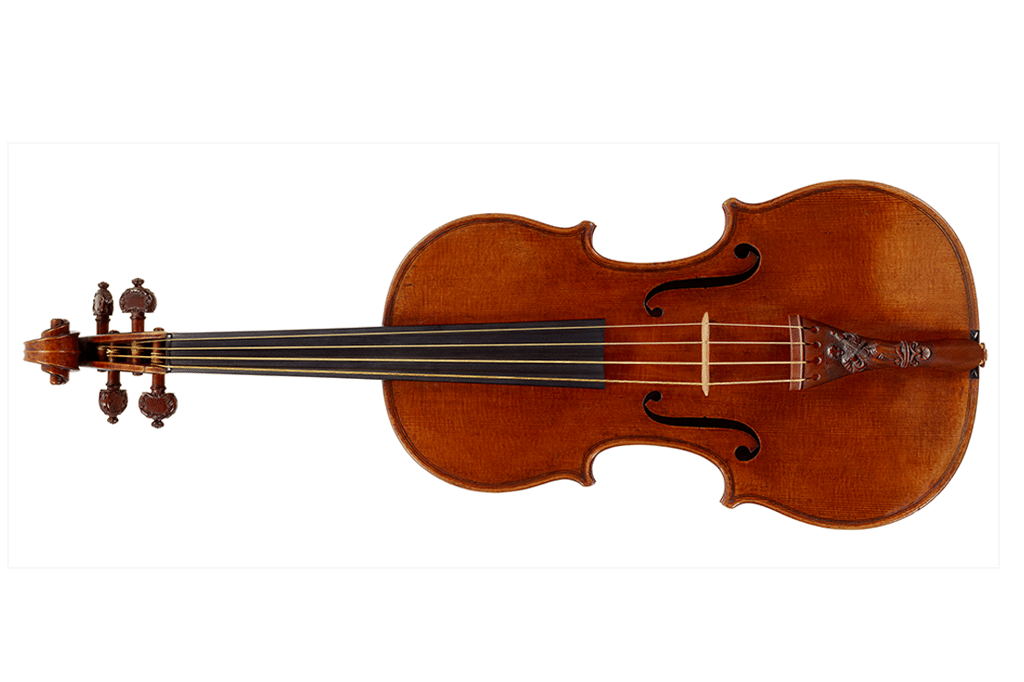
The density of wood may be one of the factors responsible for the quality of the famous instruments built hundreds of years ago. Throughout the year, trees grow differently. In spring, growth is faster, so the wood is light and spongy. In winter, it is dark and denser, when growth is slower. All these facts are recorded in the rings of the wood. “This pattern influences the resonance quality of the wood,” said to the BBC the Dutch physician Berend Stoel, head of the study published in the online journal PLOS ONE.
Computed tomography scans, which were carried out on five ancient violins, show that density is constant throughout the instrument. This was not the case in the seven modern violins analyzed. “Climate change could explain part of the differences, but the treatment given to the wood could be another explanation,” said Stoel, from Leiden University Center.
On the other hand, Joseph Nagyvary, emeritus professor of Biochemistry at Texas A&M University, was the first to propose that the chemicals used in the making of violins—and not so much the skill of crafting the instrument—were the reason Antonio Stradivari and others produced instruments with a unique sound.
Now, a team of scientists led by Hwan-Ching Tai, professor of Chemistry at National Taiwan University, has corroborated this theory, showing that borax, zinc, copper and alum, together with limewater, were used to treat the wood used in violins.
“Borax has a long history as a preservative, dating back to the ancient Egyptians, who used it in mummification and, later, as an insecticide,” Nagyvary said in a statement from the American university.
The presence of these chemicals points to a collaboration between violin makers and the local pharmacies and apothecaries of that time. Both Stradivari and Guarneri would have liked to treat their violins to prevent woodworms from eating the wood, because infestations were very common at that time,” he added.
The study was published in the scientific journal Angewandte Chemie.